The Sinosphere · Volume 34, The Chilli Jar, the Smoke Room and the Mountain the Tusi Ruled
Mao shi hongshaorou
Changsha, via Shaoshan
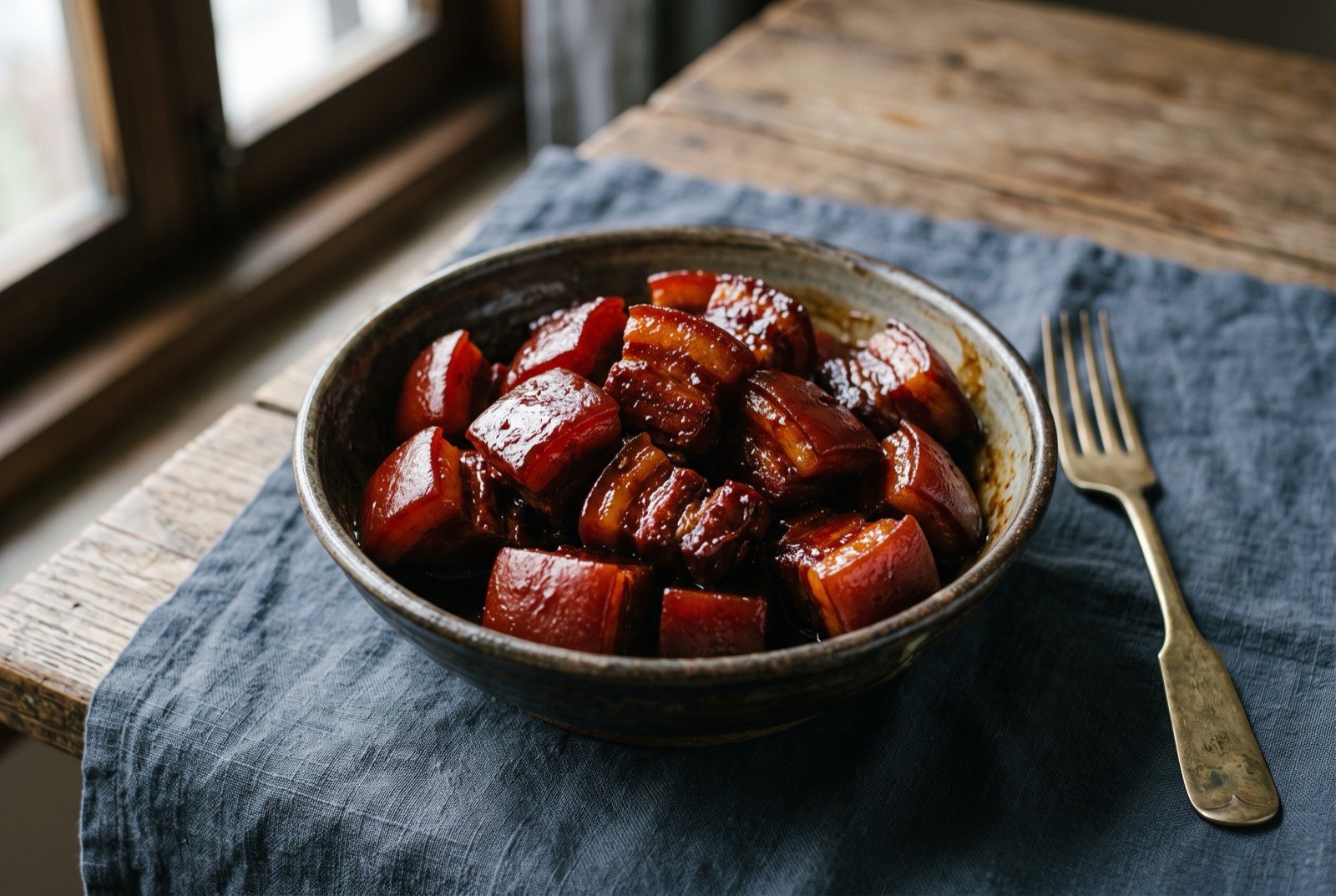
Illustration
- Time
- 1 hour 30
- Researched
- Researched from 111 sources in the brief
Changsha, via Shaoshan. A schoolboy's Saturday treat, standardised decades later into the province's political calling card.
As tradition built it
Serves 4. 1.5 hours.
Ingredients
- 800 g pork belly, skin on, cut into 3cm cubes
- 30 g rock sugar
- 2 tbsp vegetable oil
- 50 ml Shaoxing wine
- 2 star anise
- 3 slices ginger
- 1 small piece cassia bark
- 750 ml boiling water
- 1 tsp salt
Method
- Blanch the pork cubes in boiling water for 2 minutes to remove scum, then drain and pat dry.
- Melt the sugar in the oil over medium heat until it foams and darkens to a deep amber, adding the pork the instant the bubbles start to shrink so it colours evenly without the sugar catching.
- Add the ginger, star anise and cassia, stir briefly, then deglaze with the Shaoxing wine.
- Add the boiling water to just cover, season with the salt, no soy sauce at any point, bring to a simmer, then reduce to a slow, steady simmer, partially covered.
- Simmer 1 to 1.5 hours, uncovering towards the end to reduce the liquid to a thick, glossy, deep red-brown sauce with no added thickener, turning the pieces occasionally so they colour evenly throughout.
What a modern chef changes
The colour, controlled precisely rather than judged by eye alone.
Rung 4
Method
- Sear and deglaze the pork as above, then sous vide it separately in a reduced portion of the braising liquid at 82°C for 8 to 10 hours, rendering the fat and collagen fully without any risk of the sugar-based sauce scorching over a long stovetop reduction.
- Reduce the reserved braising liquid hard and fast in a wide pan, at the very end only, toss the sous vide pork through briefly to coat and re-crisp the surface under a hot broiler.
- Judge the sugar stage purely by colour and bubble size, exactly as Rung 4 demands even with the rest of the method engineered, since this is the one step the tradition's own precision cannot be improved on.