The Sinosphere · Volume 33, The Mala Basin
Chongqing hotpot (重庆火锅)
Chaotianmen, Chongqing
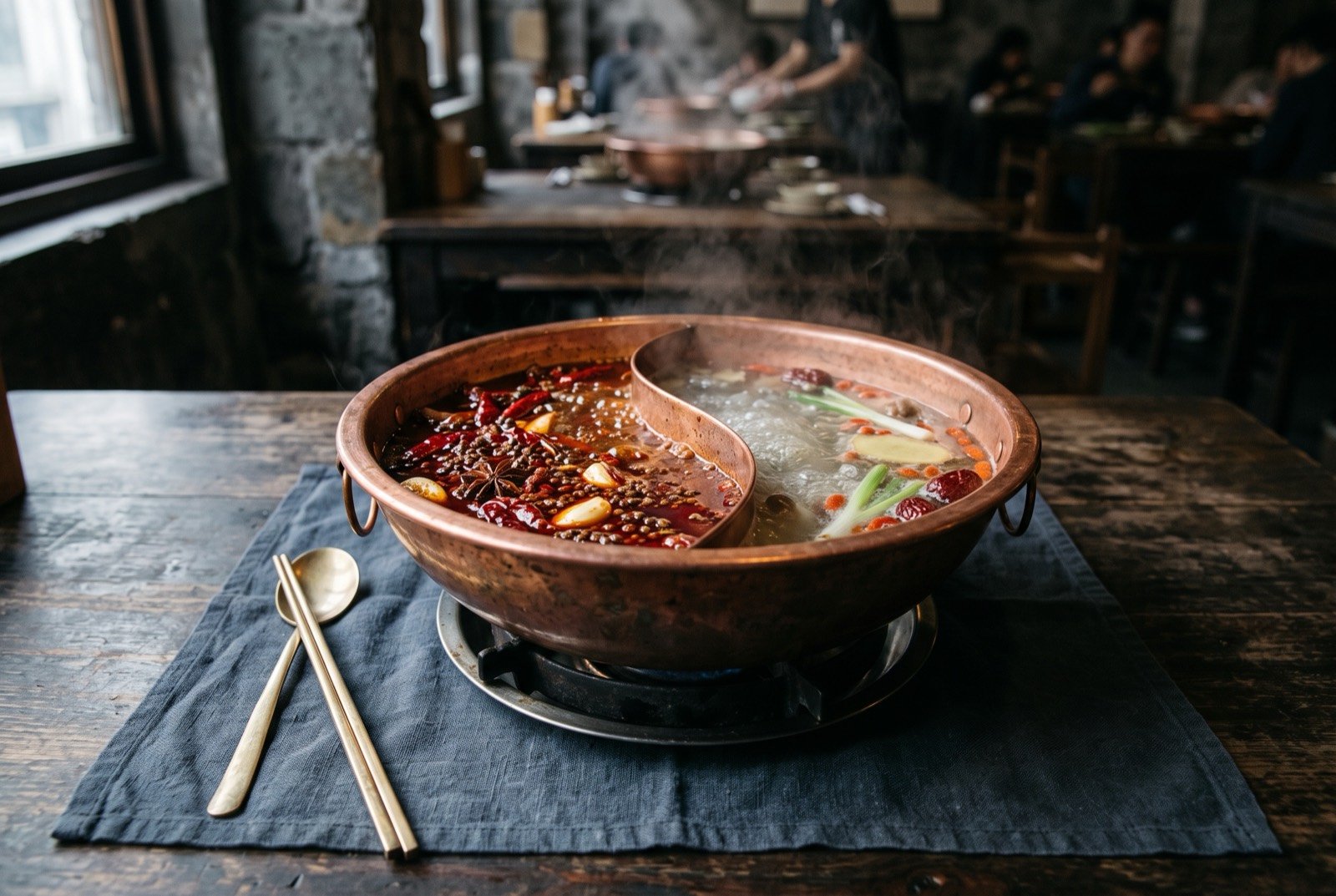
An illustration of the dish, not a photograph of it cooked.
- Time
- 1 hour
- Reviewed
- Not yet reviewed from inside the tradition
- Cooked
- Not yet cooked and reported
The dominant, though contested, origin account places hotpot's beginnings among dock workers and boat-trackers on the Jialing wharves at Chaotianmen, cooking salvaged offal streamside in chilli, Sichuan pepper, ginger, garlic and riverbank salt. Zigong and Luzhou both claim earlier or better rival origins, and this chapter names all three without settling the question. What is firmly documented is the mandarin duck split pot itself: credited to He Yongzhi, co-founder of the Xiaotian'e hotpot brand, who in the early 1980s reportedly had a metalworker fit a dividing plate into a single pot after watching the Jialing and Yangtze run side by side, unmixed, at Chaotianmen, later patented for its design. The dish's darker history, reused "old oil" sold as tradition, is a genuine, still-enforced food safety issue, most recently prosecuted in Chongqing in January 2024, and this chapter is explicit that the version worth cooking at home is the honest one: a base made fresh, once, and discarded after use.
As tradition built it
Serves 4. About 1 hour to build the base, plus table cooking.
Ingredients
For the base
- 1.5kg beef tallow
- 1kg vegetable oil
- 500g Pixian doubanjiang
- 50g ginger, 65g spring onion chopped ginger and spring onion
- 20g fermented glutinous rice
- 50ml white liquor
- 50g chopped garlic
- 15g preserved mustard stem
- a little a little rock sugar
- 750g dried chillies, rehydrated
- 3 to 8g each a spice sachet: white cardamom, tsaoko, sand ginger, clove, star anise, cassia, liquorice root and more
To serve
- as available beef tripe
- as available pork or beef throat gristle
- as available duck intestine
- as available duck or beef blood curd
- to serve sesame oil and garlic paste, for dipping
Method
- Render the beef tallow with the vegetable oil to about 70 to 80 percent heat, then pour it over the doubanjiang, chopped ginger and spring onion, fermented glutinous rice, white liquor, chopped garlic, preserved mustard stem and rock sugar, stirring continuously so nothing scorches.
- Simmer on medium heat for about ten minutes, until the paste has reduced and dried a little, then add the rehydrated dried chillies and bring to a boil before reducing to a simmer for a further 15 minutes.
- Add the spice sachet and simmer gently rather than fry, so its more delicate aromatics survive intact.
- Serve in a nine-square-grid pot, Chongqing's own signature format, or a mandarin duck split pot alongside a plain broth.
- Dip in sesame oil and garlic paste, the classic austere Chongqing dip, as against Chengdu's richer sesame-and-oyster-sauce version.
- Cook the tripe, throat gristle, duck intestine and blood curd using the "seven up, eight down" method, dipped in and out of the boiling broth seven or eight times over about fifteen to twenty seconds, a genuine food-safety heuristic rather than mere ritual, since thin tripe needs that cumulative heat exposure to be safe while staying tender.
Notes
Essential ingredients are beef tripe, pork or beef throat gristle, duck intestine and duck or beef blood curd.
The base should be made fresh, once, and discarded after use, never filtered and reused; the reused-oil version is a genuine, still-prosecuted food safety violation, not a traditional shortcut worth keeping.
What a modern chef changes
A slow oven-rendered tallow and a steeped, staged spice base
Rungs 1 and 6
Method
- Render the tallow low and slow, at 90°C in a controlled oven or on the Big Green Egg indirect at that temperature for three hours rather than a hard stovetop render, for a cleaner-tasting fat with none of the acrid notes a fast, hot render can pick up.
- Build the chilli component as the full staged three-pour method (Rung 1), added to the base once it has finished simmering rather than fried directly into it, protecting more of its aroma.
- Toast and grind the spice sachet's components fresh in the spice grinder rather than using pre-ground spice, and steep it as a bouquet garni rather than a loose scatter, so it can be lifted out cleanly before service, keeping the finished broth clear rather than gritty.