The Sinosphere · Volume 33, The Mala Basin
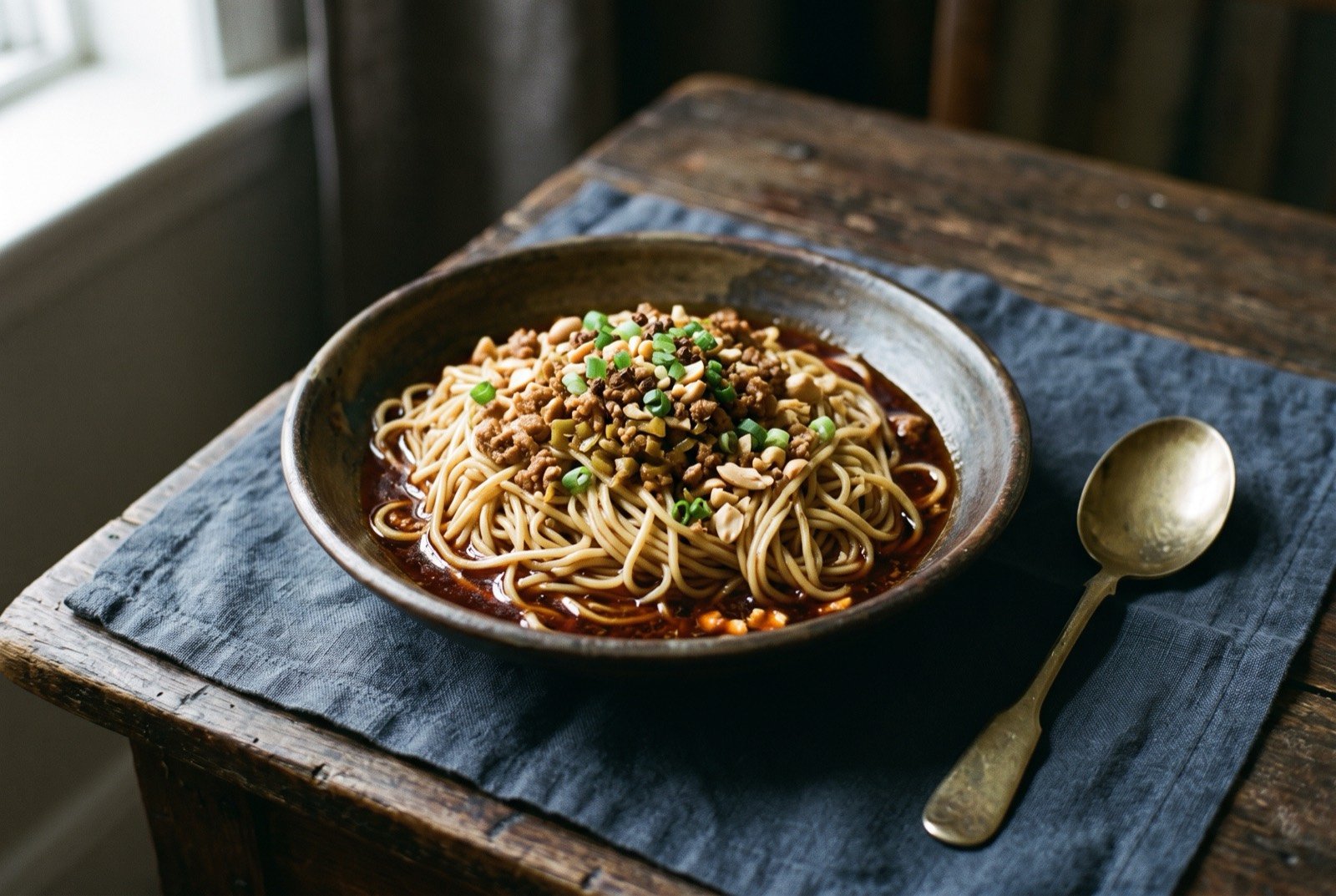
Dan dan noodles (担担面)
Zigong, Sichuan
Illustration
- Time
- 40 minutes
- Researched
- Researched from 96 sources in the brief
The more widely repeated origin credits a Zigong street vendor nicknamed Chen Baobao, who in 1841 carried his cooking equipment on a shoulder pole, dan, while hawking noodles street to street, giving the dish its name. Zigong and Chongqing still keep something close to the original meatless style; Chengdu added a pork mince topping, and it is that Chengdu-inflected version that spread nationally, named one of China's ten great noodle dishes by the Ministry of Commerce in 2013.
As tradition built it
Serves 4. About 40 minutes.
Ingredients
For the topping
- 10g Yibin yacai, rinsed and finely chopped
- a little garlic, ginger and spring onion
- 30g pork mince
- to taste light soy and cooking wine, to season
For the red oil
- as needed chilli powder
- as needed white sesame
- as needed oil
- a few star anise, Sichuan pepper and a bay leaf
For the sauce, per bowl
- 1 spoonful sesame paste
- 1 spoonful peanut butter
- a little hot water, to loosen
- 5g light soy
- 3g black vinegar
- a little Sichuan-pepper oil
- 10g red oil, above
- a pinch a pinch of salt
To finish
Method
- Fry the chopped yacai with garlic, ginger and spring onion, then add the pork mince, brown it, season with light soy and cooking wine, and dry it down until it clings rather than pools.
- For the red oil, combine the chilli powder and white sesame in a bowl; separately heat the oil with star anise, Sichuan pepper and a bay leaf until fragrant, strain the spices out, and pour the hot oil directly over the chilli powder and sesame, stirring at once.
- For each bowl, combine a spoonful each of sesame paste and peanut butter, loosened with a little hot water, with light soy, black vinegar, Sichuan-pepper oil, the red oil and a pinch of salt into a thick, pourable paste.
- Boil the noodles to about 80 percent doneness, drain, and toss through the sauce base before topping with the pork and yacai mixture.
What a modern chef changes
A fully staged red oil, freshly ground sesame paste and a properly dried yacai
Rung 1
Method
- Build the red oil as the full staged, three-pour version (Rung 1) rather than the single hot pour above, so its aroma survives being tossed hot through noodles rather than being served as a static condiment.
- Grind the sesame paste fresh in a high-power blender from lightly toasted white sesame, rather than using a jarred paste, for a rounder, less bitter base.
- Dry the yacai briefly in a dehydrator after chopping, at 55°C for fifteen minutes, before frying, which concentrates its savoury edge and stops it releasing water into the pork mince as it cooks, keeping the topping properly dry rather than stewed.