The Sinosphere · Volume 31, The Wok’s Breath, the Tea Trolley and the Coconut Coast
Char siu, honey-glazed roast pork
Guangdong, the siu mei roast counter
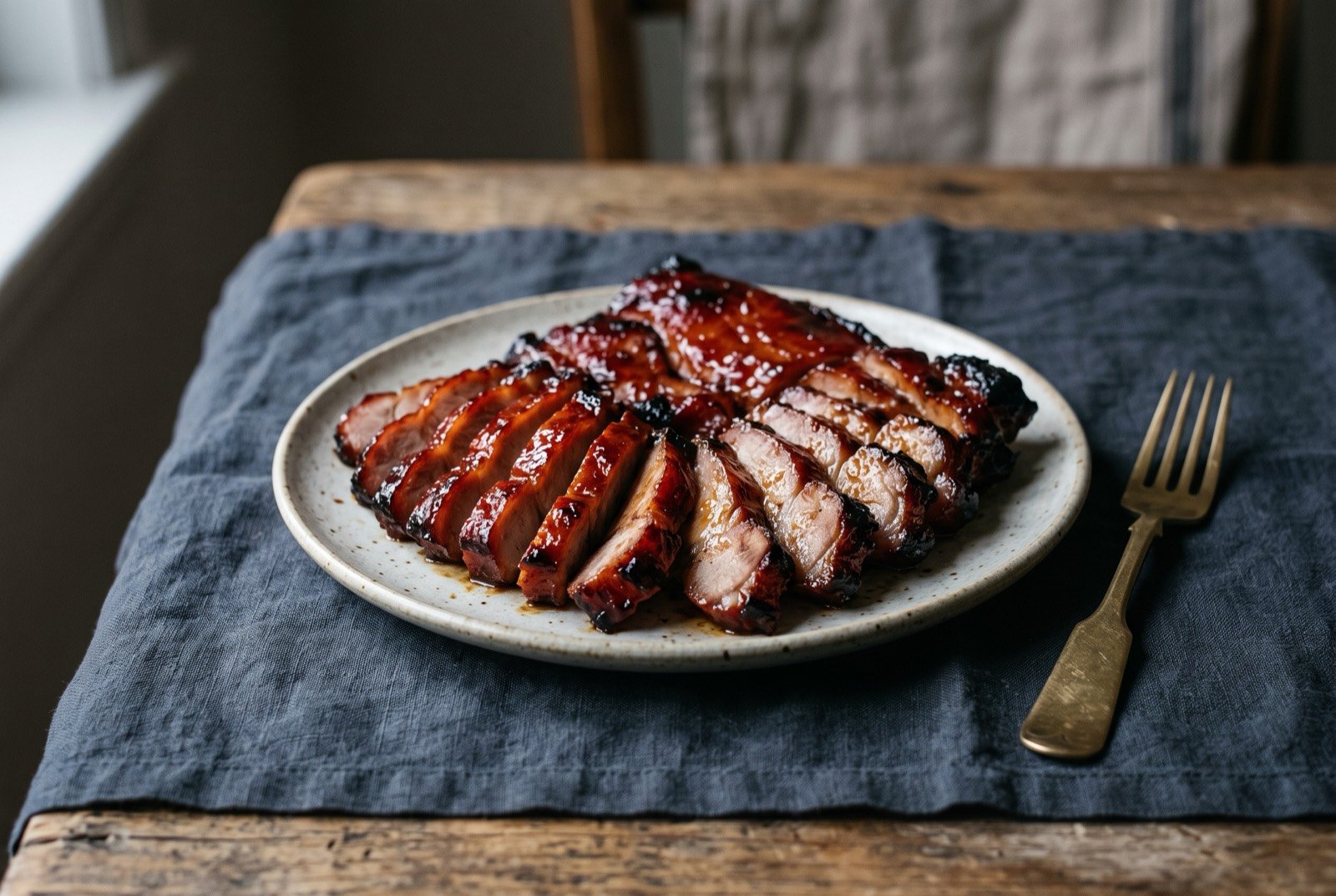
An illustration of the dish, not a photograph of it cooked.
- Time
- 1 hour
- Reviewed
- Not yet reviewed from inside the tradition
- Cooked
- Not yet cooked and reported
The siu mei roast counter's signature dish. A marinade built for lacquer, roasted on a curve a human eye actually runs.
As tradition built it
Serves 4 to 6. Marinate several hours or overnight; roast 1 hour.
Ingredients
- 1 kg pork shoulder or collar (梅頭肉), cut into 4 long strips
- about 130g each garlic, shallot and ginger paste
- 1 tbsp fine salt, about 130g sugar salt, sugar
- 2 tbsp light soy sauce
- 1 tbsp oyster sauce
- 2 tbsp Shaoxing wine
- 1 tbsp ground bean sauce
- 1 tbsp sesame paste
- 1 tbsp hoisin sauce
- 1 tsp cornflour
- 1 egg, added later
- 1 tsp sesame oil
For the glaze
- enough to brush generously over the surface honey, warmed and thinned slightly with water
Method
- Combine the garlic, shallot and ginger paste with salt, sugar, light soy, oyster sauce and Shaoxing wine, then fold in the ground bean sauce, sesame paste, hoisin and cornflour.
- Marinate the pork strips in this mixture for at least 45 minutes, then work in the egg and a little sesame oil.
- Leave to marinate several hours, ideally overnight, turning occasionally.
- Roast at 160°C for 15 minutes, turn the strips, drop to 100°C for a further 15 minutes, then finish at a low 80°C for 30 minutes.
- Brush generously with the warmed honey glaze, then let the surface air-dry briefly before slicing, so the lacquer sets rather than staying tacky.
What a modern chef changes
The high-low-high curve, held by a probe rather than a clock.
Rung 5
Method
- Sear the marinated pork hard on a very hot grill or under a broiler first, replicating the initial scald-and-set stage of the siu mei tradition, then finish the interior gently at a low oven temperature or sous vide around 65°C until just cooked through.
- Glaze and torch the surface in stages, checking colour by eye between passes, exactly as Rung 5 demands: watch the lacquer, not the clock.
- Rest briefly before slicing, letting the glaze set fully so it doesn't tear when the knife goes through.