The Sinosphere · Volume 31, The Wok’s Breath, the Tea Trolley and the Coconut Coast
Bo zai fan, clay pot rice
The Pearl River Delta
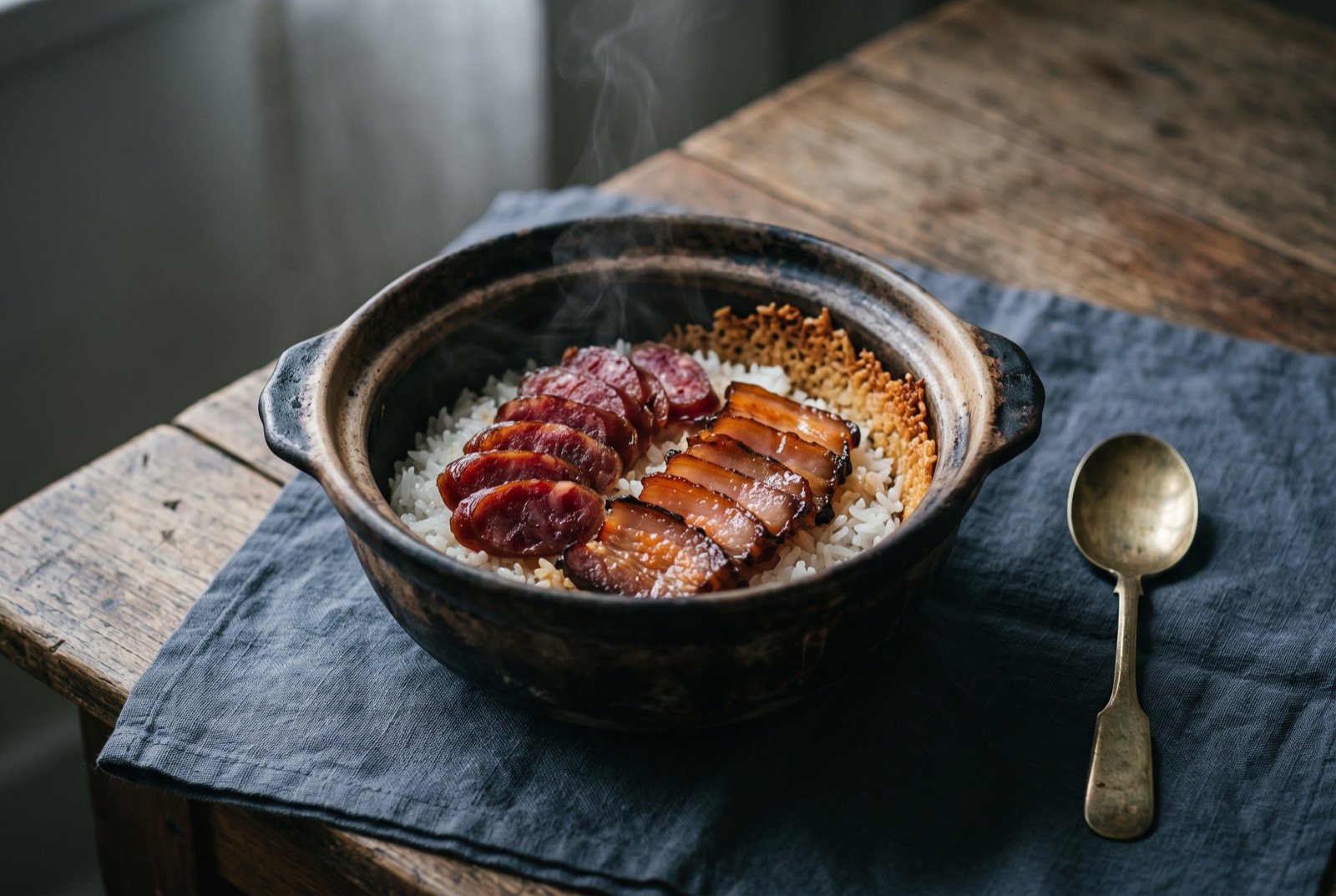
An illustration of the dish, not a photograph of it cooked.
- Time
- 45 minutes
- Reviewed
- Not yet reviewed from inside the tradition
- Cooked
- Not yet cooked and reported
The Pearl River Delta, popularly said to have begun as a dockworker's portable hot lunch. The scorched rice is the whole point.
As tradition built it
Serves 2 to 3, per pot. 45 minutes.
Ingredients
- 200 g jasmine rice, rinsed
- 250 ml water
- 2 Cantonese cured sausages (lap cheong), sliced
- 50 g cured pork belly (laap yuk), sliced
- to taste soy sauce, sugar, a little oil
- a small handful, to finish spring onion, to finish
Method
- Soak the rinsed rice in the clay pot's own water for 20 minutes before cooking; a new pot should first be seasoned with a rice-water soak to reduce the risk of cracking over direct heat.
- Bring the pot to a simmer over direct flame, then lower the heat and cover, cooking gently until the water is mostly absorbed.
- Lay the sliced cured sausage and pork over the surface of the half-cooked rice, re-cover, and continue cooking gently until the rice is nearly done and the cured meats have rendered their fat down into it.
- Raise the heat sharply for the final 1 to 2 minutes, listening for the change in sound as the rice against the pot wall begins to caramelise into a scorched crust.
- Off the heat, drizzle over a little soy sauce, sugar syrup and a trickle of oil for shine, scatter with spring onion, and bring the pot straight to the table.
What a modern chef changes
The scorched crust, engineered for reliability.
Method
- Cook the rice to just short of doneness in the clay pot as above, then finish the final high-heat crisping stage over an infrared or very high direct flame for a more even, controllable scorch than an ordinary hob ring can always give a clay pot's uneven base.
- Render the cured meats separately in a hot pan first, then lay the rendered slices and their fat over the rice only for the final stage, giving more control over exactly how much fat reaches the rice.
- Bring the pot to the table exactly as tradition does: this dish's real elevation is in the crust, not in how it is served.