Melanesia, Micronesia and Polynesia · Volume 06, The Root, the Reef and the Earth Oven
Porc au sucre
New Caledonia, Vietnamese-derived
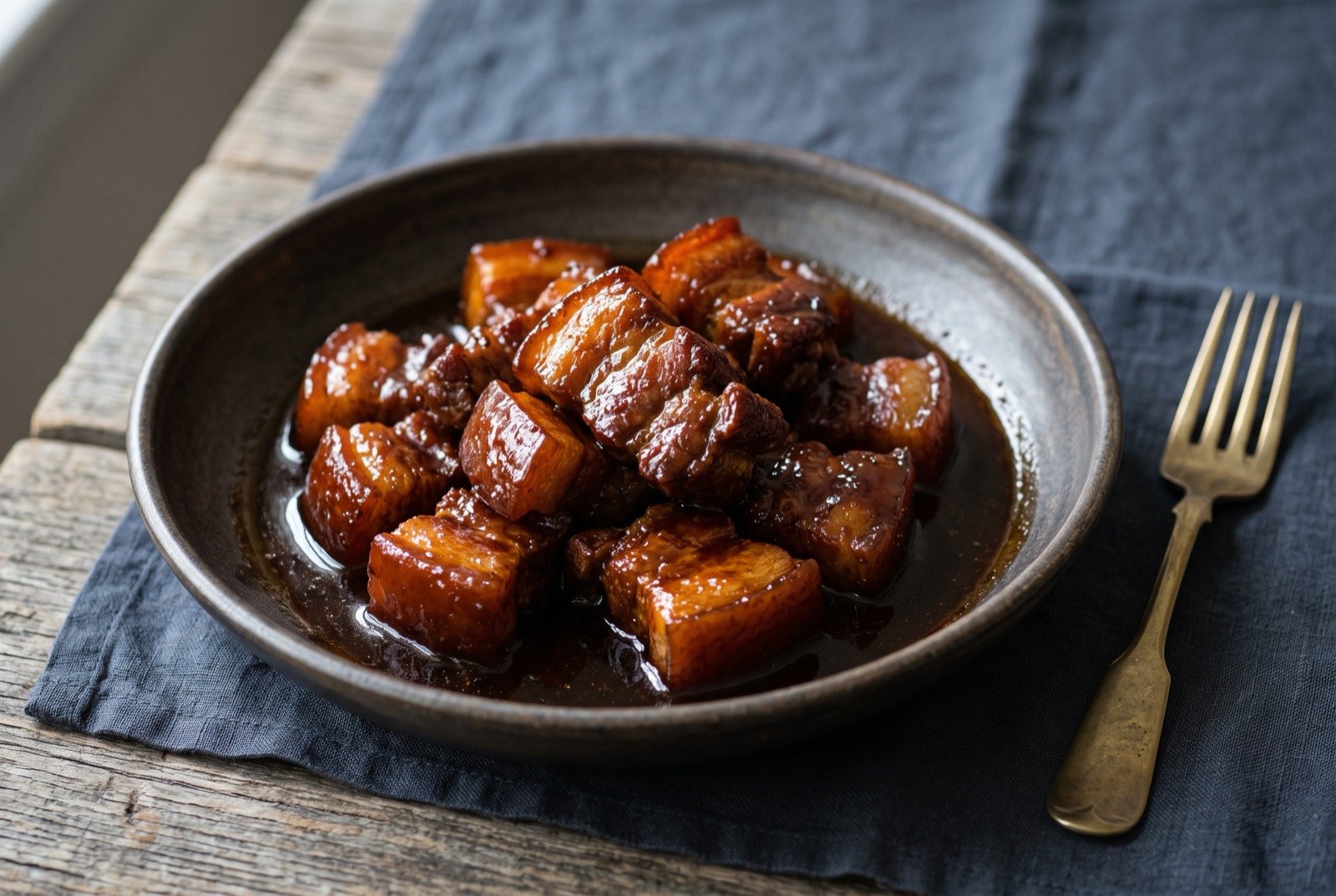
An illustration of the dish, not a photograph of it cooked.
- Time
- Not statedNo source states a time and the atlas has too few comparable dishes to estimate one.
- Researched
- 16 sources cited
- Reviewed
- Not yet reviewed from inside the tradition
- Cooked
- Not yet cooked and reported
A Caledonian adaptation of Vietnamese caramelised pork, thịt kho, brought by chân dang contract labourers from the 1890s and, per the one detailed source this chapter found, now so thoroughly absorbed into everyday Nouméa eating that it is described as "as common as steak frites on the island." [diacritics.org, "Autrefois une île de résidence," as above] No source consulted for this chapter gave a full, gram-quantified recipe; the caramelisation method below is this chapter's standard rendering of documented Vietnamese thịt kho technique, applied honestly to a dish whose specific Caledonian ratios were not found in any source searched, and that limit is stated here rather than smoothed over with an invented recipe.
As tradition built it
Reported method, general rather than precisely quantified.
Ingredients
An outline, not yet a recipe: the tradition's method with its ingredients named but not weighed. Quantities are being added from sources inside the tradition, lead dishes first.
- pork, typically belly or shoulder, cut into pieces
- sugar, cooked to a deep amber caramel
- water or coconut water
- fish sauce
Method
- Cut the pork into pieces and brown it.
- Cook sugar to a deep amber caramel.
- Add the liquid (water or coconut water) and fish sauce to the caramel.
- Braise the pork slowly in the resulting sweet-savoury liquid until tender and the sauce has reduced to a dark, glossy coating.
What a modern chef changes
The caramel and the braise separated and controlled, since no source found gives a controlled method beyond "simmered until tender."
Method
- Cook the sugar to a precise, deep amber caramel using a thermometer, arresting the process with the braising liquid at a consistent, repeatable point rather than by eye, since caramel a few degrees too dark turns bitter and a few degrees too light stays cloying rather than properly savoury.
- Braise the pork sous vide at a controlled low temperature after the initial caramel and liquid are combined, then finish by reducing the braising liquid separately on the stovetop to the same dark, glossy consistency the traditional method reaches by long, uncontrolled simmering, giving a more consistently tender result without the risk of the caramel scorching during a long open pot cook.