Mainland Southeast Asia · Volume 41, The Coconut and the Court
Massaman
Thailand
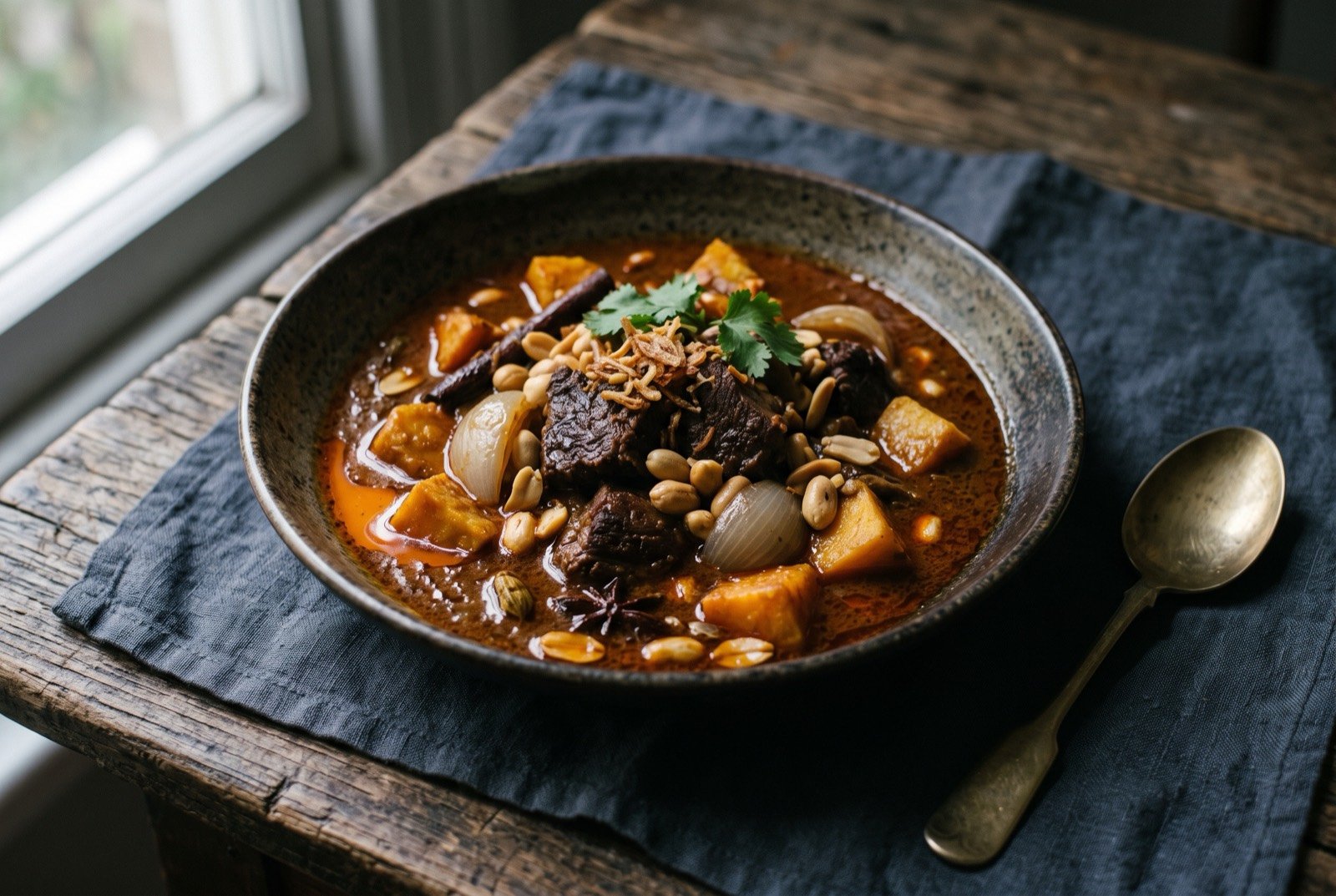
An illustration of the dish, not a photograph of it cooked.
- Time
- 3 hours
- Researched
- 8 sources cited
- Reviewed
- Not yet reviewed from inside the tradition
- Cooked
- Not yet cooked and reported
The name derives from Persian musalman, Muslim. The trade origin is plausible and widely believed rather than documented from a named period source; what is textually certain is King Rama II's poem, 1809 to 1824, which names massaman directly as the jewel of curries. Thai Muslim communities themselves reportedly call this style of curry salamat rather than massaman, and their version runs saltier and richer than the sweetened style now most associated with Thailand internationally, itself already a step removed from the tradition it draws on.
As tradition built it
Serves 6. About 3 hours.
Ingredients
- 1kg beef flank, or another collagen rich cut
- 200g massaman curry paste
- 6 cardamom pods, toasted
- 600g sweet potato, peeled and chunked
- 200g onion, quartered
- 80g roasted peanuts, skinned
- 1.5 cups thick coconut cream
- 5 cups thin coconut milk
- 100g tamarind liquid
- 200g palm sugar
- 1 tbsp fish sauce
Method
- Heat the coconut cream alone until it splits and the oil rises. See Rung 2.
- Fry the massaman paste in the separated fat with the toasted cardamom until fragrant.
- Add the beef and coat thoroughly.
- Add the thin coconut milk and simmer slowly until the beef is tender, around 2 hours.
- Add the sweet potato, onion and peanuts, and simmer until the potato is tender.
- Season with tamarind, palm sugar and fish sauce, balancing to a rich, only gently sweet finish.
What a modern chef changes
The long braise, and the paste's own South Asian ancestry, both taken seriously.
Rung 2
Method
- Consider a low, long braise in a Big Green Egg run at a stable indirect temperature for the beef stage specifically, closer to the slow, patient cooking the dish's own long history suggests than a rushed stovetop simmer.
- Toast and grind the whole warm spices, cardamom, cinnamon, clove, fresh in the dedicated spice grinder, rather than relying on a shop bought paste's pre-ground spice, the clearest single improvement available for this dish's South Asian register.
- Season toward the saltier, richer Thai Muslim style rather than the sweetened mainstream version, and say so, giving the reader the choice rather than defaulting silently to the more diluted register.