Mainland Southeast Asia · Volume 41, The Coconut and the Court
Khao yam
Thailand
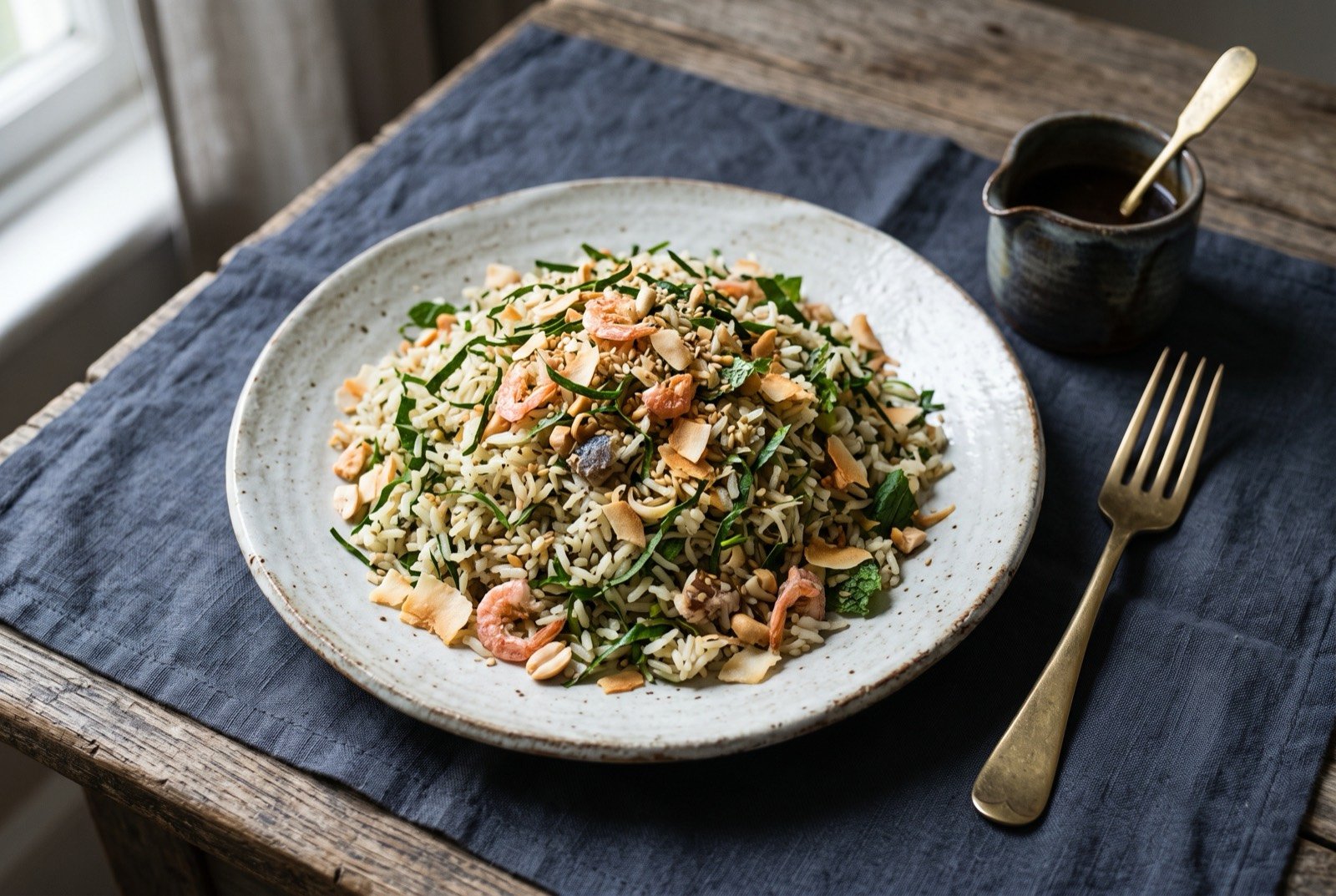
An illustration of the dish, not a photograph of it cooked.
- Time
- 30 minutes
- Researched
- 8 sources cited
- Reviewed
- Not yet reviewed from inside the tradition
- Cooked
- Not yet cooked and reported
Two real forms exist: khao yam khluk khrueang, rice tossed directly with a pounded paste of chilli, black pepper, shallot, garlic, turmeric, galangal, kaffir lime, lemongrass, palm sugar and shrimp paste, plus dried shrimp or grilled fish and toasted coconut; and khao yam nam budu, the same rice and shredded herbs dressed instead with a sweetened, soured budu based dressing.
An origin legend, checked and not repeated as fact. A popular version holds the dish was devised by a royal Nakhon Si Thammarat court physician during a period of religious fasting, to treat digestive complaints. This chapter's research actively searched for the claim's source and found no named period, no named physician, and no primary text behind it. It is reported here as a widely repeated popular story, not documented history, exactly the same treatment this chapter gives nom banh chok's own origin legend above.
As tradition built it
Serves 4. About 30 minutes, plus cooked rice.
Ingredients
- 400g cooked jasmine rice, cooled
- as available lemongrass, wild betel leaf, noni leaf, turmeric leaf, kaffir lime leaf, shredded fine
- a scatter toasted grated coconut, dried shrimp or fish floss
- to taste for the paste: fresh chilli, black pepper, shallot, garlic, turmeric, galangal, kaffir lime, lemongrass, palm sugar, shrimp paste
- to taste for the budu dressing: budu, lime juice, chilli, herbs
Method
- Pound the aromatic paste, or prepare the budu based dressing, according to which version is wanted.
- Toss the cooled rice with the shredded herbs and vegetables.
- Dress with either the pounded paste or the budu dressing, tossing thoroughly.
- Finish with toasted grated coconut and dried shrimp or fish floss.
What a modern chef changes
The two versions kept genuinely distinct rather than blended into one compromise.
Rung 1
Method
- Pound the khluk khrueang paste properly, per Rung 1, rather than blending it, since its fibrous aromatics need the same crushing action this whole chapter's curry pastes depend on.
- Toast the coconut fresh, in a dry pan, immediately before serving, for real aroma rather than the flat, stale note a pre-toasted packet gives.
- Serve the two versions side by side rather than choosing one, letting a reader taste directly how differently budu and a pounded paste each carry this same rice.