Maritime Southeast Asia · Volume 45, The Mortar, the Wok and the Roti Board
Assam laksa
Penang, Malay hawker (absorbed by the Peranakan community)
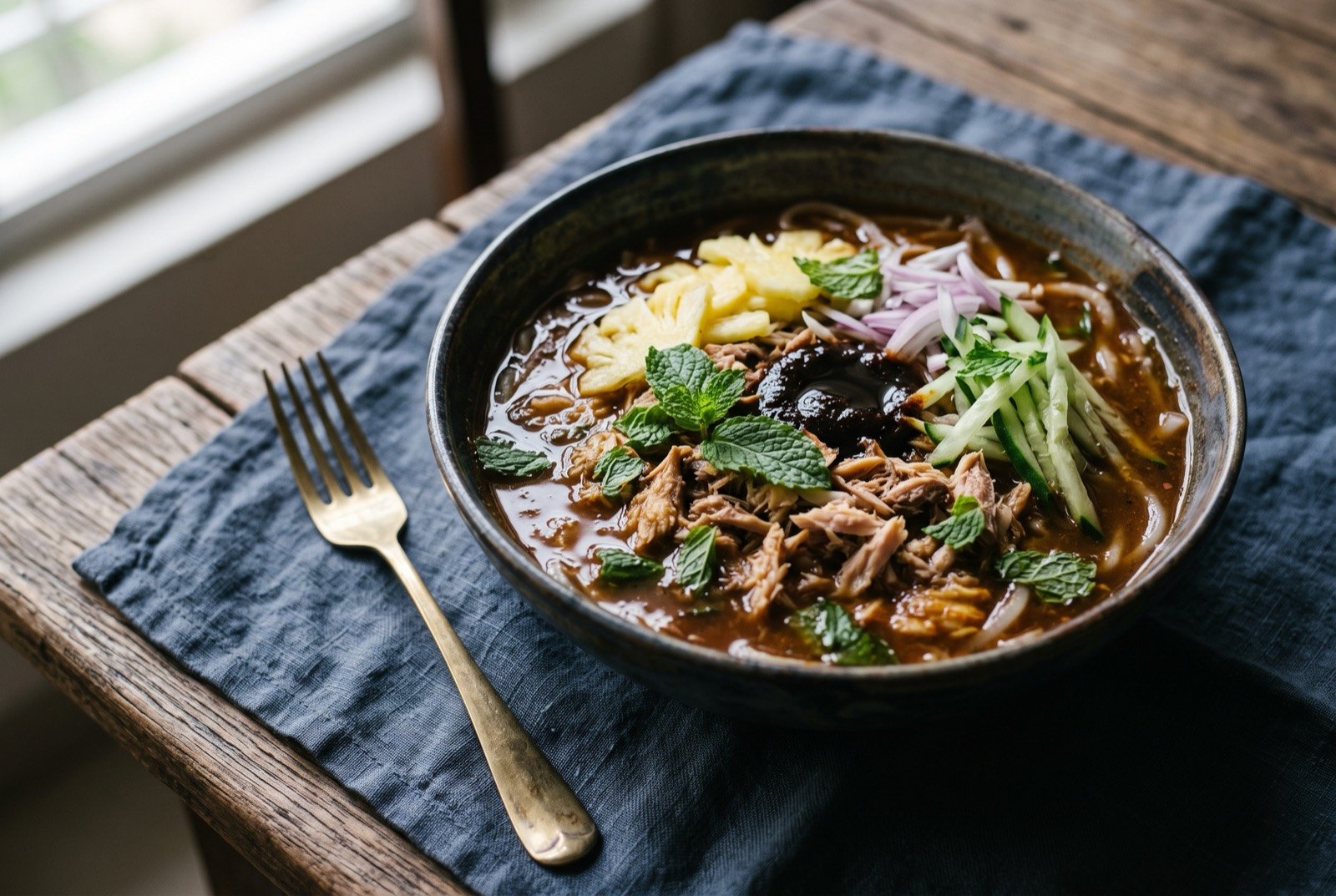
An illustration of the dish, not a photograph of it cooked.
- Time
- 1 hour 10
- Reviewed
- Not yet reviewed from inside the tradition
- Cooked
- Not yet cooked and reported
Laksa is the cleanest single illustration of the Penang and Melaka-Singapore Nyonya split: the two things called laksa in this chapter are not variations on one dish, they are two structurally different broths that happen to share a name. Assam laksa itself is properly a Penang Malay hawker dish that the Penang Peranakan community absorbed and is closely associated with rather than one it actually originated.
As tradition built it
Stock about 30 minutes, then a further 30 to 40 minutes
Ingredients
- 1.5kg whole mackerel, about 15 fish whole mackerel
- 5 lemongrass stalks, white part only lemongrass
- 15 fresh red chillies, 10 dried chillies, 10 shallots, 6 garlic cloves, galangal, turmeric and 1½ tbsp belacan, ground chilli-and-shrimp-paste rempah
- ⅓ cup tamarind juice, plus 5 pieces tamarind peel tamarind
- 1 torch ginger flower, quartered torch ginger flower
- 6 stalks daun kesum (laksa leaf) daun kesum (laksa leaf)
- 1 spoonful, stirred in at the table, not in the pot hae ko, thick fermented shrimp paste
Method
- A whole mackerel simmers briefly with lemongrass until just cooked, is flaked by hand, and its bones and head go back into the pot with a chilli-and-shrimp-paste rempah for a thirty-minute stock build before the flaked fish returns for a further thirty to forty minutes.
- Tamarind supplies the sourness, torch ginger flower and daun kesum the perfume, and a spoonful of hae ko, thick fermented shrimp paste, is stirred through at the table by the diner, never in the pot.
What a modern chef changes
The stock built as a proper fumet, roasted bones and a chinois strain
Rung 5
Method
- Build the assam laksa stock as a proper fumet: reserve every fish bone and head, roast them lightly before they go into the pot for a rounder, less raw fish note, and strain the finished stock through a chinois until it runs clear enough to see the bowl's base through it, something no hawker stall pressed for time ever bothers to do.