Maritime Southeast Asia · Volume 45, The Mortar, the Wok and the Roti Board
Kaya toast, with kopi
Hainanese, Singapore and Malaysia
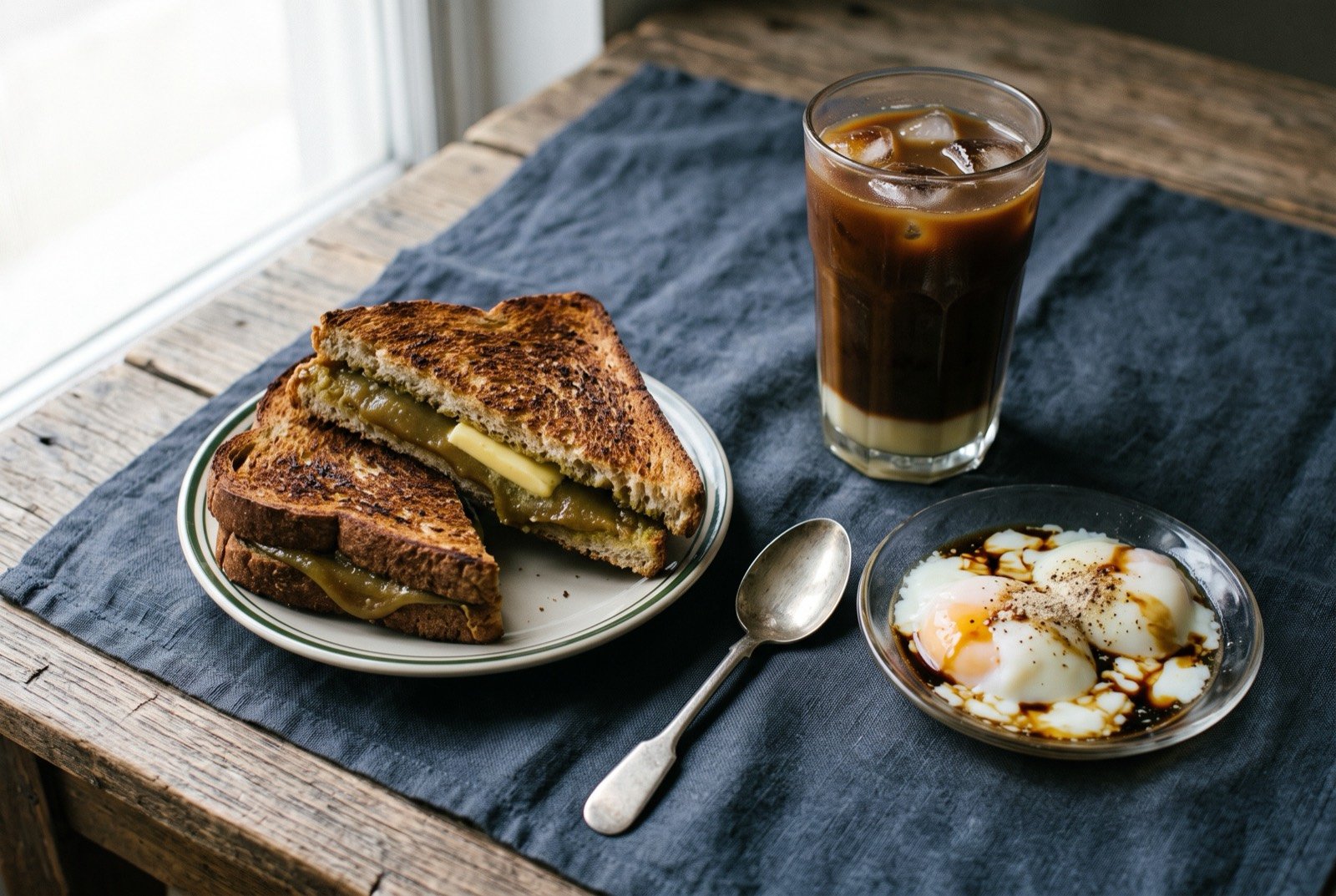
An illustration of the dish, not a photograph of it cooked.
- Time
- 40 minutes
- Reviewed
- Not yet reviewed from inside the tradition
- Cooked
- Not yet cooked and reported
Hainanese migrants arrived later than the other southern Chinese waves, from the 1860s onward, and found every established trade already taken. Shut out of trade and land, they took the jobs nobody else wanted, as domestic servants and cooks in British colonial households, hotels and clubs, and when the Depression of the 1930s collapsed many of those jobs, they opened their own coffee shops instead, cooking the only thing they knew how to cook professionally, simplified Western breakfasts and chops, for a general local market. Singapore's kopitiam culture, kaya toast, soft egg, dark sweet kopi, is not an accident of taste, it is the direct residue of one migrant community's exclusion from every better-paid trade in the colony.
As tradition built it
Kaya cooked about 40 minutes over low heat, whisked throughout
Ingredients
- 2 slices thick white bread bread
- 10g butter butter
- 4 eggs, 250ml coconut milk, 200g sugar and pandan leaves, for the jam kaya: coconut, egg, sugar and pandan jam
- 2 soft-boiled eggs soft-boiled eggs
- 1 tsp dark soy sauce dark soy sauce
- a pinch of white pepper white pepper
- 1kg robusta beans roasted with 300g sugar and 30g margarine kopi: robusta coffee beans, margarine and sugar
- 2 tbsp condensed milk or evaporated milk condensed milk or evaporated milk
Method
- Bread, traditionally hand-toasted over charcoal, spread with butter and kaya, a coconut, egg, sugar and pandan jam traditionally whisked by hand over a charcoal double boiler until silky and deep golden from deliberately caramelised sugar, served with soft-boiled eggs, dipped in dark soy and white pepper.
- Kopi: robusta beans roasted in a wok with margarine and sugar until coated in a dark caramel shell, brewed through a reusable cloth sock filter into a thick, strong concentrate, cut with condensed or evaporated milk depending on the order.
- This entire breakfast is Hainanese in origin, a direct, deliberate adaptation of the Western breakfasts Hainanese cooks learned to make for British colonial households before the Depression pushed them into running their own coffee shops instead.
What a modern chef changes
The kaya set in a water bath, the toast smoked over live charcoal
Method
- Cook the kaya in a precisely temperature-controlled water bath rather than a double boiler eyeballed by feel, holding it at a steady point just below the temperature at which the eggs would scramble, for a smoother, more consistently silky set than even a careful hand achieves.
- Toast the bread over live charcoal on the Big Green Egg rather than a domestic toaster, restoring the smoke note the tradition's own method always specified and that pre-sliced bread and electric toasting have quietly dropped.