Maritime Southeast Asia · Volume 43, The Sweet Court, the Salt Island and the Mould Between Them
Nasi liwet Solo
Solo
Illustration
- Time
- 45 minutes
- Researched
- Researched from 221 sources in the brief
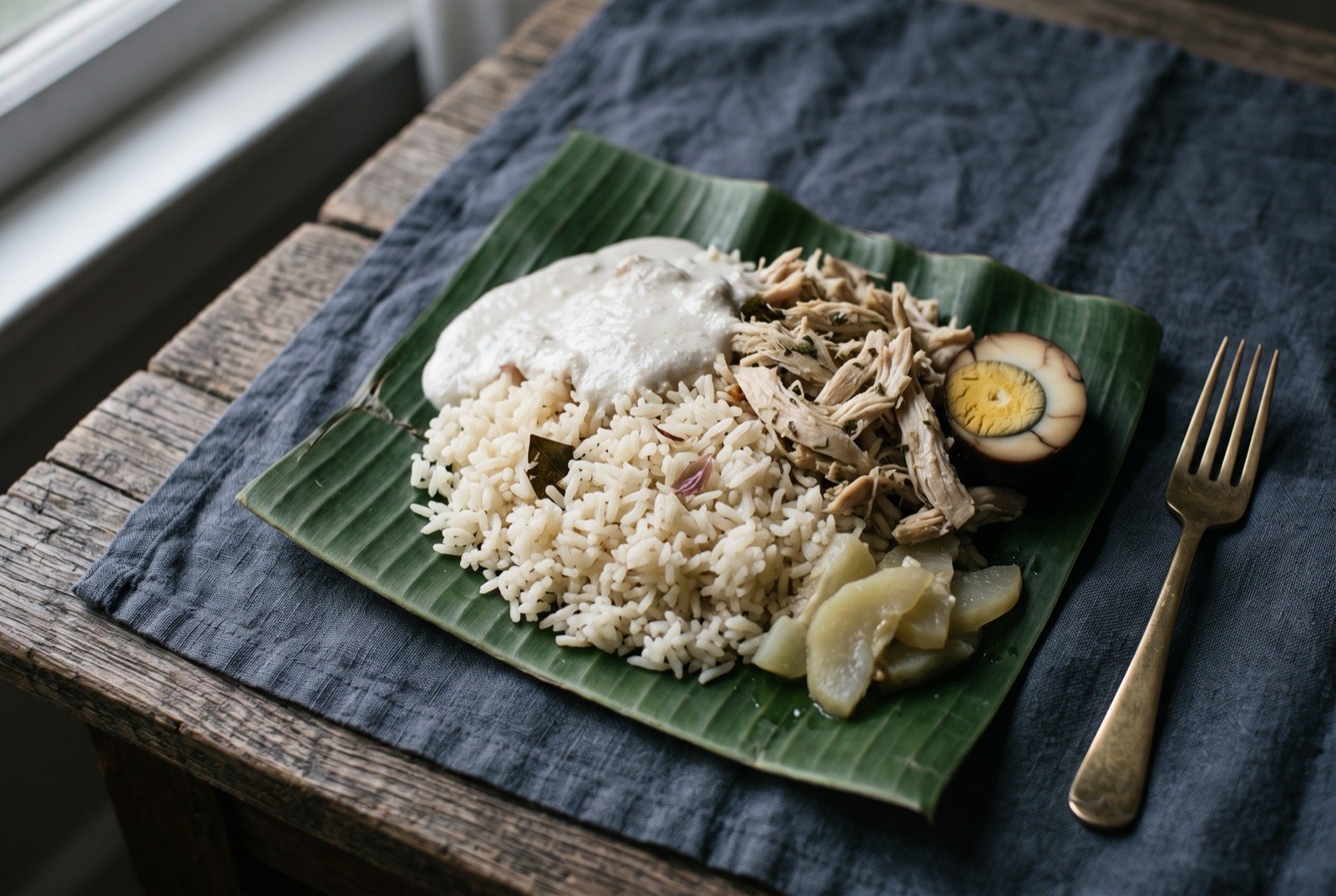
Solo. Rice cooked in its own coconut milk, finished under a whisked coconut cream that turns a bowl of rice into something closer to a dish in its own right.
As tradition built it
Serves 4 to 6. Rice 45 minutes, eggs and areh alongside.
Ingredients
- 500 g glutinous rice, rinsed well
- 400 ml thin coconut milk (from about a quarter of a coconut)
- 5 shallots, thinly sliced
- 2 bay leaves (daun salam)
- 1 lemongrass stalk, bruised
- 1 tsp salt
- 400 ml thick coconut milk (from about half a coconut), for the areh
- 2 leaves; 1 stalk 2 more bay leaves and 1 more lemongrass stalk, for the areh
- 5 to 10 eggs, for telur pindang
- 2 handfuls; a few cloves, bruised; 1 piece, bruised; 4 to 5 leaves; 1 to 2 leaves; 2 tsp dried shallot skins, garlic, galangal, jambu (guava) leaves, pandan leaves, salt, for the telur pindang cure
- to serve labu siam (chayote), fried tofu, shredded kampung chicken, to serve
Method
- Rinse the rice thoroughly and steam until half cooked, around 15 minutes.
- Transfer to a mixture of the thin coconut milk, sliced shallots, bay leaves, lemongrass and salt. Cook, stirring, until the coconut milk is fully absorbed, then return to the steamer and steam until fully cooked, a further 30 minutes.
- For the telur pindang, submerge the eggs with the dried shallot skins, garlic, galangal, jambu leaves and salt, and simmer until the eggs are done. Remove, gently crack the shells with the back of a spoon without peeling, and return to a bare simmer for 30 minutes so the cracked surface takes up the cooking liquid's colour and aroma, then turn off the heat and leave the eggs submerged overnight before peeling the next day.
- For the areh, combine the thick coconut milk with its own bay leaves, lemongrass and salt, bring to the boil, then remove from the heat and cool completely.
- Serve the rice with the shredded chicken, the labu siam side dish, the fried tofu, the marbled telur pindang and the cooled areh spooned generously over the top.
Notes
A specific, well evidenced origin story. Indonesian sources date nasi liwet's first appearance to Desa Menuran, Sukoharjo, just outside Solo, around 1582CE, coinciding with the founding of the Islamic Mataram kingdom, developed as an innovation on sego gurih, rice cooked for the Thursday night selamatan blessing ritual inside the Surakarta court. A specific commercialisation date is also given: around 1934, residents of Menuran began selling nasi liwet more widely around Solo; before that it was confined to the court itself, eaten by nobility and the royal family. Many sellers still cook the rice over a wood fired tungku rather than gas, credited with a natural smoky aroma. Nasi Liwet Bu Wongso Lemu is named repeatedly in Indonesian sources as a specific, long running Solo institution serving it.
What a modern chef changes
The areh's emulsion, controlled rather than left to a whisk arm
Rung 4
Method
- Reduce the thick coconut milk separately in a chinois-strained pass first, removing any grit or fibre before the egg white goes in, for a genuinely silky rather than merely thick areh.
- Whisk the egg white into the warm, not boiling, coconut cream, off the heat, watching for the same stable emulsion the traditional method achieves by hand but with more control over exactly how far it is taken before it splits.
- Present the telur pindang halved rather than whole, its cracked, marbled cross section visible on the plate, the same egg the tradition has always used, shown rather than hidden.