Maritime Southeast Asia · Volume 43, The Sweet Court, the Salt Island and the Mould Between Them
Sate Madura
Madura
Illustration
- Researched
- Researched from 221 sources in the brief
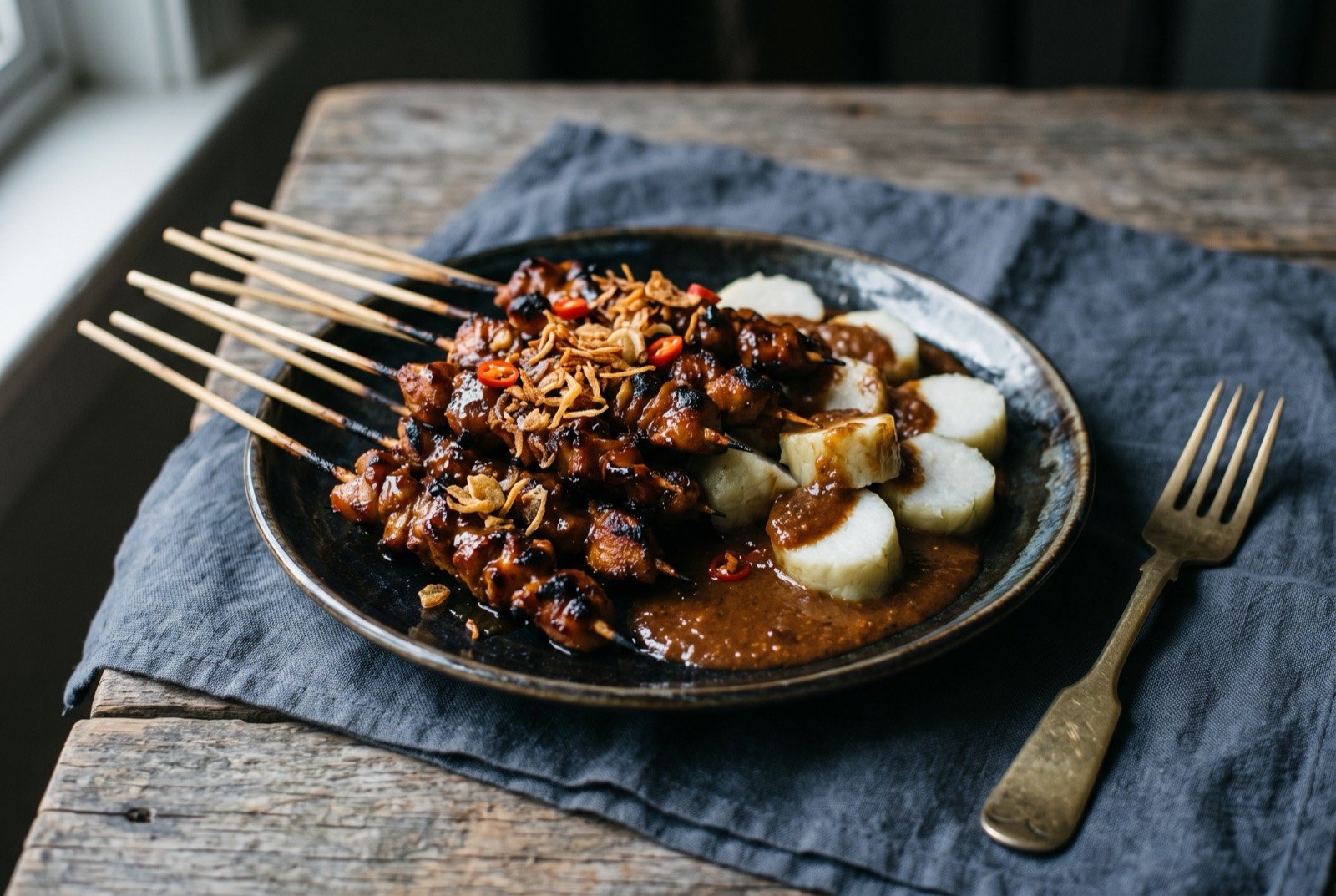
Madura. Small, evenly diced meat on a thin skewer, double basted in a peanut sauce that most Indonesians would name before naming any other satay in the country.
As tradition built it
Serves 4. Marinate overnight, grill in batches.
Ingredients
- 600 g chicken thigh (or goat), cut into small dice matching the skewer's width, with a little skin or fat included
- to taste ground spice paste, mushroom stock powder, sugar, palm sugar, jeruk limau juice, kecap manis, pepper, for the marinade
- to taste ground peanuts, red chillies (a mix of cabai keriting and cabai merah besar), kemiri, gula merah, salt, for the bumbu kacang
- to serve cut lontong (compressed rice cake), fried shallots, to serve
Method
- Marinate the diced meat overnight in the fridge in the spice paste, mushroom stock powder, sugar, palm sugar, jeruk limau juice, kecap manis and pepper, so the seasoning penetrates fully.
- Thread 4 to 5 pieces per thin bamboo skewer.
- Build the bumbu kacang: blend the peanuts, chillies, kemiri, gula merah and salt smooth, then cook over low heat for a minimum of 30 minutes, stirring occasionally, until the sauce is soft and glossy and the raw, grassy smell of uncooked peanut has cooked out completely. No source consulted for this chapter gave a fixed ratio for the sauce beyond "to taste," and this chapter states that honestly rather than inventing a precision that does not exist in the tradition.
- Grill the skewers until half cooked, then coat them again in the peanut sauce and return them to the coals to finish, the double baste that defines the dish's own finish.
- Serve over cut lontong, doused in more peanut sauce and kecap manis, topped with fried shallots.
Notes
A grilling claim worth correcting rather than repeating. Sate Madura is often assumed to be defined by grilling over coconut shell charcoal specifically. The sourcing behind this chapter instead shows wood charcoal as the everyday, standard commercial choice, cheaper and more widely available, with coconut shell charcoal used by some vendors as a higher quality, longer burning, more expensive alternative rather than a universal, defining technique, and this chapter presents it that way rather than asserting a harder distinction than the evidence supports. A genuine Madura-internal variant worth naming: sate lalat, "fly satay," a Pamekasan speciality of very small diced meat, twenty five skewers to a portion, credited to a Pamekasan seller named Pak Ento who developed and popularised the style roughly twenty five years before this chapter's research.
What a modern chef changes
The two stage baste, engineered for even doneness before the fire ever touches the peanut sauce
Rungs 1 and 2
Method
- Sous vide the marinated meat to a precise internal temperature before skewering, then finish over direct heat on the Big Green Egg for colour and smoke alone, separating doneness from char the way Semaja's own Bebek Goreng Madura in Jakarta separates its spice paste from its crisp exterior, so a diner tastes each element distinctly before they meet.
- Grind the bumbu kacang in the cobek and ulekan for a portion of the batch, and blend the rest for volume, then strain the finished sauce through the chinois for a silkier, grit free result without losing the hand ground texture entirely.
- Char the coconut shell charcoal itself as a smoking element rather than the sole fuel, adding it to a wood charcoal base for its aroma at the point of finishing, an honest, stated compromise between the two grilling traditions the sourcing found rather than a claim to have reproduced either one exactly.