Maritime Southeast Asia · Volume 43, The Sweet Court, the Salt Island and the Mould Between Them
Rujak cingur
Surabaya
Illustration
- Time
- 20 minutes
- Researched
- Researched from 221 sources in the brief
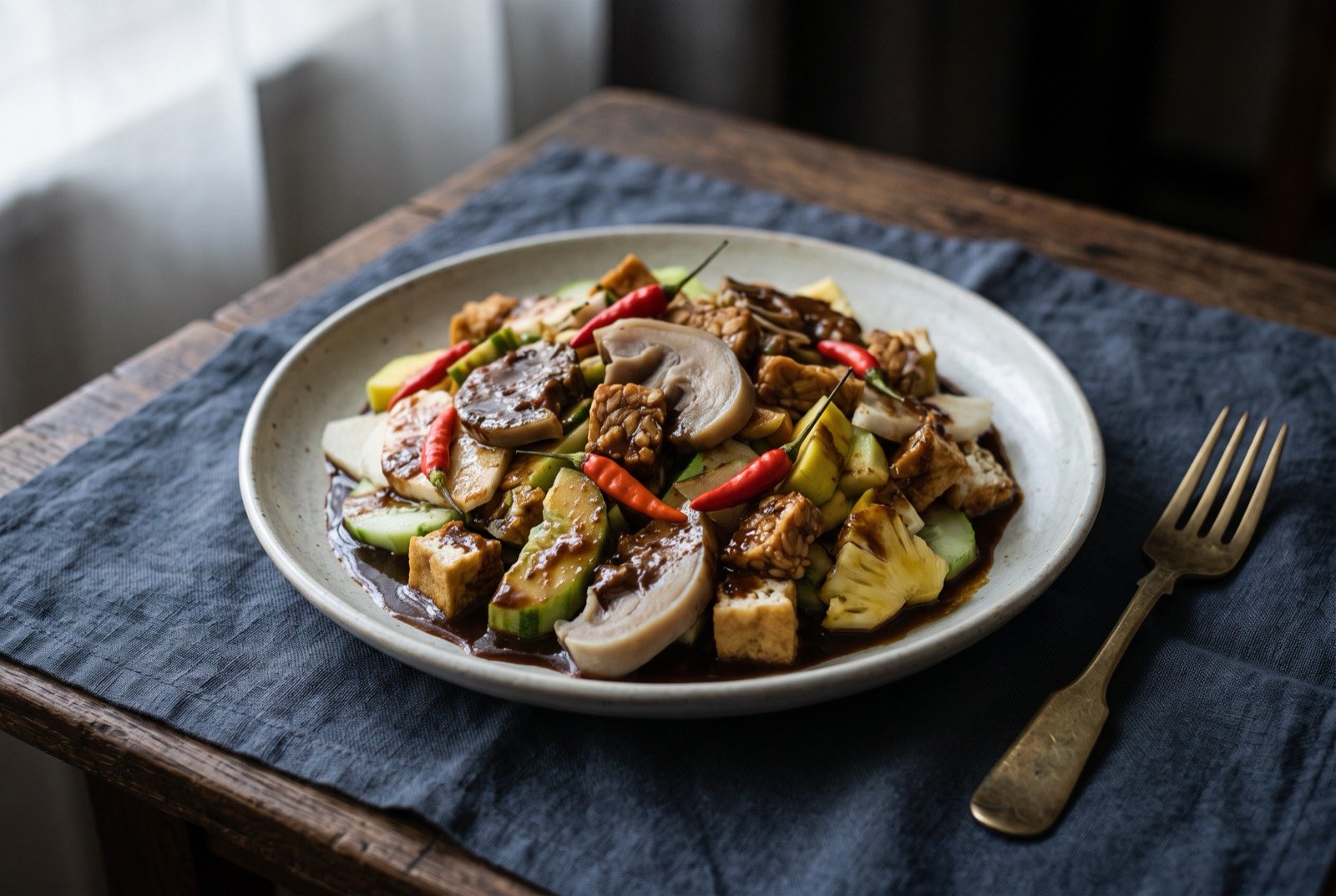
Surabaya, via a genuine three way attribution conflict this chapter names rather than settles. A fruit and vegetable salad dressed in petis, with boiled cow snout as its most distinctive, least apologetic ingredient.
As tradition built it
Serves 4 to 6. Sauce takes 20 minutes; assembly is quick.
Ingredients
- 2; 100g; 1; 100g; 1; 50g; 100g; included with the water spinach cucumber, jicama (bengkuang), unripe mango, pineapple, kedondong, bean sprouts, water spinach, long beans, sliced and blanched as appropriate
- 2 pieces; 1 piece; 2 pieces fried tofu, fried tempeh, lontong
- 250g boiled cow snout (cingur), sliced
- 4 bird's eye chillies
- 1 large red chilli
- 1 pisang batu (firm, astringent raw banana), thinly sliced
- 50 g fried peanuts, finely ground
- 3 tbsp shrimp petis
- 1 tsp tamarind
- 50 g palm sugar
- 1 tsp salt
- 100 ml water
- 2 cloves; 1 tsp fried garlic and toasted terasi, for the sauce base
Method
- Build the sauce: pound the fried garlic, chillies and toasted terasi with the salt and palm sugar first, then work in the ground peanuts to a paste. Add the petis and tamarind water, and grind through until the sauce is thick and evenly combined.
- Toss the sliced pisang batu through the sauce.
- Arrange the cucumber, jicama, unripe mango, pineapple, kedondong, bean sprouts, water spinach and long beans, with the fried tofu, tempeh, lontong and sliced cingur, and dress generously with the sauce to serve.
Notes
Report the conflict, do not settle it. The dish is claimed as belonging to the Arekan, Surabaya cultural sub-region, while its documented modern popularisation in the city is credited to Madurese migrant sellers from the 1930s, who originally used a Madurese style tuna petis before adapting to shrimp petis for Surabaya's Javanese palate; a separate, older folk legend traces it to a royal cook in Masiran instead. This chapter names all three claims and adjudicates none of them. Cingur itself is Javanese for mouth or snout, cengor in Madurese.
What a modern chef changes
The same deconstruction principle Chef Ragil applied to gado-gado, applied here to a dish built on the identical logic of dressed, mixed components
Rung 1
Method
- Present each vegetable and fruit element separately on the plate, the sauce served alongside rather than tossed through, letting the diner build their own ratio, exactly the presentation-only change the atlas's own argument asks for.
- Dehydrate thin slices of pisang batu into crisp chips as a textural garnish, rather than folding the fruit raw into the sauce.
- Grind the sauce base in the cobek and ulekan, then finish it in the high power blender for a fully smooth, restaurant grade texture without losing the hand pounded aromatics the mortar releases first.