Maritime Southeast Asia · Volume 47, The Odalan Calendar, the Base Genep and the Island That Kept Its Pig
Nasi jinggo
Denpasar, Benoa harbour
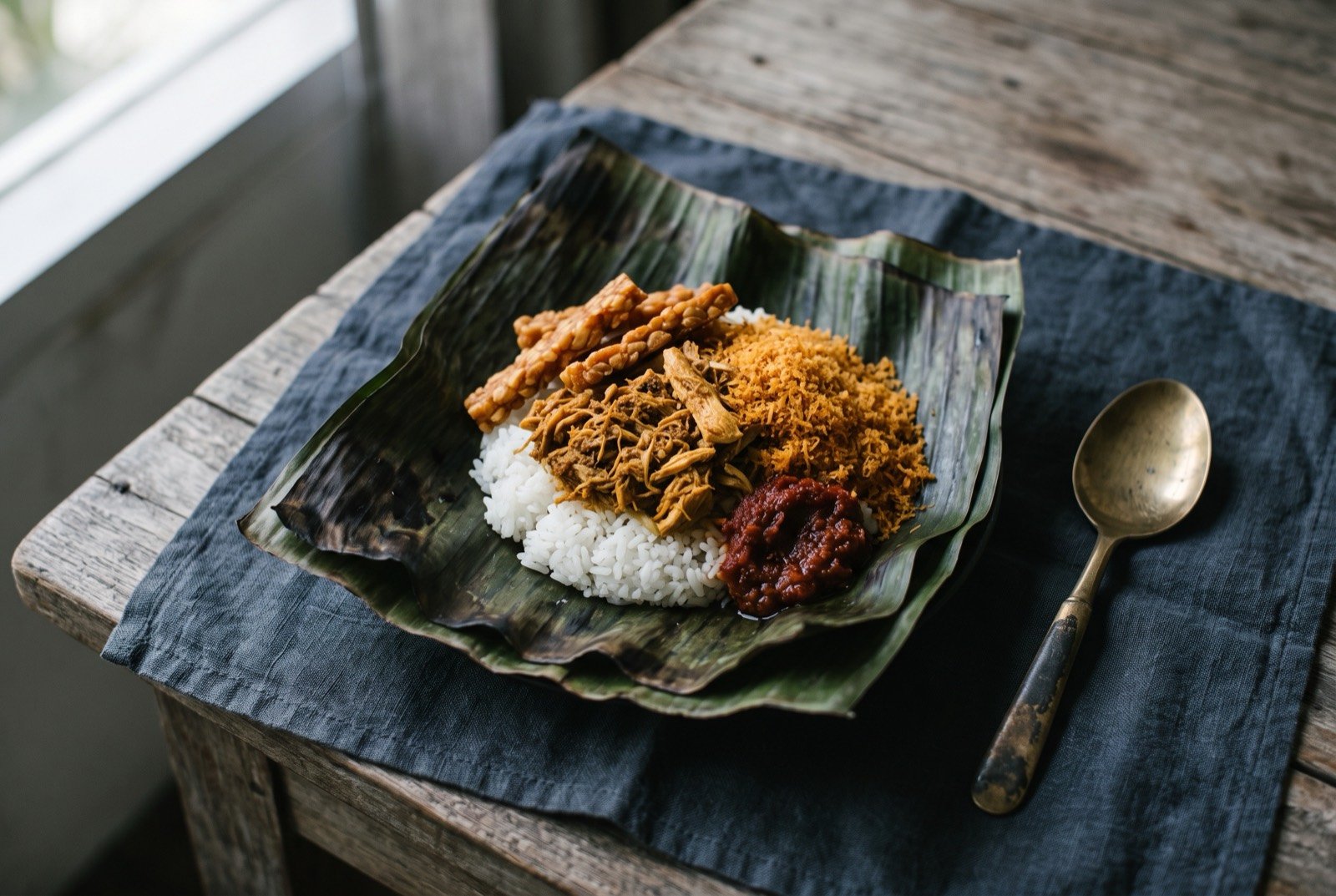
An illustration of the dish, not a photograph of it cooked.
- Time
- 45 minutes
- Researched
- No outside sources linked
- Reviewed
- Not yet reviewed from inside the tradition
- Cooked
- Not yet cooked and reported
Nasi jinggo was created around the 1970s by Ni Ketut Ngasti, known as Men Djenggo, at Benoa harbour, Denpasar, selling small, cheap, portable rice parcels to dock labourers, tanker drivers, fishermen and night anglers working before dawn. It spread through the 1980s, visible in bulk around Pasar Badung by roughly 1984, and across the island afterward. The name comes from the childhood nickname of Men Djenggo's eldest son, itself inspired by the 1966 Western film Django; the family declined to trademark it, treating the dish as shared Balinese cultural creation rather than a proprietary one.
As tradition built it
Serves 4, about 8 small parcels. 45 minutes.
Ingredients
- 400g cooked white rice
- 200g chicken, cooked and shredded, seasoned with base genep
- 100g tempeh, sliced and fried until crisp
- 100g serundeng (spiced grated coconut, sautéed until dry and golden)
- a spoonful per parcel sambal
- 8 squares banana leaf, for wrapping
Method
- Portion the rice into small mounds, roughly 50g each, on squares of banana leaf.
- Top each with a little shredded chicken, fried tempeh, serundeng and a spoonful of sambal.
- Fold the banana leaf into a tight parcel and secure with a toothpick or a strip of the leaf itself.
- Serve at room temperature, in the hand, exactly as it was originally sold.
What a modern chef changes
A working-class dish, staged, not smoothed over, borrowing a real technique from one of Bali's own fine-dining kitchens
Method
- Roast the base genep used to season the chicken directly in a coconut husk, a technique documented at Ubud's Nusantara by Locavore, rather than simply frying it in a pan, for a smokier, more compact aromatic before it goes anywhere near the rice.
- Serve each parcel individually plated rather than hand-wrapped, the banana leaf laid open beneath rather than folded around the food, a fine-dining staging of street food that keeps every original component honest rather than reinventing them.