Maritime Southeast Asia · Volume 47, The Odalan Calendar, the Base Genep and the Island That Kept Its Pig
Urutan
The rice highlands and Karangasem
Illustration
- Time
- 1 hour
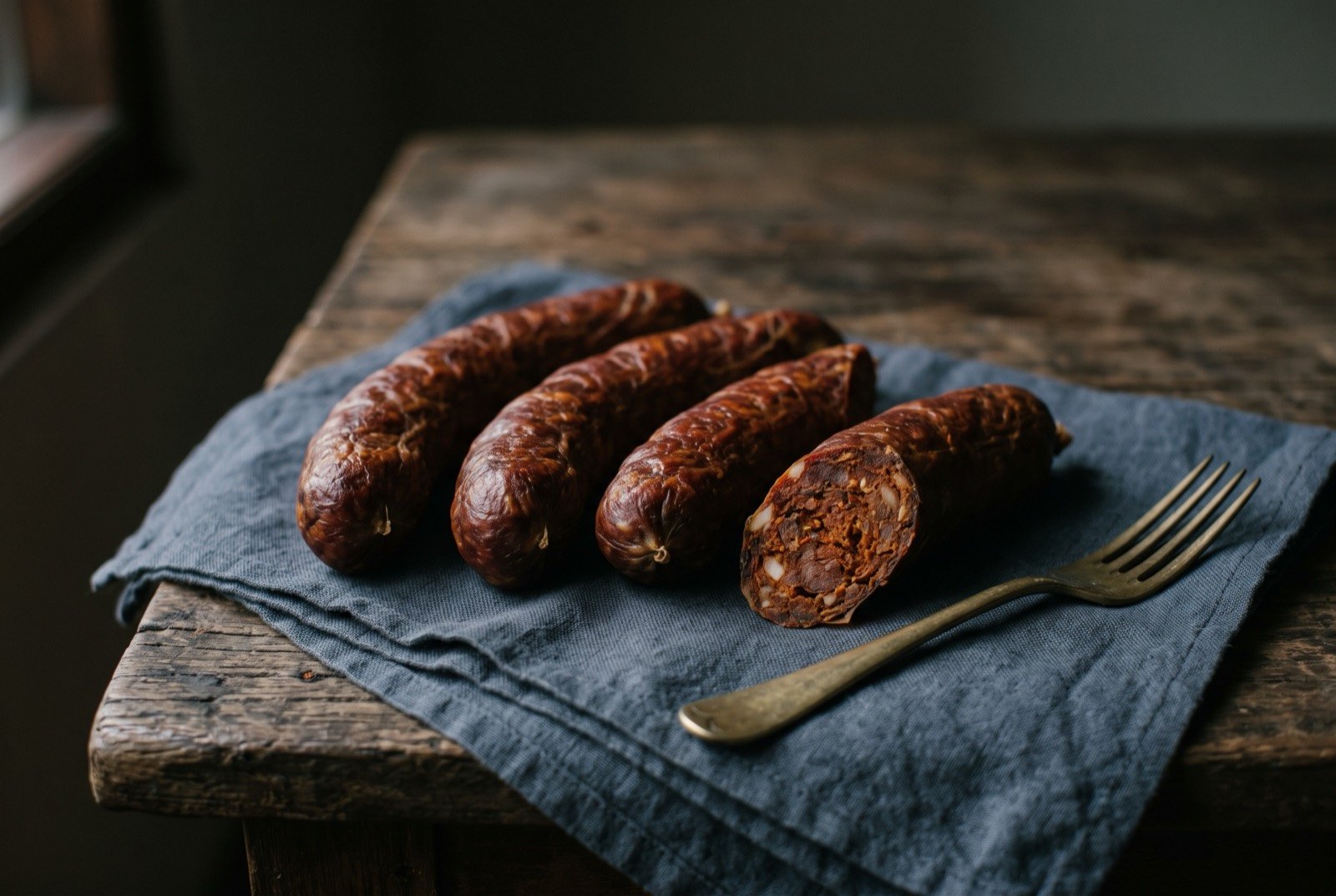
Urutan is chopped pork and pork fat, heavily seasoned with base genep, packed into cleaned pig intestine casing. The casing is washed until the rinse water runs clear, then soaked in lime juice; one end is tied with coconut fibre or string, the filling packed in, and the sausage pierced along its length to let trapped air escape before frying, so it does not burst. There are two named traditional versions: one sun-dried a full day before frying, effectively lightly fermented, the other fried immediately with no drying stage at all.
As tradition built it
Makes about 8 sausages. 1 hour active work, plus 1 day drying for the fermented version.
Ingredients
- 1kg pork shoulder and belly, chopped small by hand, not minced
- 300g pork back fat, chopped small
- 200g base genep
- enough for 8 sausages natural pig intestine casing, cleaned and soaked in lime juice
Method
- Combine the chopped pork, fat and base genep thoroughly by hand.
- Tie off one end of the casing, then pack the mixture in firmly, working out air pockets as you go.
- Tie off the other end, then pierce the length of the sausage all over with a fine skewer.
- For the sun-dried version, hang the sausages somewhere dry and airy for a full day before cooking. For the immediate version, proceed straight to frying.
- Fry gently in a little oil, turning regularly, until deeply browned and cooked through, about 15 to 20 minutes.
What a modern chef changes
A controlled dehydrator dry, and a finer emulsion
Method
- Blitz the pork and fat in a high-power blender with a little ice, in short pulses so the fat does not smear, for a finer, more even texture than hand-chopping gives, then pass the mixture through a chinois-fitted piping bag or sausage funnel to remove any sinew before casing.
- Dry the cased sausages in a dehydrator at 18 to 20°C for 24 hours, a controlled, food-safe version of the traditional sun-dry, rather than leaving them to ambient weather.