Maritime Southeast Asia · Volume 49, The Monopoly, the Monsoon Line and a Border Still Drawn
Ikan bakar colo-colo
Ambon
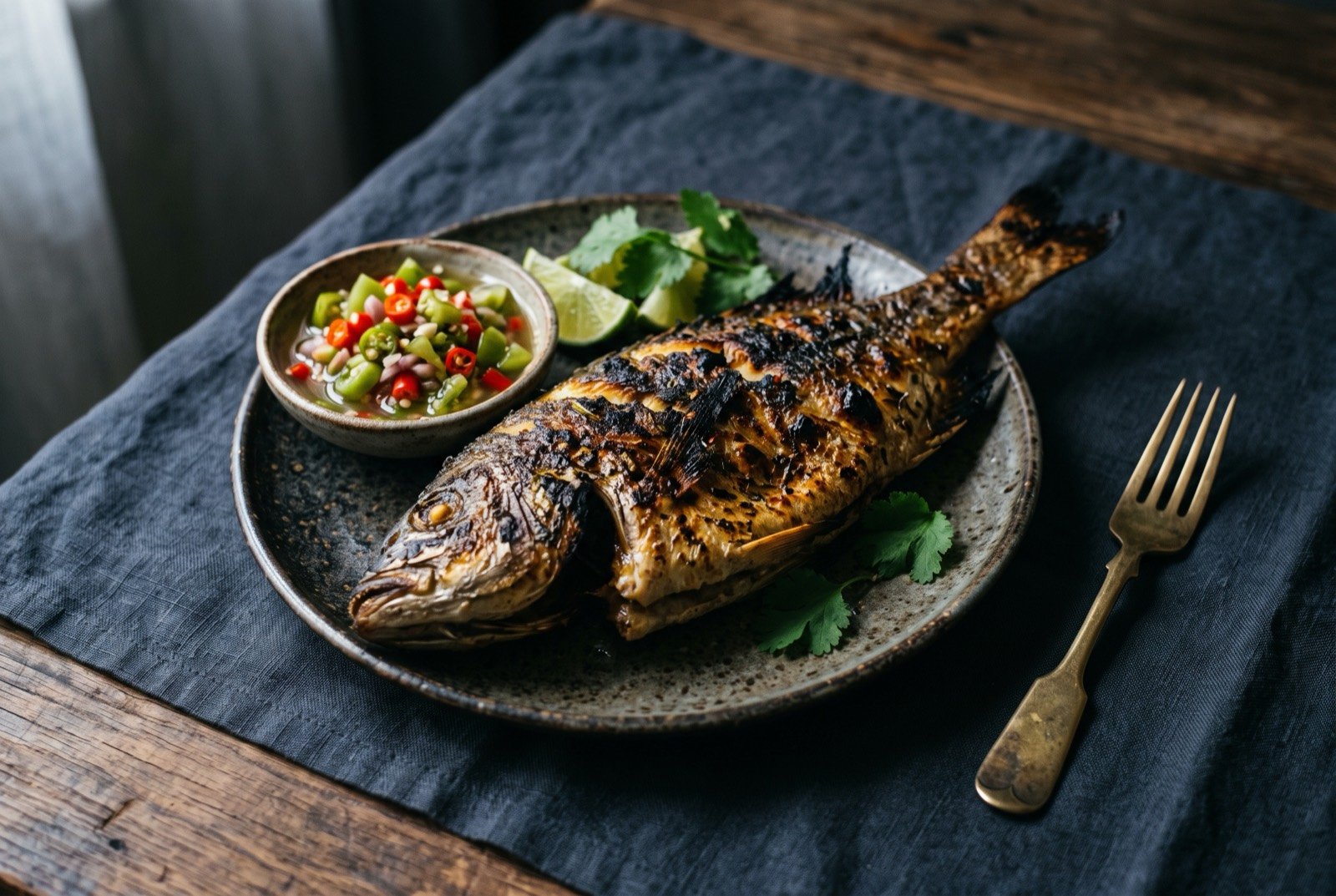
An illustration of the dish, not a photograph of it cooked.
- Time
- 1 hour
- Researched
- No outside sources linked
- Reviewed
- Not yet reviewed from inside the tradition
- Cooked
- Not yet cooked and reported
Ambon. Grilled fish and the raw chilli-lime sauce that, per Maluku's own elders, did not always contain the soy sauce most versions carry today.
As tradition built it
Serves 4. Marinate 1 hour, grill 15 minutes.
Ingredients
- 1 whole (about 750 g) skipjack tuna or similar firm fish
- 1 tbsp tamarind, dissolved in 50 ml water
- 2 tsp salt
- 100 g green tomato, diced
- 10 red bird's eye chillies, sliced
- 5 shallots, sliced
- 5 tbsp lemon cui or lime juice
- 1 tbsp kecap manis (sweet soy), optional, per the later, more common version
Method
- Rub the skipjack tuna with the tamarind-salt marinade and rest, covered, in the fridge for around 1 hour.
- Grill over coals, turning, until cooked through on both sides and the skin has taken real char.
- For the sambal: combine the green tomato, chilli, shallot and lemon cui or lime juice. Add kecap manis if using the later, more common version, or leave it out for the version Maluku elders describe as the original.
- Serve the grilled fish with the raw sambal spooned alongside, not over, so its crunch and acid stay distinct from the fish's char.
What a modern chef changes
The grill and the acid, both taken further.
Rung 1, Rung 3.
Method
- Run the grill on a Big Green Egg direct at high heat for a fast, intense char on the fish's skin, then move it briefly to the indirect side to finish the interior gently without over-firing the surface.
- Char the green tomato itself before dicing it into the sambal, applying Rung 1's logic to a vegetable most versions leave raw, deepening the sambal's own flavour to match the fish's smoke.
- Dehydrate a portion of the sliced shallot until crisp and scatter it over the finished plate, a textural counterpoint to the sambal's own soft, wet shallot.