Maritime Southeast Asia · Volume 49, The Monopoly, the Monsoon Line and a Border Still Drawn
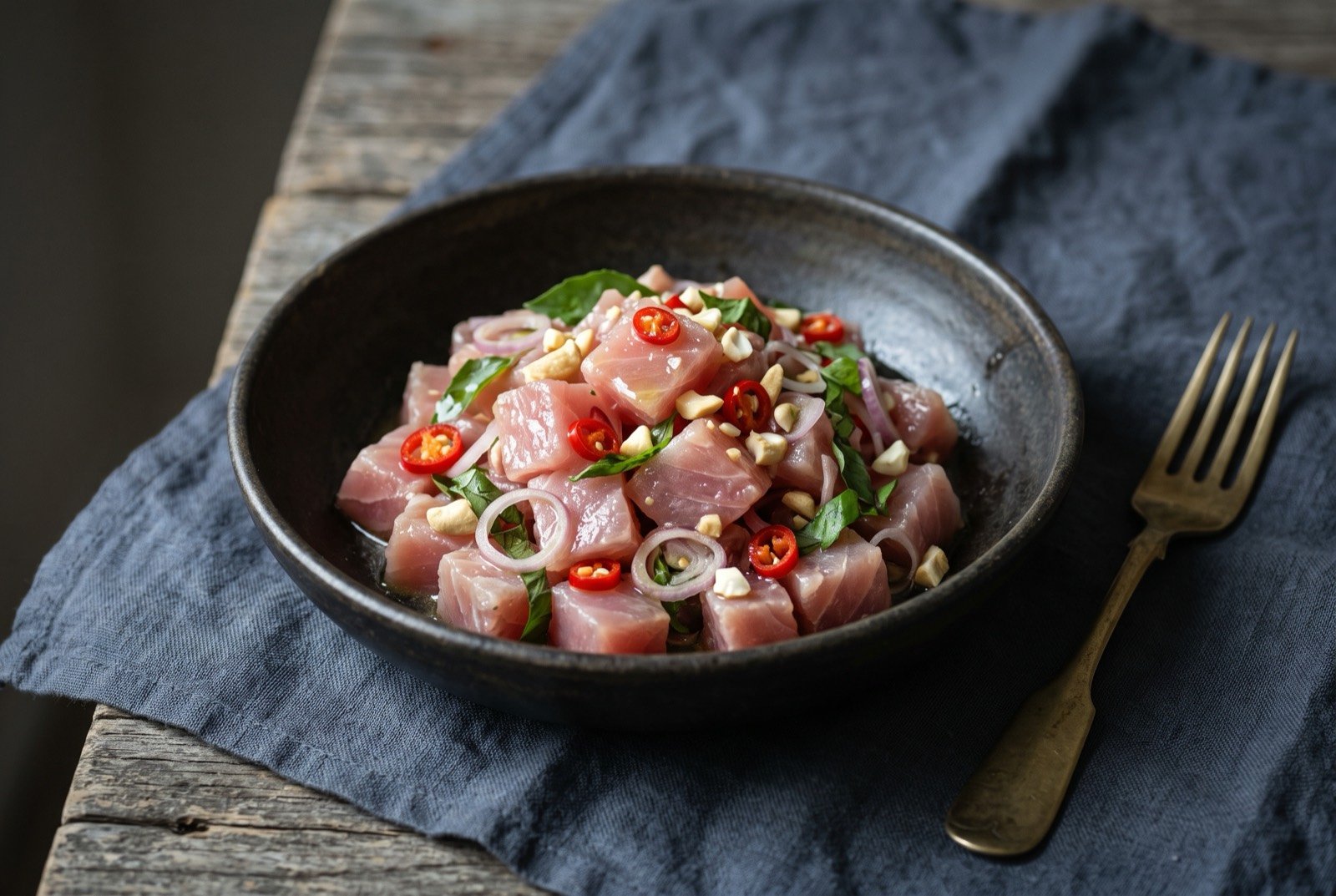
Gohu ikan
Ternate
Illustration
- Time
- 15 minutes
Ternate. Raw skipjack “cooked” entirely by lemon cui, and fairly compared to sashimi or ceviche by the country's own food writers.
As tradition built it
Serves 4. 15 minutes plus a brief rest.
Ingredients
- 400 g fresh skipjack tuna, filleted and diced small
- 5 whole lemon cui (or 4 to 5 limes, as the honest UK substitute)
- to taste shallot, thinly sliced
- to taste bird's eye chilli, sliced
- to taste fried peanuts or crushed kenari nut (or toasted candlenut, see Sourcing)
- to taste fresh basil
- 2 tbsp oil, for frying the shallot and chilli
Method
- Dice the skipjack tuna small and place in a bowl.
- Squeeze the lemon cui or lime juice over the fish, enough to submerge it fully, and toss.
- Fry the shallot and chilli briefly in a little oil until fragrant, then pour the hot oil, shallot and chilli directly over the fish.
- Fold through the fried peanuts or crushed nut and fresh basil.
- Rest briefly, no more than a few minutes, so the acid finishes firming the fish without turning it chalky.
What a modern chef changes
Rung 2, taken further than the traditional dish asks.
Rung 2, Rung 5.
Method
- Split the citrus treatment into two stages: a very brief initial acid bath, timed rather than judged by eye, for a translucent, barely-set exterior, then serve with a small pool of extra lemon cui or lime juice at the table for the diner to finish the acid's work themselves.
- Toast and grind the candlenut or kenari in the spice grinder to a fine, dry crumb rather than leaving it crushed and coarse, dusted over at the very end for a drier, more textural finish than the traditional wet garnish gives.
- Blitz a portion of the fried shallot oil in the high-power blender with a little extra basil, straining through the chinois for a clear, intensely aromatic oil to drizzle rather than relying on whatever oil clings from the pan.