Maritime Southeast Asia · Volume 46, The Sago, the Citrus Cure and the River Before the Road
Soto Banjar
Banjarese, South Kalimantan
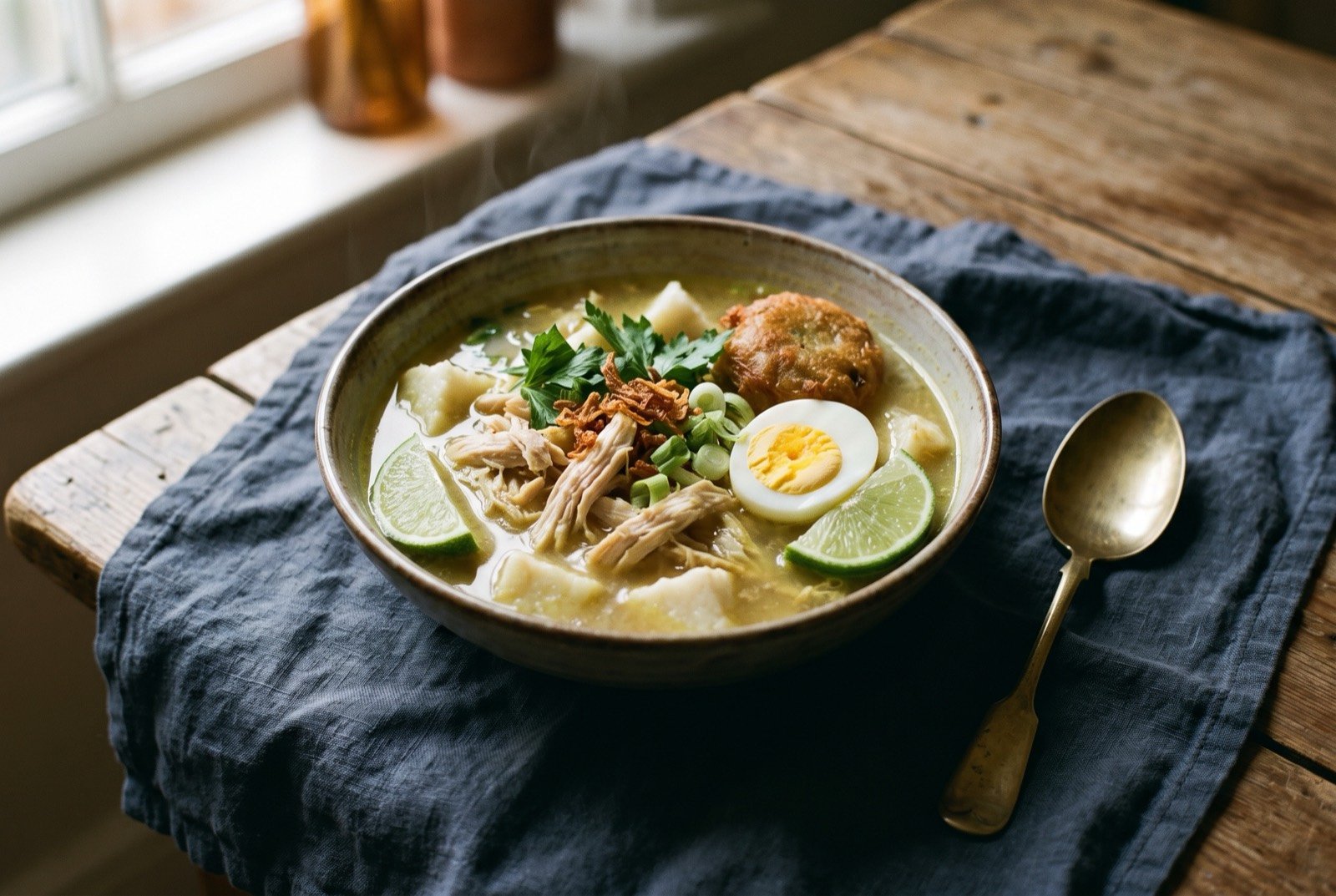
An illustration of the dish, not a photograph of it cooked.
- Time
- 1 hour
- Researched
- 7 sources cited
- Reviewed
- Not yet reviewed from inside the tradition
- Cooked
- Not yet cooked and reported
Dated by Indonesian sources to after 1563, when Chinese traders arrived in Banjarmasin in numbers; the dish is said to derive from a Chinese soup style, subsequently adapted with spices from Arab and Indian trade contact. Authentic soto Banjar excludes star anise and cardamom, unlike soto from other Indonesian regions.
As tradition built it
Serves 4 to 6. About 1 hour.
Ingredients
- 1 whole kampung (free-range) chicken, jointed
- 4 shallots
- 4 cloves garlic
- 2 candlenuts
- 1 thumb ginger
- 1 thumb fresh turmeric
- 1 stick cinnamon
- 4 cloves
- 1 tsp coriander seed
- 1 tsp black peppercorns
- to serve ketupat or lontong, boiled egg, perkedel (potato fritter), fried shallots, celery leaf, soun (glass noodles), to serve
- to taste limau kuit or lime juice, sambal hati, to finish
Method
- Boil the chicken in water until tender; remove, shred the meat, reserve the broth.
- Grind the shallots, garlic, candlenuts, ginger, turmeric, cinnamon, cloves, coriander seed and peppercorns to a fine wet paste.
- Fry the paste in oil or ghee until fragrant and the oil visibly separates at the pan's edges.
- Add the reserved broth, simmer 20 to 30 minutes; season.
- Return the shredded chicken to the pot.
- Serve with ketupat, boiled egg, perkedel, soun, fried shallots and celery leaf, finished with lime juice and sambal hati.
What a modern chef changes
The paste-frying discipline given its full weight, and the two ingredients tradition specifically excludes named as exclusions, not omissions.
Rung 6
Method
- Do not add star anise or cardamom. Authentic soto Banjar excludes both; their presence marks a version that has drifted toward a generic "Indonesian soto" profile rather than the specific Banjar one.
- Fry the paste properly, watching for the oil to visibly separate, before the broth goes in; a paste added to hot stock directly never develops the body that makes this soup distinctive without added fat.
- Do not add coconut milk or cream to thicken the broth. The cloudy, rich texture in the authentic version is a matter of spice-paste technique, not dairy or coconut fat; adding either is the single most common way this dish drifts from what it actually is.