Maritime Southeast Asia · Volume 46, The Sago, the Citrus Cure and the River Before the Road
Pinasakan
Kadazan-Dusun, Sabah
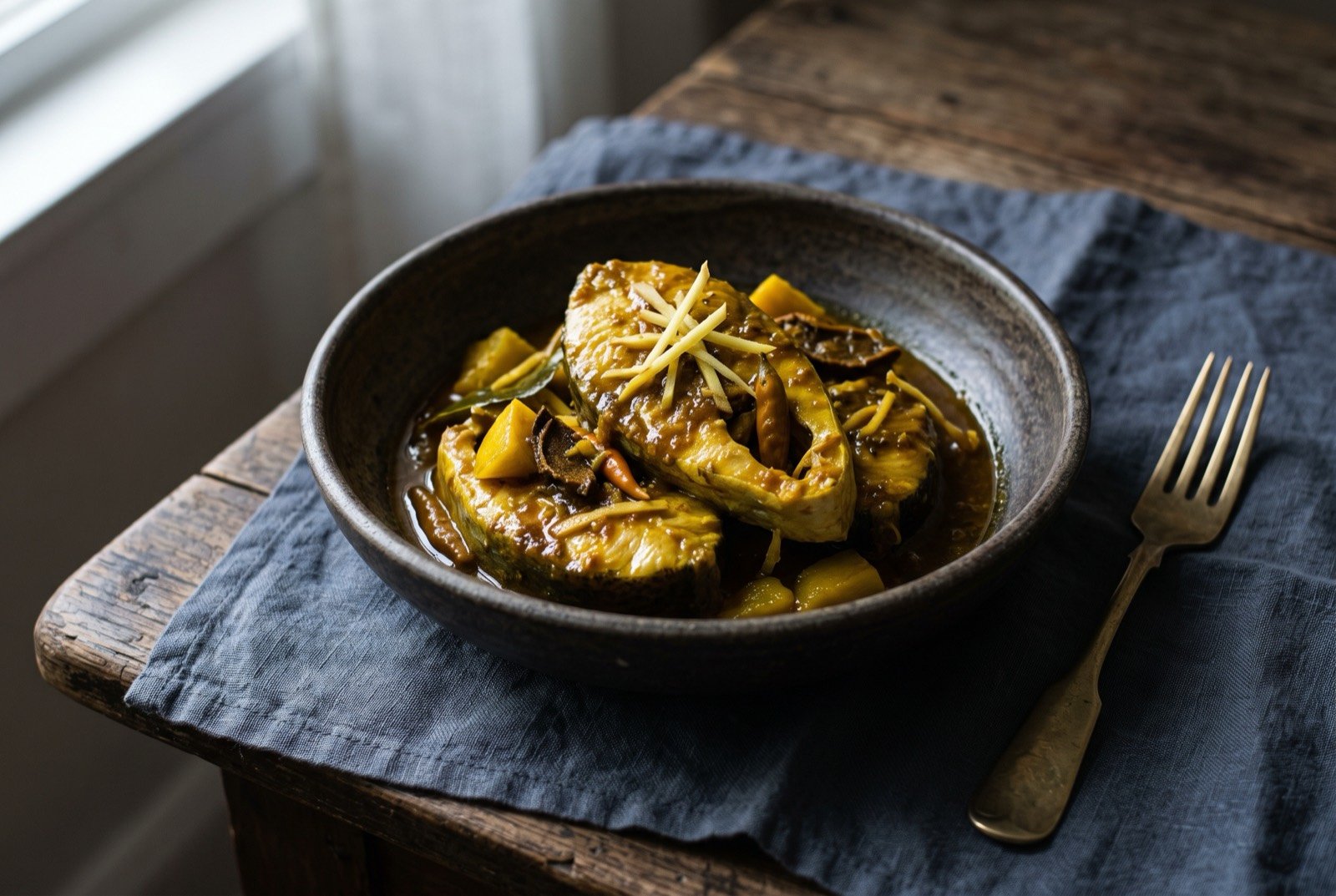
An illustration of the dish, not a photograph of it cooked.
- Time
- 40 minutes
- Researched
- 7 sources cited
- Reviewed
- Not yet reviewed from inside the tradition
- Cooked
- Not yet cooked and reported
Traditionally made with basung, big-eye scad, or another local fish.
As tradition built it
Serves 4. About 40 minutes.
Ingredients
- 500g basung or other firm white fish, cut into pieces
- to taste takob-akob (dried souring fruit skin) or tamarind, to taste
- to taste fresh turmeric leaf and rhizome, sliced
- 3 cloves garlic, sliced
- 3 shallots, sliced
- 1 thumb ginger, sliced
- 1 stalk lemongrass, bruised
- to taste grated bambangan kernel or bamboo guava, to taste
- to just cover water, to just cover
Method
- Combine the fish with the takob-akob or tamarind, turmeric, garlic, shallot, ginger and lemongrass in a pan.
- Add water just to cover.
- Braise, uncovered, until much of the liquid has evaporated and the flavour has concentrated to a balance of sourness and salt, roughly 30 to 40 minutes.
- Finish with grated bambangan kernel if using, for a second layer of sourness.
What a modern chef changes
The souring logic made explicit as a technique, and the one honest substitution offered where takob-akob cannot be found.
Rung 4
Method
- Treat the souring agent as the dish's actual technical decision, not a background note. Takob-akob has no confirmed botanical identity beyond "mangosteen-like" in the sources behind this chapter, and no UK source exists for it; tamarind is the honest, stated substitute, not a silent swap.
- Braise uncovered and let the liquid genuinely reduce, watching for the point where the sauce clings rather than pools, the same reduction discipline this chapter's soto Banjar rung teaches for a different broth.
- Add bambangan kernel, if sourced, only at the very end, off the heat, to preserve its raw aromatic character rather than cooking it into the braise.