Mainland Brazil · Volume 44, Fire, Mate and the Colônia Table
Costela no fogo de chão
Rio Grande do Sul, Brazil
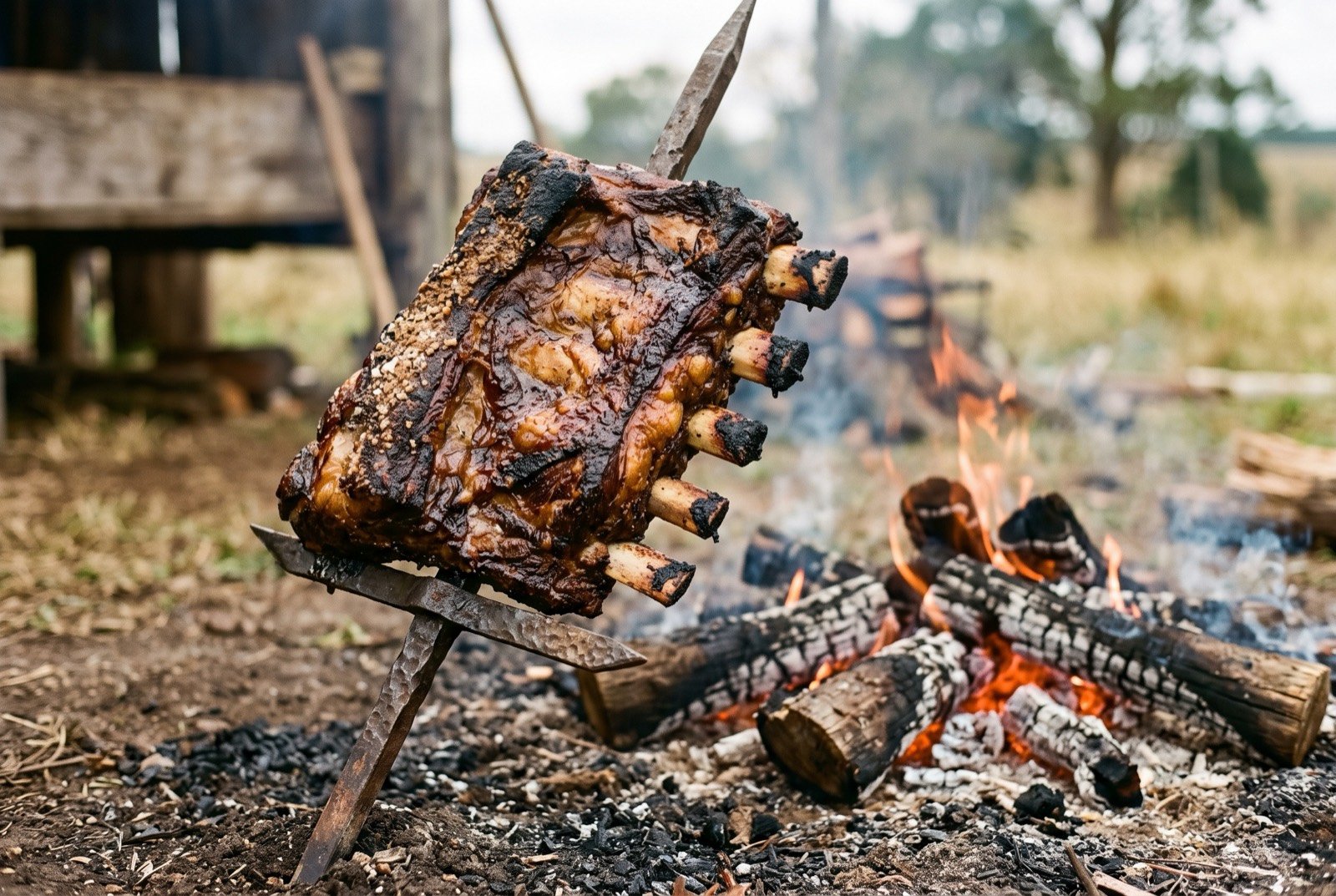
An illustration of the dish, not a photograph of it cooked.
- Time
- 12 hours
- Reviewed
- Not yet reviewed from inside the tradition
- Cooked
- Not yet cooked and reported
As tradition built it
Costela no fogo de chão
Serves 8 to 10. 6 to 12 hours, the first 3 hours critical for establishing steady heat.
Ingredients
- 1 whole rack beef ribs (costela), bone in
- to taste coarse salt (sal grosso), applied at the point of setting up, no marinade
Method
- Build a wood fire to one side of where the stake will stand, not directly beneath it.
- Salt the rack generously with coarse salt as it is set on the stake, bone side facing the fire.
- Position the stake beside the fire at an angle, close enough to cook steadily, far enough that the meat never sits in direct flame.
- Hold a steady, moderate heat for the first 3 hours, the period sources agree is critical to the whole cook, then let it continue low and slow for a further 3 to 9 hours depending on size and fire, turning periodically so both sides take heat evenly.
- The meat is ready when it pulls easily from the bone.
Notes
Sources genuinely disagree on the precise hours and on whether a brine is traditional at all: some describe coarse salt only, applied at set up, with no marinade, arguing the meat should take its character from fire and smoke alone; a Rio de Janeiro trained chef working in this style instead brines the rack at least 18 hours in coarse salt, garlic, pepper and herbs before roasting some 12 hours over fruitwood, specifically guava or orange. That second version reads as a chef's elevation of the technique rather than rural folk practice, and this chapter treats it as exactly that below rather than as the traditional method.
What a modern chef changes
The chef's own elevation, treated honestly as an elevation.
Rung 3.
Method
- Brine the rack at least 18 hours in coarse salt, crushed garlic, black pepper and herbs, the documented restaurant technique rather than the simpler rural version, if a longer, more deliberately seasoned result is wanted.
- Build the fire from fruitwood specifically, guava or orange where available, for the aromatic difference over ordinary hardwood or charcoal.
- Once the rack is fully tender, remove the meat from the bone and treat it as Capincho does its own forequarter cuts: reduce the cooking juices to a proper sauce, and plate the meat composed rather than serving it straight off the stake.