Mainland Brazil · Volume 40, Caatinga, Vaqueiro and the Salt-Cured Table
Bolo de rolo
Pernambuco, Brazil
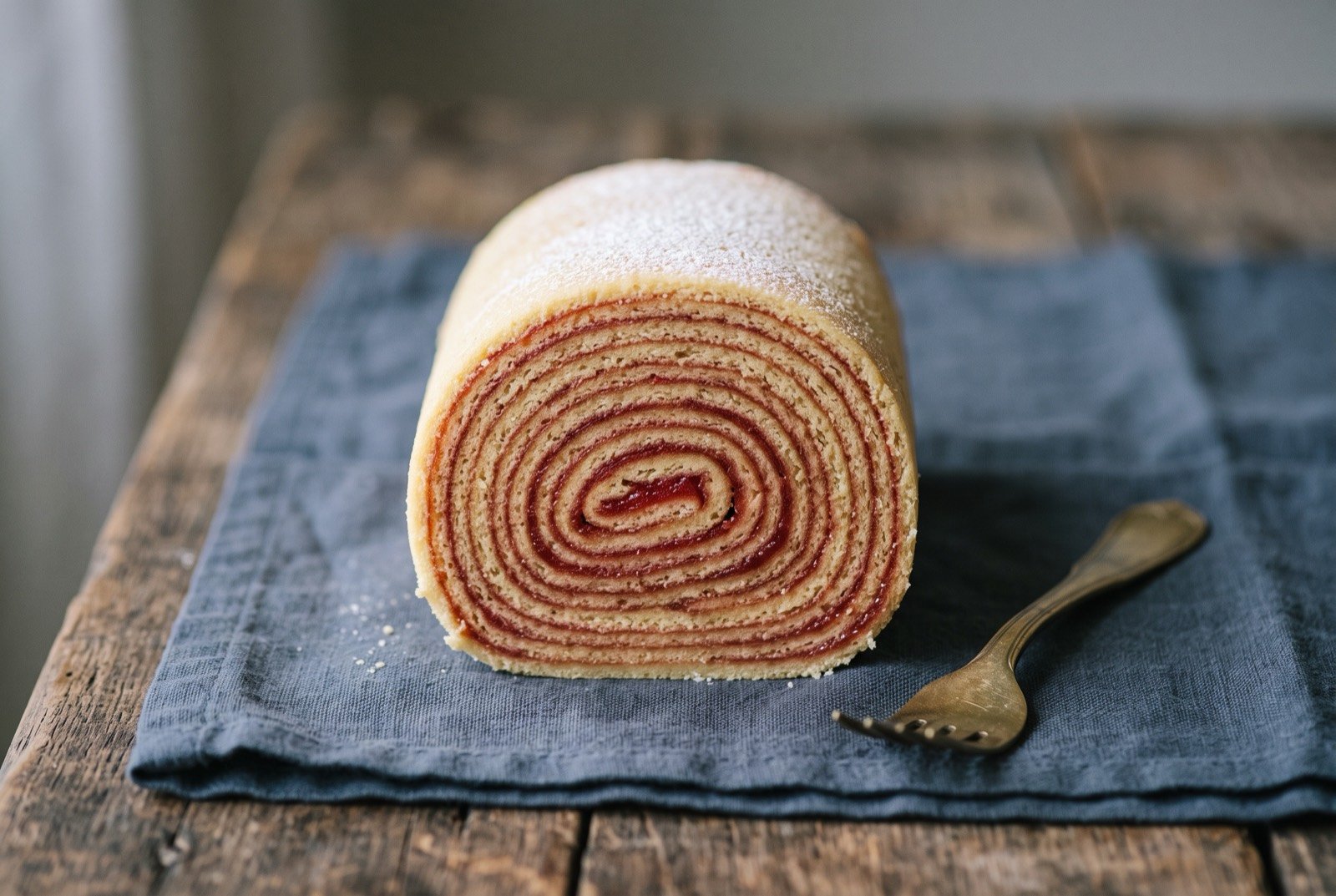
An illustration of the dish, not a photograph of it cooked.
- Time
- 40 minutes
- Reviewed
- Not yet reviewed from inside the tradition
- Cooked
- Not yet cooked and reported
As tradition built it
Bolo de rolo
Serves 8 . about 40 minutes, baked in several thin sheets around 5 minutes each and rolled while still hot
Ingredients
- 230g butter, 230g caster sugar, 230g plain flour and 7 eggs, whipped separately and folded together butter-enriched sponge batter
- 250g goiabada (guava paste)
- as available water, to thin the goiabada
Method
- Bake the butter-enriched sponge in very thin sheets across a wide tray, each sheet only around five minutes.
- While still hot, spread with warm goiabada thinned with a little water.
- Roll immediately and tightly while pliable, since a sponge left to cool even slightly will crack rather than roll.
Notes
Declared Intangible Cultural Heritage of the State of Pernambuco by state law in 2008.
Its origin is genuinely disputed between two named scholars, one tracing it to an adaptation of the Portuguese Colchão de Noiva, the other dating the rolled form to as late as the 1950s and deriving it from Portugal's Azeitão cake.
A popular claim that the cake was served to Dom Pedro II in 1859 looks, on the evidence, like a likely confusion with the separate, better-documented Bolo Souza Leão.
What a modern chef changes
Precision in the sheet, not the flavour
Rung 03
Ingredients
- green corn
- plum
- lightly sweetened corn purée
Method
- Use a precise, consistent oven temperature and a consistent, thin, even spread to give a sponge that behaves the same way every time, removing the trial and error that makes this dish something Recife doçarias now teach as a paid, hands-on course.
- Borrow the documented contemporary Recife variant that swaps in green corn and plum alongside the classic guava.
- Fill with a lightly sweetened corn purée, textured against the guava rather than replacing it, tying the cake back to this chapter's own corn tradition.