Mainland Brazil · Volume 40, Caatinga, Vaqueiro and the Salt-Cured Table
Carne de sol
Sertão, Brazil
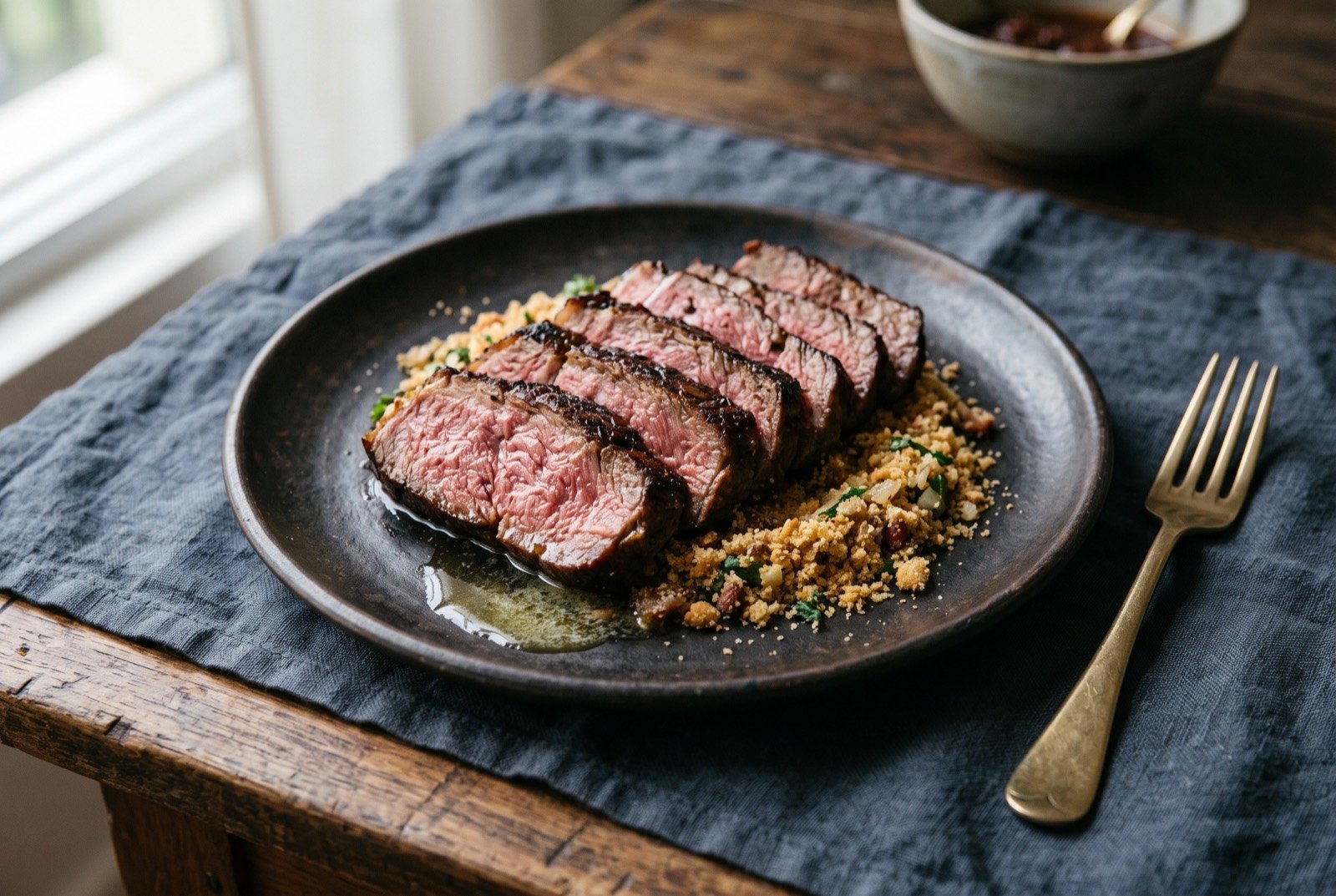
Illustration
- Researched
- Researched from 21 sources in the brief
As tradition built it
Carne de sol
Serves 4 . 2 to 3 days, mostly curing and drying
Ingredients
- 1kg coxão mole, peito or lagarto (lean, well-connective beef cut)
- roughly 5% of the meat's weight coarse salt
- a little, to finish manteiga de garrafa (clarified Northeastern butter)
Method
- Rub the beef, coxão mole, peito or lagarto, with coarse salt at roughly five per cent of its weight and leave to cure for around twenty four hours, turning every six hours.
- Dry fast rather than long: hang for three hours in sun in an insect-protected spot, followed by two consecutive nights left in the open sereno air.
- Rinse or briefly soak the meat, since the light salting means it needs no long desalting the way charque does.
- Pan-fry or grill hard and fast, finish with a little manteiga de garrafa, and serve with rice, baião de dois or paçoca.
What a modern chef changes
The same shallow cure, dried under control
Rung 01
Method
- Salt the meat as tradition dictates.
- Dry it not in open air but in a dehydrator held at a controlled low temperature and humidity, or in a Big Green Egg run cold with a light smoke, for the same short window the sereno method uses.
- Finish with a hard sear.
- Rest briefly sous vide at a gentle temperature to carry the smoke through evenly before the final char.
Notes
Addresses a peer-reviewed Ceará food-safety study that found staph counts many times over the legal limit in shade-dried market carne de sol; the elevation changes nothing about the dish's essential character while removing the actual documented risk.