The Andes · Volume 21, Colombia, the Andean Interior
Bandeja paisa
Antioquia, Colombia
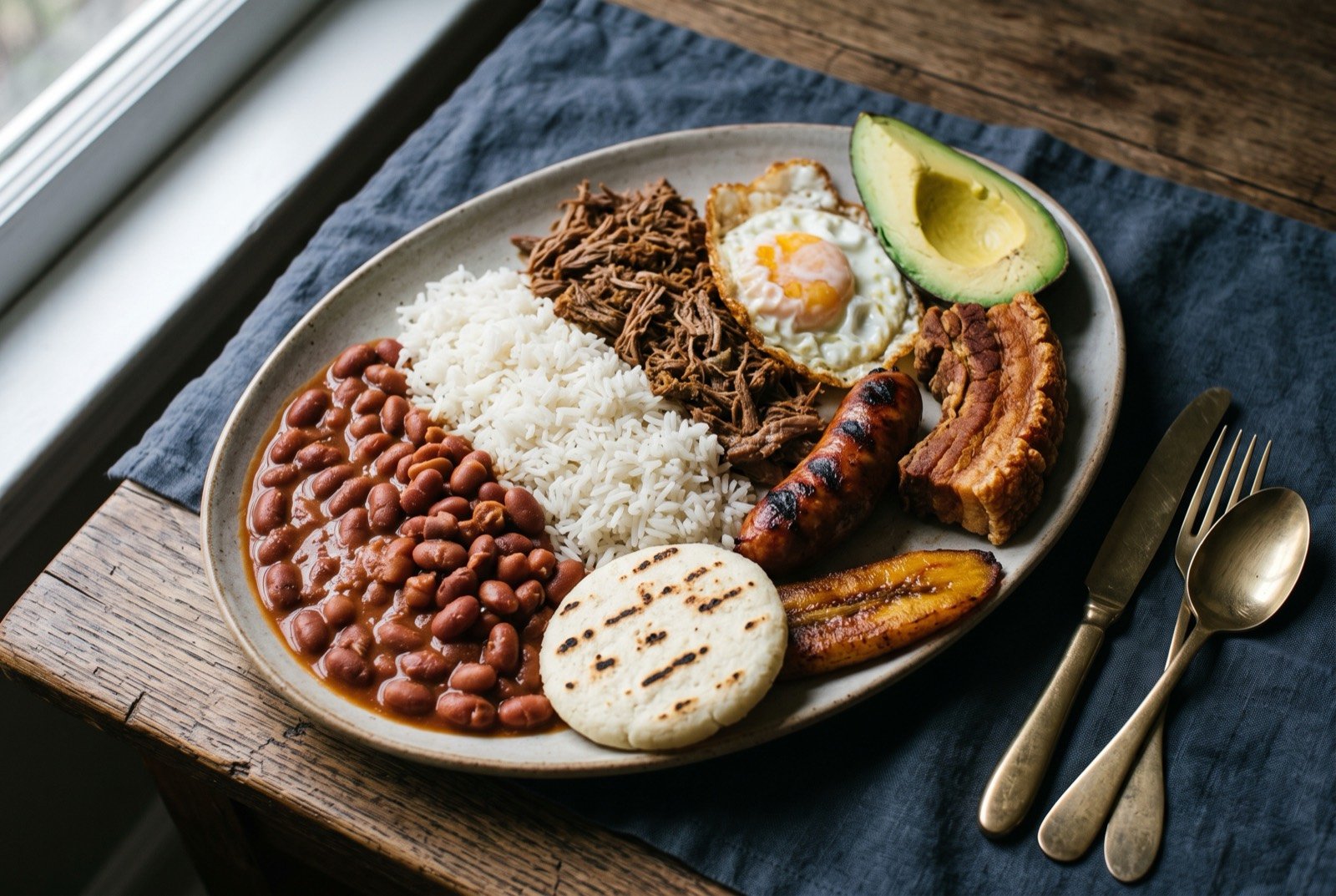
An illustration of the dish, not a photograph of it cooked.
- Time
- 6 hours
- Reviewed
- Not yet reviewed from inside the tradition
- Cooked
- Not yet cooked and reported
As tradition built it
Bandeja paisa
Serves six. About 6 hours, including bean cooking.
Ingredients
- 250g dried cargamanto or red beans, pre-soaked
- 300g pig's trotters
- ½ green plantain
- 1 large carrot
- to taste seasoning
- 240ml hogao, to finish the beans
- 300g rice
- 500g beef chuck
- 6 chorizos
- 6 eggs
- 3 ripe plantains
- 180g cornmeal, 240ml water, 50g melted butter, ¼ tsp salt precooked white cornmeal, water, melted butter and salt, for the arepas
- 500g chicharrón
- 6 morcilla
- 3, halved avocado
Method
- Simmer the pre-soaked beans with the pig's trotters, green plantain, carrot and seasoning, finished with hogao, for roughly 1 to 2 hours until tender.
- Cook the rice plain.
- Simmer the beef chuck in seasoned water until tender enough to shred.
- Poach the chorizos.
- Fry the eggs.
- Fry the ripe plantains in batches.
- Griddle arepas from precooked white cornmeal, water, melted butter and salt.
- Prepare the chicharrón, morcilla and avocado separately, each finished at the last possible moment so nothing on the plate has time to go cold or soggy against its neighbours before it reaches the table.
Notes
The chapter is explicit that bandeja paisa is a disputed mid-twentieth century restaurant and tourism-marketing invention rather than old arriero trail food, with at least three competing accounts and no consensus among them.
What a modern chef changes
Nine Components, Each Done Right
Method
- Treat each component of the plate with the same rigour as a langoustine, per Álvaro Clavijo's own stated method at El Chato, rather than treating the plate as one dish.
- Cook the beef chuck sous vide to a precise, still-moist shred rather than simmering it to greyness.
- Render the chicharrón properly, skin dried overnight and fried hot enough to blister rather than merely soften.
- Griddle the arepa on a genuinely hot budare or dry pan rather than a lukewarm one, for real colour rather than a pale, steamed result.
- Reduce a portion of the bean-cooking liquor with panela through the spice grinder's own logic of concentration into a small, glossy sauce, spooned sparingly rather than drowning the beans in their own broth.