The Slavic east and the Balkans · Volume 29, Bura, Smoke and the Ottoman Line
Brudet
Coastal Croatia
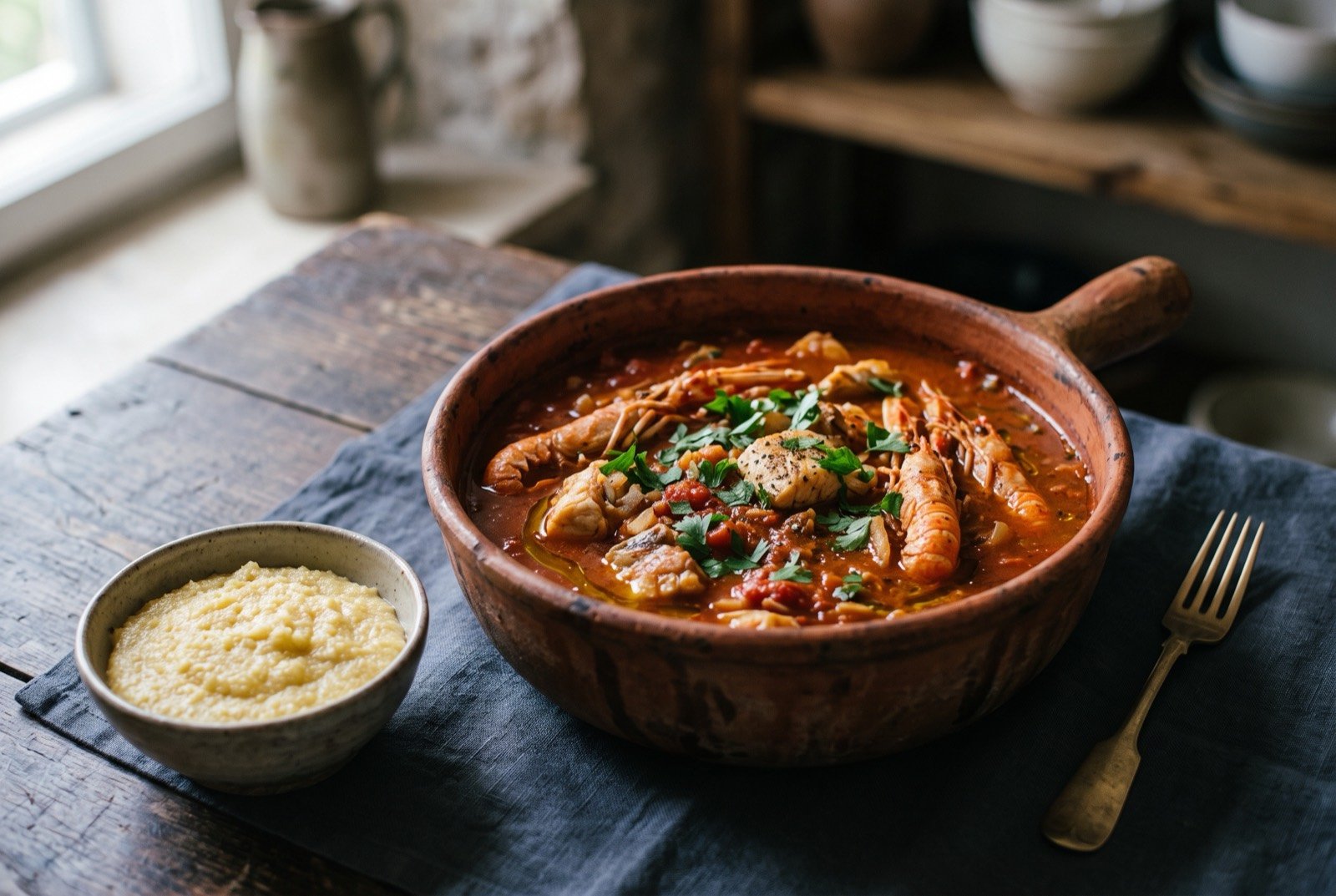
An illustration of the dish, not a photograph of it cooked.
- Time
- 40 minutes
- Researched
- 14 sources cited
- Reviewed
- Not yet reviewed from inside the tradition
- Cooked
- Not yet cooked and reported
Croatian sources are consistent on one point above all others: there are as many recipes for brudet as there are Dalmatian kitchens. What holds is the method, not the fish list.
As tradition built it
Serves 4. About 40 minutes.
Ingredients
- 1.5 kg mixed white fish and shellfish, hake, scorpionfish, monkfish, langoustine, cut to portion
- 2 onions, sliced
- 100 ml olive oil
- 4 cloves garlic, sliced
- 200 ml tomato passata
- 200 ml white wine
- for garnish parsley, chopped
- to serve polenta, to serve
Method
- Sweat the onion gently in the olive oil until soft, then add the garlic and cook a further minute.
- Add the passata and wine, and bring to a gentle simmer.
- Lay the firmer fish in first, then the more delicate fish and shellfish on top, and season.
- Cover and simmer 20 to 25 minutes, shaking the pot occasionally to move the liquid rather than stirring it, so the fish stays whole.
- Finish with parsley, and serve over polenta rather than bread or rice.
What a modern chef changes
The same rule, made more reliable, and a white version alongside the red.
Rung 2
Method
- Poach the firmest fish separately to a precise internal temperature, then return it to the pot only in the last few minutes, a controlled version of the same intention as the traditional layering, since a probe removes the guesswork the shake-don't-stir rule was managing by feel.
- Build a white, tomato-free version alongside the standard red one, thickened with a little dried breadcrumb rather than passata, to show the dish's older, plainer register.
- Reduce the stock separately and finish the pot with it rather than raw wine, concentrating flavour before the fish ever goes in, so less cooking time is needed once the delicate seafood arrives.