The Slavic east and the Balkans · Volume 29, Bura, Smoke and the Ottoman Line
Kačamak
Montenegro
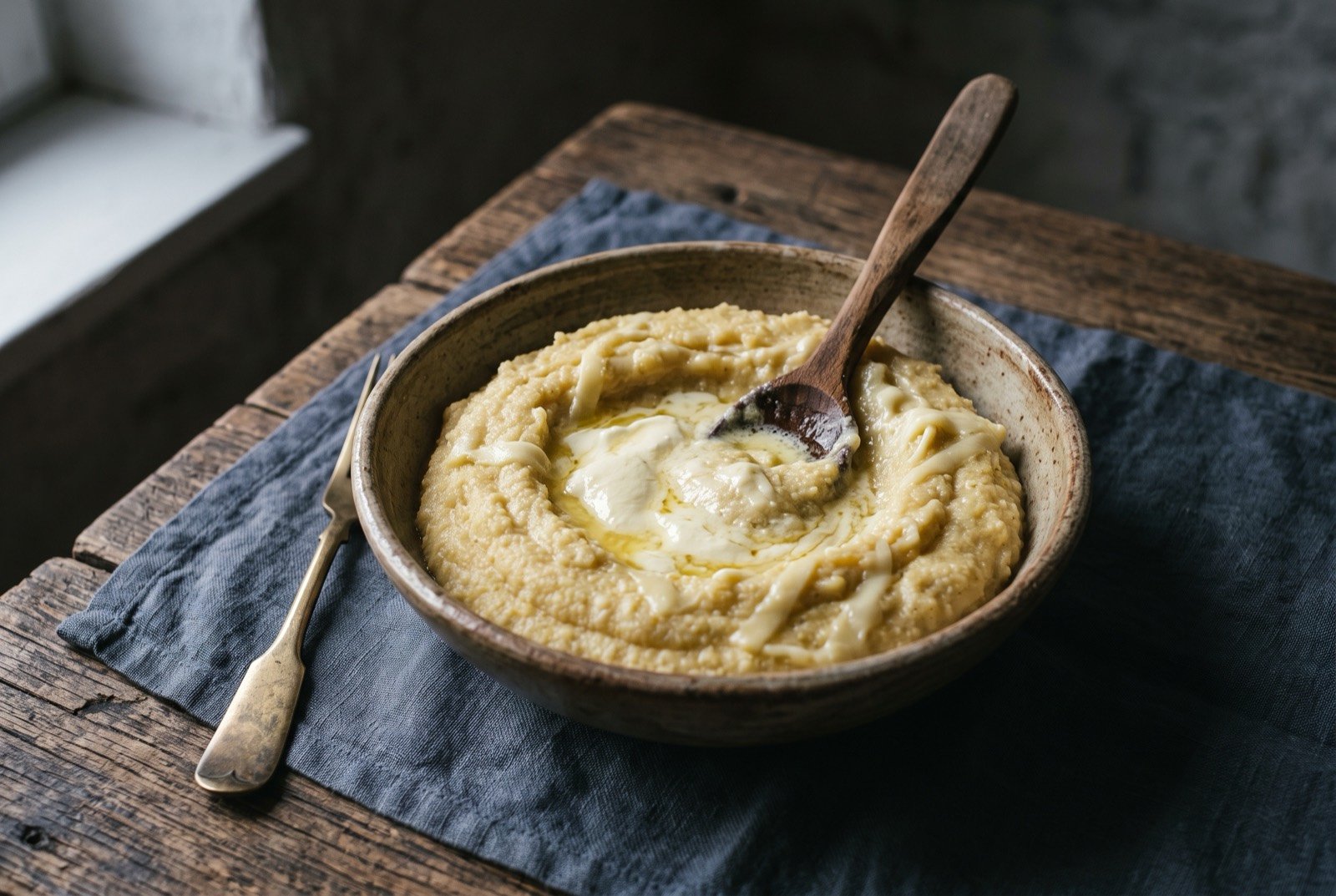
An illustration of the dish, not a photograph of it cooked.
- Time
- 40 minutes
- Researched
- 14 sources cited
- Reviewed
- Not yet reviewed from inside the tradition
- Cooked
- Not yet cooked and reported
Montenegro's national broadcaster, RTCG, dates the dish specifically: it arose from necessity in the north after Petar I brought the potato back from Trieste in 1786, a way of stretching flour, which was scarce and expensive in the pastoral highlands, with potato, which was not, while cheese and kajmak were already abundant. It was originally family food, not guest food.
As tradition built it
Serves 4. About 40 minutes, with real physical effort.
Ingredients
- 800 g potatoes, peeled and roughly chopped
- 300 g cornmeal
- 200 to 250 g Njeguški sir or a hard aged sheep's cheese, grated
- a generous spoonful per portion kajmak
- to taste salt
Method
- Boil the potatoes in salted water until fully soft and beginning to break apart.
- Reduce to a gentle simmer, and add the cornmeal gradually, stirring continuously.
- Keep stirring vigorously and continuously, binding the flour fully into the potato until the mixture becomes a thick, elastic mass; this genuinely takes sustained effort, not a few idle turns of a spoon.
- Fold in the cheese and kajmak while the mixture is still hot, until melted through, and serve immediately.
What a modern chef changes
The same effortful binding, made more consistent, and the fat handled with more precision.
Rung 5
Method
- Use a stand mixer's paddle attachment to do the sustained binding work, replacing the arm-aching hand-stirring with a machine that can hold a steady, continuous action longer than a wrist can.
- Whip the kajmak lightly before folding it through, aerating it slightly so it distributes more evenly through the hot mass rather than sitting in pockets.
- Finish a portion under a hot grill or torch for a few seconds, giving the cheese on top a light colour the traditional stovetop-only method never develops.