The Slavic east and the Balkans · Volume 29, Bura, Smoke and the Ottoman Line
Pašticada
Coastal Croatia
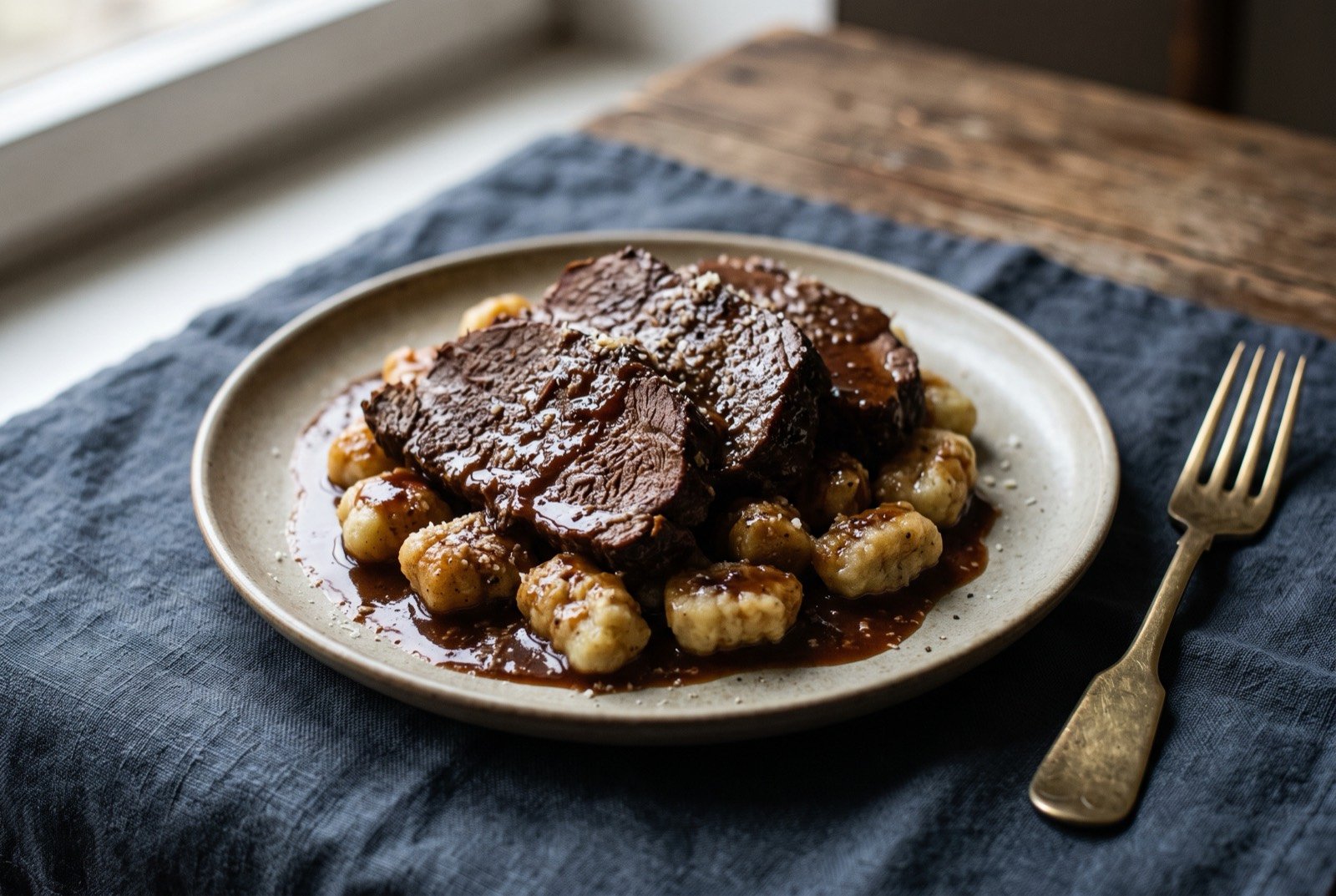
An illustration of the dish, not a photograph of it cooked.
- Time
- 27 hours
- Researched
- 14 sources cited
- Reviewed
- Not yet reviewed from inside the tradition
- Cooked
- Not yet cooked and reported
Iće & Piće, the serious Croatian food magazine behind this chapter's clearest source on the dish, is explicit that the marinade runs 24 hours, not the several days sometimes assumed; other recipe sources agree on an overnight marinade. Its origin is genuinely contested rather than settled: some unnamed food historians, cited by that same magazine, trace the dish to Byzantine cuisine reaching the Adriatic via Venice, with an early version made from horse rather than beef, a claim this chapter states as attributed rather than fact.
As tradition built it
Serves 6. 24 hours marinating, then about 3 hours cooking.
Ingredients
- 1.2 kg beef topside, larded with strips of pancetta, garlic slivers and whole cloves
- 100 ml red wine vinegar
- 300 ml red wine or prošek
- 1 onion, sliced
- 1 carrot, sliced
- 1 celery stick, sliced
- 1 bay leaf, and whole peppercorns
- 120g, or to taste dried plums
- a handful dried figs
- a pinch each of cloves and cinnamon ground cloves, cinnamon, and the zest of one lemon
- to serve gnocchi (njoke) and grated parmesan, to serve
Method
- Marinate the larded beef, studded with pancetta, garlic and cloves, in the vinegar, wine or prošek, onion, carrot, celery, bay and peppercorns, refrigerated, for 24 hours.
- Remove the meat, pat it dry, and brown it well on all sides in a hot pan.
- Add the drained marinade vegetables and sweat until soft.
- Return the meat, add the reserved wine or prošek, dried plums and figs, ground cloves and cinnamon, and simmer gently, covered, for 2 to 2.5 hours, until the meat is fully tender.
- Stir in the lemon zest at the end, and serve sliced, sauce spooned over gnocchi, with grated parmesan.
What a modern chef changes
The same 24-hour logic, made more precise, and the sauce concentrated separately.
Rung 1
Method
- Sous vide the larded, marinated beef at a controlled low temperature for several hours after the initial browning, holding it at an even, gentle heat that a stovetop simmer cannot quite match, then finish the sauce and the meat's final sear separately.
- Reduce the braising liquid on its own to a tighter glaze once the meat is out, rather than serving it at simmering-pot consistency, so the sweet-sour balance concentrates rather than thins over the gnocchi.
- Pass the finished sauce through a chinois before serving, for a smooth, restaurant-grade finish the home-style version never bothered with.