The Slavic east and the Balkans · Volume 29, Bura, Smoke and the Ottoman Line
Njeguški Pršut
Montenegro
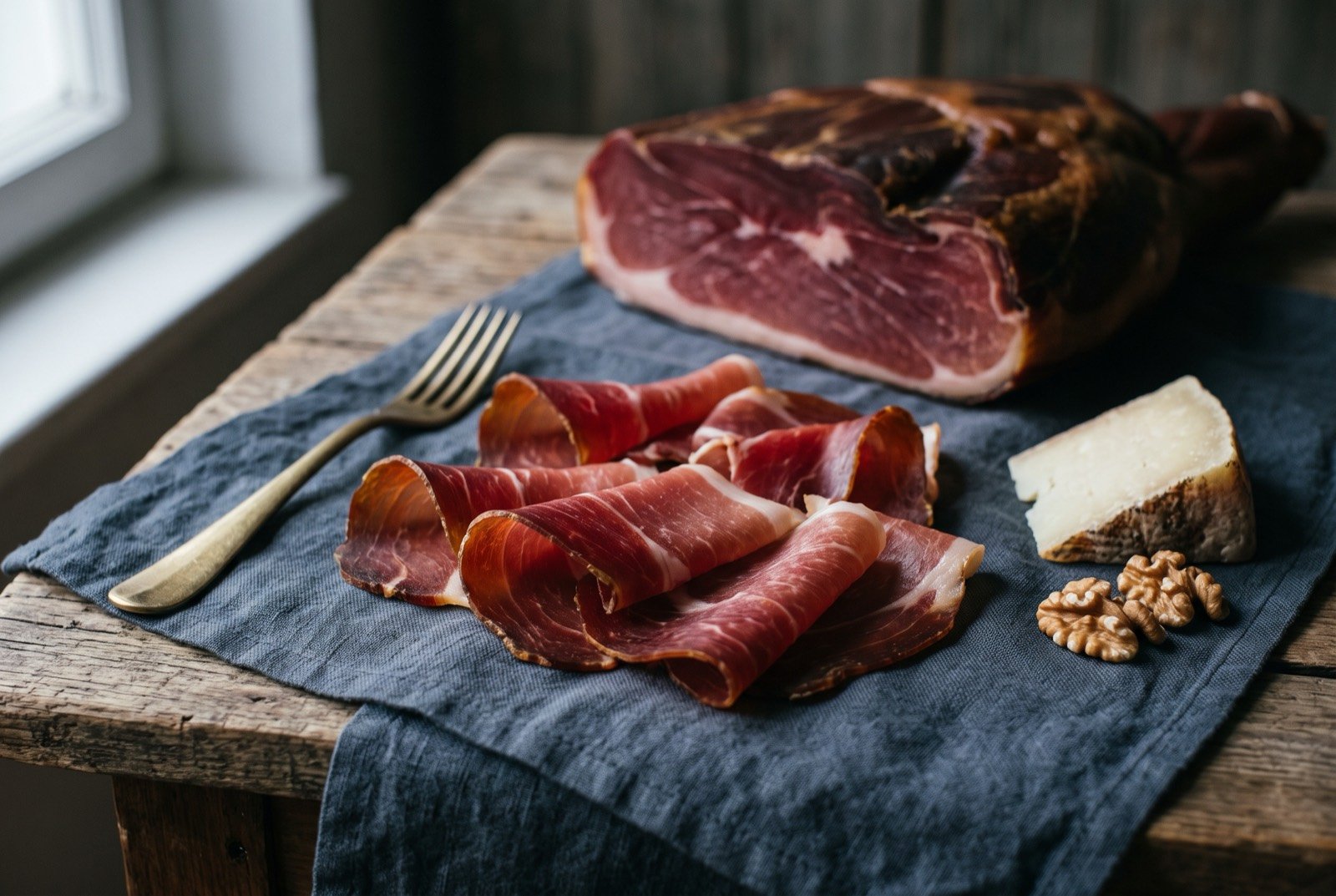
Illustration
- Researched
- 14 sources cited
Where Dalmatian pršut uses bura wind as its primary tool and smoke as an addition, Njeguški pršut runs the opposite way: cold smoke first, then mountain wind to finish. The distinction matters enough to the whole chapter's argument that it earns its own full entry rather than a footnote to the Dalmatian recipe above.
As tradition built it
One leg. Roughly 10 months, mostly unattended.
Ingredients
- 1 whole bone-in, skin-on pork leg
- 10% of the leg's weight, or less sea salt
Method
- Dry-salt the leg thoroughly, holding it for up to 20 days.
- Press under weight for 7 to 10 days.
- Cold-smoke over dry beech wood, no open flame, at 13 to 21°C, for 5 to 8 weeks, until the surface reaches its characteristic golden colour.
- Age in a cool, dark room for 8 to 10 months, so the total process, salt to finished ham, runs to at least nine months.
What a modern chef changes
Rebuilt at a scale a home cold-smoker can actually manage.
Rung 1
Method
- Use a Big Green Egg fitted with a cold smoke generator, held below 21°C for the full smoking period, the genuinely closest UK equivalent to beech cold-smoking a mountain-cured ham.
- Cure a smaller joint on the same salt-then-smoke-then-age sequence, so the whole project runs to weeks of active work rather than a year, while keeping the order of operations, which is the actual technique, intact.
- Log the smoking chamber's temperature and humidity daily, rather than trusting the fire by eye, replacing what the Lovćen massif's own climate was doing unmeasured with instruments doing the equivalent job.