The Slavic east and the Balkans · Volume 29, Bura, Smoke and the Ottoman Line
Dalmatinski Pršut
Coastal Croatia
Illustration
- Researched
- 14 sources cited
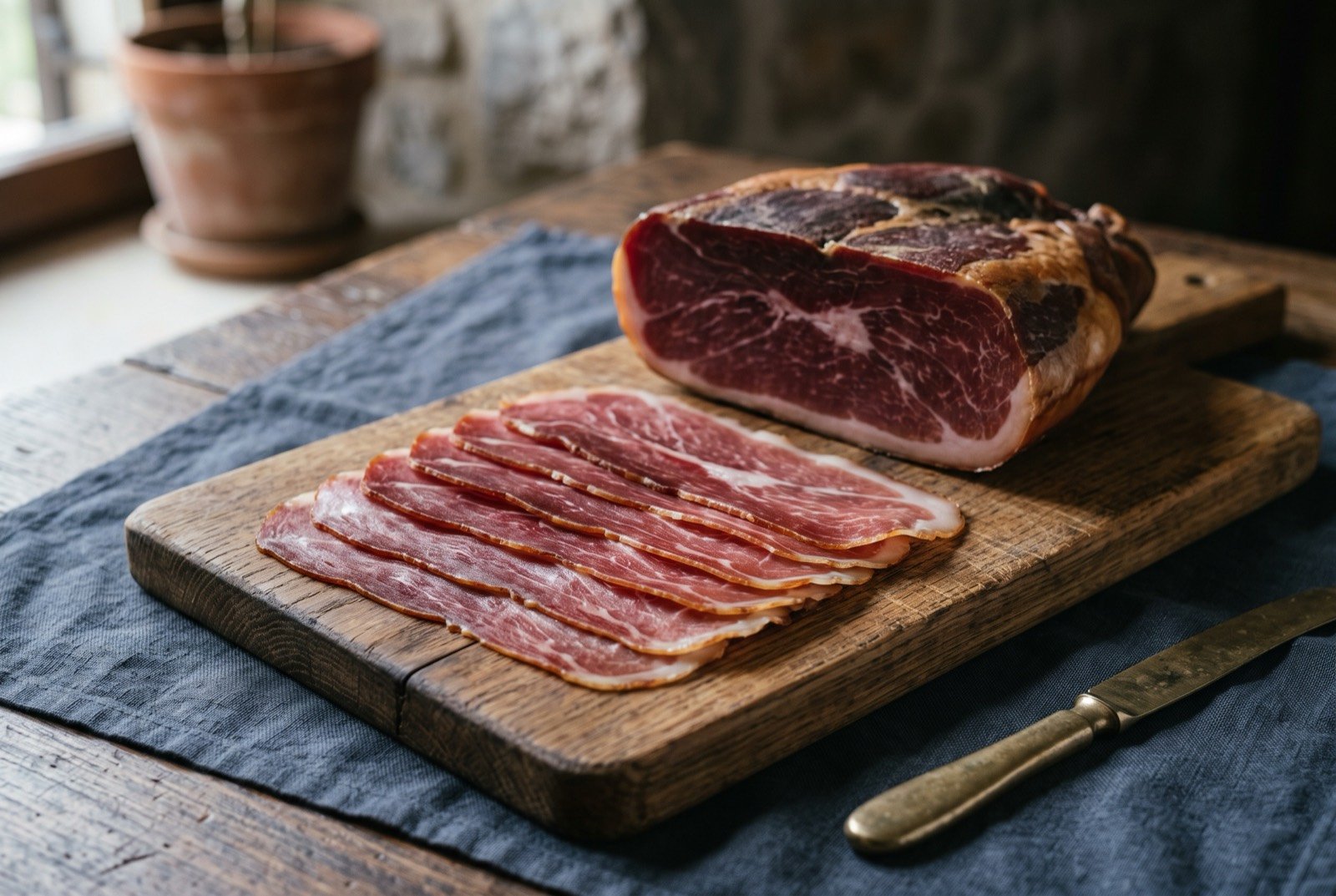
Dalmatinski pršut carries its own geographical indication, and its specification is exact rather than approximate: sea salt only, no other spice or preservative, and production timed around the alternation of two named winds, the cold, dry bura, which does the real early drying work while the leg still carries most of its moisture, and the warm, humid jugo, credited locally with softening the meat's texture rather than letting it dry to jerky. This is real charcuterie physics, moving dry air stripping surface moisture faster than the interior can spoil, tuned to one specific coastal microclimate.
As tradition built it
One leg. Roughly 14 months, mostly unattended.
Ingredients
- 1 whole bone-in, skin-on pork leg, 8 to 10 kg
- 800g to 1kg (roughly 10% of the leg's 8 to 10kg weight) sea salt, applied in stages
Method
- Rub the leg thoroughly with sea salt, reapplying at least three times over 14 to 20 days, held at 4 to 6°C, so the salt penetrates evenly rather than sitting on the surface.
- Press the salted leg under weight for about one week, then wash it in cold water and pat dry.
- Hang to smoke over hornbeam, oak or beech wood for 50 to 60 days, until the surface takes on a recognisable copper colour.
- Age in a cool, dark, well-ventilated space for a minimum of 12 months, up to 18 for a larger leg, checking periodically that no damp patch has formed.
- Slice thin, by hand or on a proper slicer, and serve simply, with good bread and nothing that competes with it.
What a modern chef changes
A smaller-scale home project, built honestly as an education in the technique rather than a claim to equal the real thing.
Rung 1
Method
- Cure a smaller cut, a boned pork shoulder muscle rather than a whole leg, on exactly the same salt ratio and timing, so the whole process runs to weeks rather than a year and a home curing chamber can actually hold it.
- Replace bura wind with a controlled curing cabinet or a cool, humidity-monitored room, logging temperature and humidity daily rather than trusting a single ledger reading, since what the wind was doing was never mysterious, only unmeasured.
- Use a dehydrator's low, steady airflow for the final drying stage only, after an initial fridge-salted cure, understanding plainly that this reproduces the mechanism, controlled desiccation, not the specific Dalmatian result; call the finished product what it is, a home-cured air-dried ham in the Dalmatian style, not pršut.