Aotearoa and Australia · Volume 03, The Waka, the Hāngī and the Tide
Hāngī: Pork and Kūmara
Māori, Aotearoa
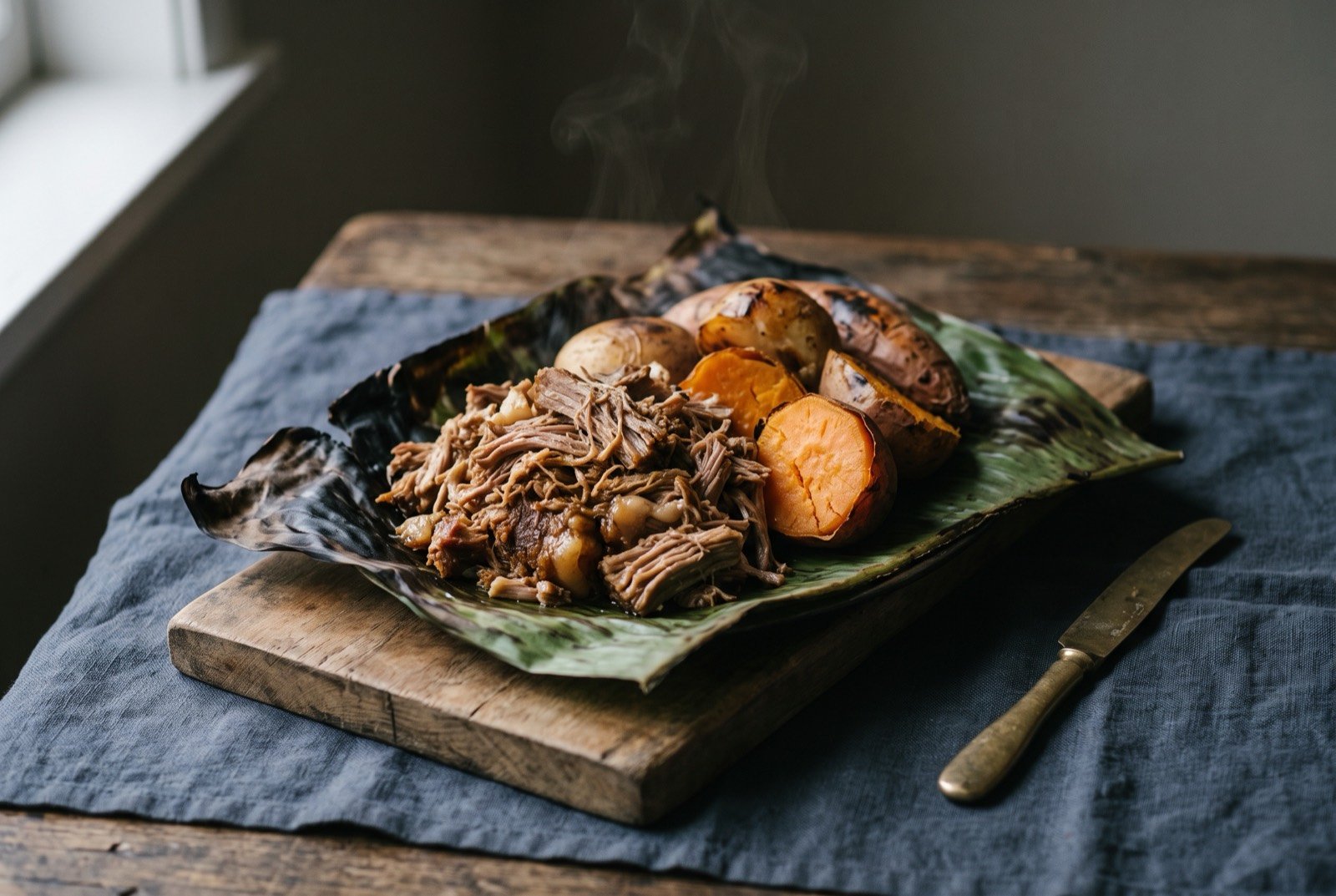
An illustration of the dish, not a photograph of it cooked.
- Time
- Not statedNo source states a time and the atlas has too few comparable dishes to estimate one.
- Reviewed
- Not yet reviewed from inside the tradition
- Cooked
- Not yet cooked and reported
A whole shoulder or leg of pork, wrapped and laid on stones fired for hours, kūmara and other root vegetables layered above it, the whole pit sealed under leaf, cloth and earth for hours of unattended, steam-driven cooking.
As tradition built it
Serves 8 to 10. Requires an outdoor fire pit and most of a day; the honest domestic version below uses a low oven in its place.
Ingredients
- 2.5 kg pork shoulder, bone in
- 1 kg kūmara (or, honestly, orange sweet potato, see Sourcing in Britain), peeled and halved
- 1 kg potatoes, halved
- as available banana leaf or, more traditionally, puka leaf, to wrap
- to taste sea salt
- as available mānuka or kānuka wood, or a genuine mesquite substitute
Method
- Rub the pork generously with salt.
- Wrap the pork loosely in banana leaf, or puka leaf if you have it.
- In a true hāngī: lay the wrapped pork onto stones fired over mānuka or kānuka wood, or a mesquite substitute, for 3 to 4 hours to 600 to 700°C, with the kūmara and potatoes wrapped separately and layered above the meat basket. Seal the whole pit under wet sacking and backfilled earth, and leave 2 to 4 hours depending on load.
- At home: place the wrapped pork in a low oven at 150°C for 4 to 5 hours, adding the wrapped vegetables to the oven for the final 1.5 hours, until the meat pulls apart easily and the kūmara is tender.
What a modern chef changes
The heat and the smoke separated into two deliberately controlled stages rather than one unattended pit.
Rung 1.
Method
- Smoke the pork on a Big Green Egg run low, around 120°C, using genuine mānuka wood chunks ordered in specifically, for the aromatic signature that reads as this cuisine's own rather than a generic barbecue note, for the first half of the cook.
- Wrap in banana leaf for the back half of the cook rather than the whole duration, giving the meat direct smoke early and the leaf's own steaming effect later, an approximation of the pit's two simultaneous mechanisms rather than one continuous method.
- State this plainly to the reader: this reconstructs the hāngī's heat and smoke character; it does not reproduce a stone pit's scale or its hours-long communal, watched cook, and no amount of equipment changes that.