Aotearoa and Australia · Volume 03, The Waka, the Hāngī and the Tide
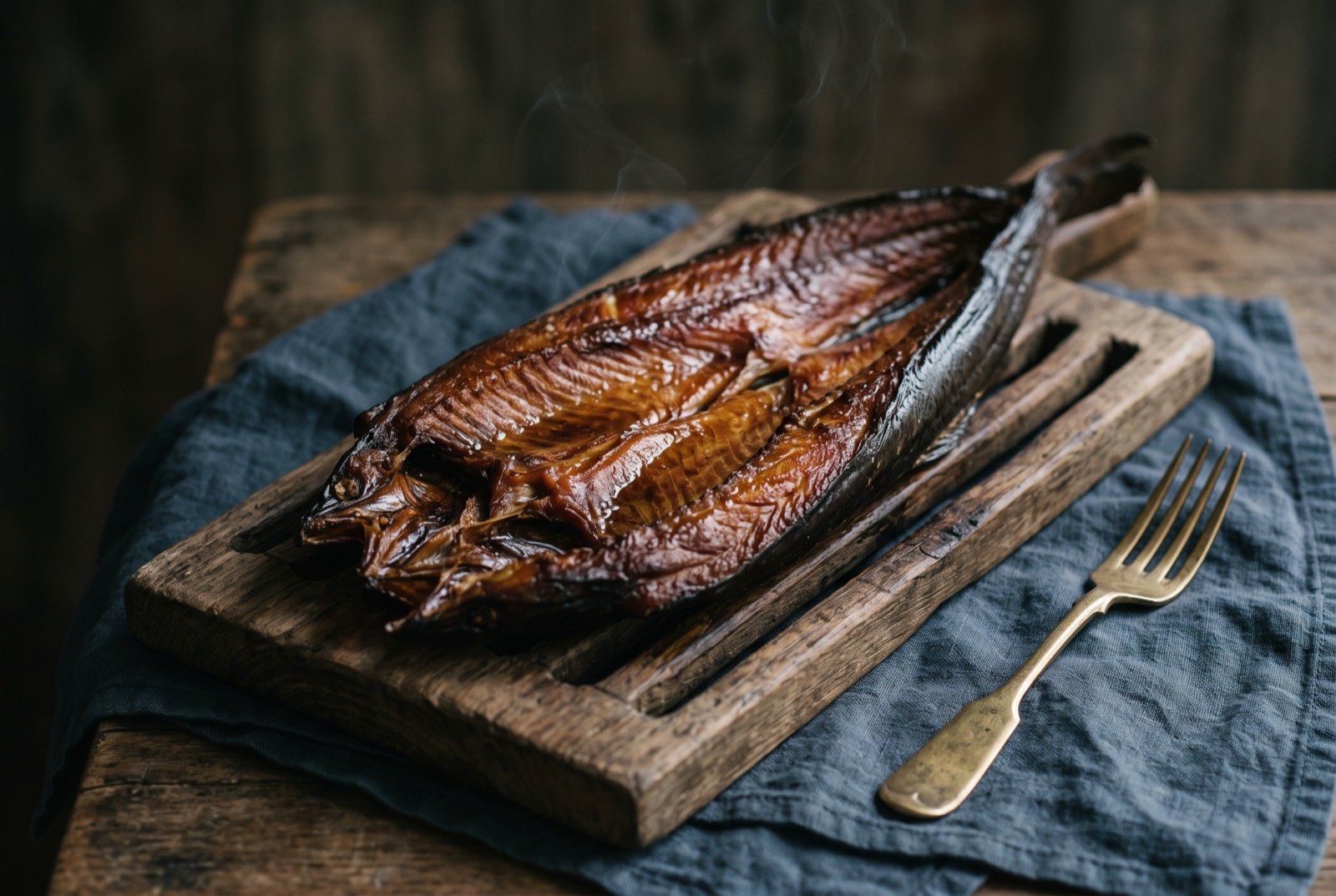
Tuna Pāwhara: Smoke-Dried Eel
Māori, Aotearoa
Illustration
- Time
- Hands on 6 hours · Waiting 8 hours
- Researched
- Researched from 188 sources in the brief
Tuna heke, the great downstream migration of mature eels bound for the deep Pacific to spawn, arrives on rainy autumn nights under a dark moon, shortfin males first in February and March, shortfin females close behind. Pā tuna, engineered river weirs, funnelled the run into woven traps at exactly this narrow window, and what was caught in volume had to be preserved fast: split lengthways, a technique specifically named pāwhara, and either cooked over a grating of green rods above a fire or hung to dry fully, sometimes packed afterward in kelp or bark with whale oil poured over to exclude air.
As tradition built it
Serves 4 to 6 as a starter. About 6 hours, mostly unattended, plus overnight drying. This chapter flags honestly that no source reached here gave a precise modern quantities-and-timings recipe for pāwhara; the method below is this chapter's own honest adaptation of the documented traditional sequence, presented as such rather than as a confirmed historical recipe.
Ingredients
- 1 whole eel, cleaned and gutted (or, honestly, sustainably sourced smoked eel, see Sourcing in Britain)
- to taste sea salt
- as available mānuka or fruitwood, for the fire
Method
- Split the eel lengthways along the backbone.
- Season generously with salt.
- Lay over a grating well above a low, smouldering mānuka or fruitwood fire, or hang in a well-ventilated, smoky spot.
- Leave several hours, turning occasionally, until the flesh is firm and part-cooked through the smoke.
- Hang overnight in a cool, dry, well-ventilated place to finish drying.
What a modern chef changes
A controlled cold smoke in place of an open fire's variable heat, since this dish is fundamentally about preservation, not a fast cook.
Rung 4.
Method
- Cold smoke on a Big Green Egg fitted with a smoking attachment, held under 30°C, using mānuka wood specifically ordered in, for hours rather than minutes, preserving the eel's texture the way the traditional method's low, indirect heat did.
- Finish in a dehydrator at a low setting overnight rather than hanging in open air, for consistent results a British kitchen's ambient humidity cannot guarantee.
- State this with real weight, not a passing caveat: European eel, the honest UK substitute for tuna, is Critically Endangered and CITES-listed; this chapter names sustainably sourced UK suppliers in Sourcing in Britain and expects the reader to buy accordingly, not to treat eel as a casual ingredient.