Melanesia, Micronesia and Polynesia · Volume 14, The Stone Garden, the Earth Oven and the Company Fence
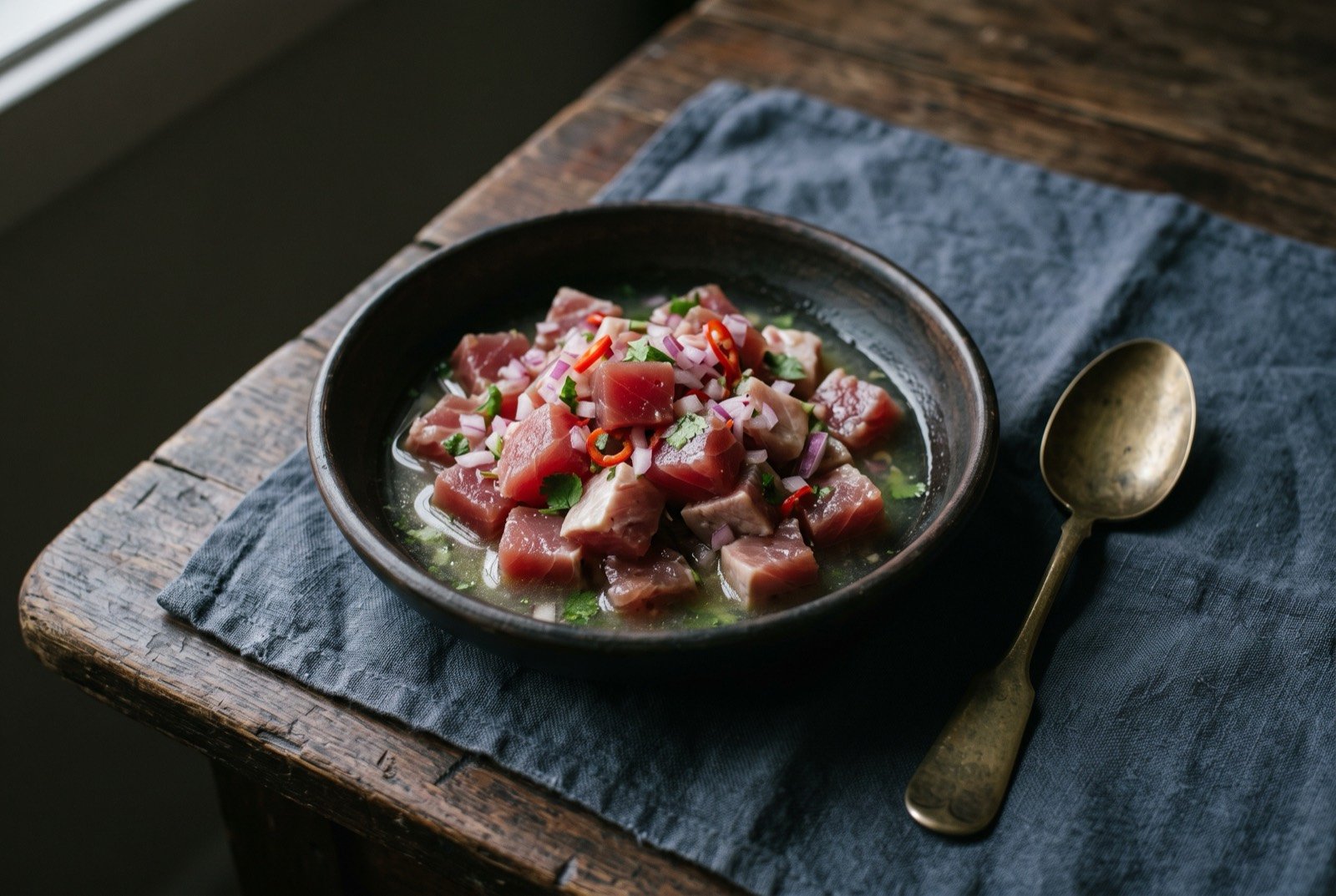
Ceviche de atún
Illustration
- Time
- 10 minutes
- Researched
- Researched from 75 sources in the brief
Rapa Nui's present-day ceviche is one of the clearest, best-documented dishes to come out of the Chilean layer, and it belongs to the Chilean-Peruvian citrus-cure family rather than to the coconut-cream raw-fish tradition documented elsewhere in this atlas, Fijian kokoda, Tahitian poisson cru, precisely because this island never had the coconut to build that version. Fresh raw tuna is cut into small pieces and cured in lime juice; this chapter does not assert a coconut-dressed variant, despite it appearing in some lower-quality travel writing, because it sits awkwardly against the island's well-established lack of a coconut tradition and looks like generic template copy rather than documented local practice.
As tradition built it
Serves 4 as a starter. 8 to 10 minutes curing.
Ingredients
- 400g sashimi-grade tuna, cut into 1.5cm dice
- 4 to 5 limes, juiced (enough to just cover the tuna)
- 1 a small red onion, finely diced
- 1 a fresh red chilli, finely diced, to taste
- a pinch a good pinch of sea salt
Method
- Combine the tuna with the lime juice, red onion, chilli and salt.
- Toss gently and leave for exactly 8 to 10 minutes, tasting at 8; the tuna should turn opaque at the edges while staying dark and raw at the centre, not cure through completely.
- Drain most of the excess lime juice before serving, so the dish stays a cure rather than a soup.
What a modern chef changes
Individually timed batches, a clarified dressing and an aúke finish
Rung 5, taken seriously
Method
- Portion the tuna into individually timed batches rather than curing the whole 400g together, so each portion is pulled at its own precise moment rather than sitting in acid while the rest is plated.
- Use a chinois to strain the lime and onion liquid into a clean, clear dressing, then re-season it and spoon it back over the tuna at the table rather than leaving the fish to sit in cloudy marinade.
- Finish with a few flakes of Rapa Nui-style aúke seasoning, dried seaweed ground fine, standing in for the salt-and-sea note the island's own tradition would reach for, in place of a generic garnish.