West Africa · Volume 03, The Gulf of Guinea
Obe Ata
Yoruba, southwest Nigeria
Illustration
- Time
- 45 minutes
- Researched
- 11 sources cited
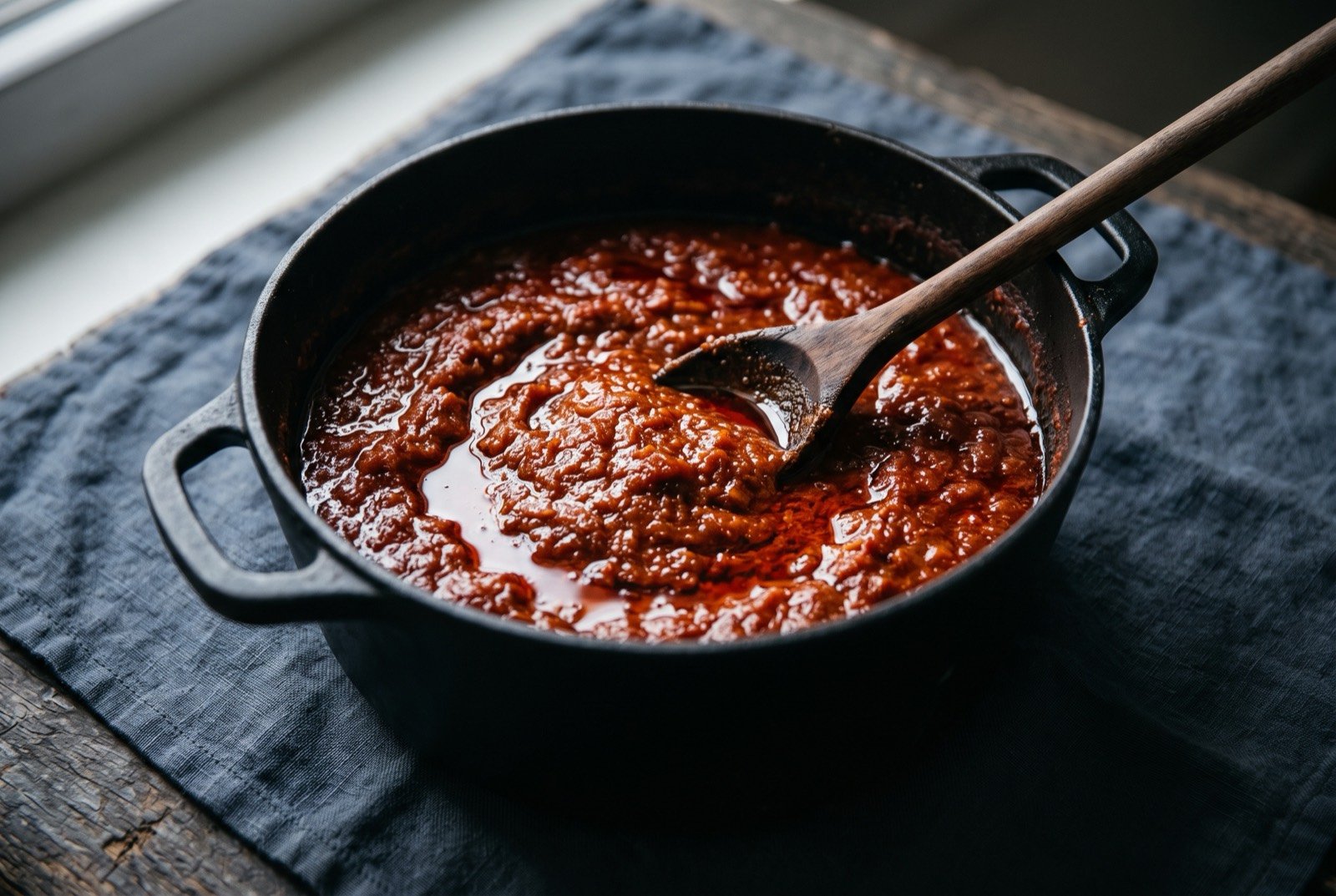
Learn this and you have unlocked jollof, efo riro, buka stew, asaro, ofada sauce and half the Nigerian repertoire. It is red bell pepper, scotch bonnet, plum tomato and onion, blended and then fried hard until the oil separates and floats. Make a double batch and freeze it in ice cube trays: it is the single most useful thing in your freezer.
The ratio matters more than the brand of anything. Three tatashe to one tin of tomatoes to two or three scotch bonnets to two onions. Note that tomato is the smallest part, not the largest. British cooks reach for the tin first and wonder why the result tastes like thin passata with chilli in it.
As tradition built it
Obe ata dindin
Makes about 1.2 litres · 45 minutes
Ingredients
- 3 red bell peppers (tatashe), stemmed
- 1 × 400g tin plum tomatoes, or 6 ripe plum tomatoes
- 2 to 3 scotch bonnets, stemmed
- 2 medium onions, one blended and one sliced
- 200ml neutral oil, or red palm oil
- 3 tbsp tomato purée
- 1 tbsp iru (locust bean)
- 2 bay leaves
- 1 tsp dried thyme
- 1 tsp curry powder (yes, really: see Part Two)
- to taste Sea salt
Method
- Blend the bell peppers, tomatoes, scotch bonnets and one onion until completely smooth. Do not add water.
- Reduce. Tip the blend into a wide pan and boil, uncovered, stirring now and then, until the water has gone and you have a thick paste. Fifteen to twenty minutes. This stage is not optional and it is the one everyone skips.
- In a separate heavy pan, cook the sliced onion in the oil over medium heat until deep gold, about 10 minutes. Add the iru and let it soften and go fragrant, one minute.
- Add the tomato purée and fry it out for three minutes, until it darkens from orange-red to brick and stops smelling tinny.
- Fry. Add the reduced paste, the bay, thyme and curry powder. Fry over medium heat for 15 to 20 minutes, stirring often and scraping the base. It will spit, darken, and eventually the oil will break out and float on top. That slick is your endpoint marker.
- Season with salt. Cool, then portion. A week in the fridge under its oil layer, three months frozen.
What a modern chef changes
Sieved base, staged treatment, oil as ingredient
Rungs 04, 06, 07, 10
Method
- Pass the blend through a chinois before reducing. You lose the tomato seeds and pepper skins, and you gain a glossy sauce instead of a slightly gritty one. It also lets you reduce further without the base turning bitter. This is the highest return per pound in the whole guide.
- Treat each component separately, which is Chan's stated rule for sauces. Confit the sliced onion in the oil with no colour over low heat for 25 minutes to extract sweetness rather than Maillard. Then lift it out, raise the heat, and brown a second batch of onion hard. Combine. You now have both flavours instead of a compromise between them.
- Bloom whole spices in the oil first. Toast and crack 2 uda pods and half a teaspoon of uziza seed, and fry them in the oil for 30 seconds before the onion goes in. Fish out the uda before serving. The aromatics are now dispersed through the fat phase rather than sitting on top as dust.
- Finish with acid, off the heat. One tablespoon of sherry vinegar or lime juice per litre. You will taste the base go from heavy to bright without tasting vinegar at all, and you will find you need noticeably less salt.
Notes
Four changes, each borrowed from a specific kitchen.
Then split the batch. Reduce half of it much further, to a dark, jammy, almost-sun-dried paste, and freeze that separately. A tablespoon of it stirred into anything is the most concentrated flavour you own.