West Africa · Volume 03, The Gulf of Guinea
Waakye
Nationwide, Ghana, out of the Zongo
Illustration
- Time
- 1 hour 15
- Researched
- 11 sources cited
- Reviewed
- Awaiting a reader from inside the tradition
- Cooked
- Awaiting a cook report
The name is Hausa: shinkafa da wake, rice and beans, brought south from northern Ghana and the Zongo migrant quarters into Accra, Kumasi and Cape Coast, and now the national breakfast. Its transatlantic cousins are Jamaican rice and peas, Cuban moros y cristianos, Puerto Rican arroz con gandules and Brazilian arroz com feijão. The same dish, carried in the same direction as the people.
The colour comes from dried sorghum leaf sheaths, sold in Britain as waakye leaves, which leach a deep red-burgundy into the cooking water and give an earthy, faintly tea-like note. Alkali (potash, or bicarbonate of soda in the city) does three things at once: it softens the beans by degrading pectin in the seed coat, it deepens and shifts the colour, and it is traditionally credited with reducing the gas-producing oligosaccharides. Ghanaian cooks are genuinely split on whether to use it, so try both.
As tradition built it
Waakye, and the plate around it
Serves 6 · 1 hour 15, plus soaking
Ingredients
- 200g black-eyed beans, soaked overnight
- 400g long-grain rice (not basmati: the perfume fights the earthiness)
- 6 to 8 dried waakye leaves
- ⅛ tsp bicarbonate of soda (optional, and debated)
- 1 tsp, or to taste Salt
The plate
- as available Waakye stew: tomato and palm oil, with fish or beef
- as available Shito
- as available Gari, dry, for texture
- as available Wele (cooked cow skin), boiled egg
- as available Talia (boiled spaghetti), if you are feeling modern
- as available Kelewele, fresh salad, avocado in season
Method
- Cook the beans with the waakye leaves and enough water to cover well. The liquor will turn deep red and the beans will visibly go from white to burgundy. Forty minutes, until nearly tender.
- Add the washed rice directly to the beans and their coloured liquid, with the bicarb if using. Top up so the water sits a centimetre above the rice. Salt.
- Cover tightly and cook on the lowest heat until the liquid is absorbed, about 20 minutes. Do not stir.
- Remove the leaves and rest, covered, ten minutes.
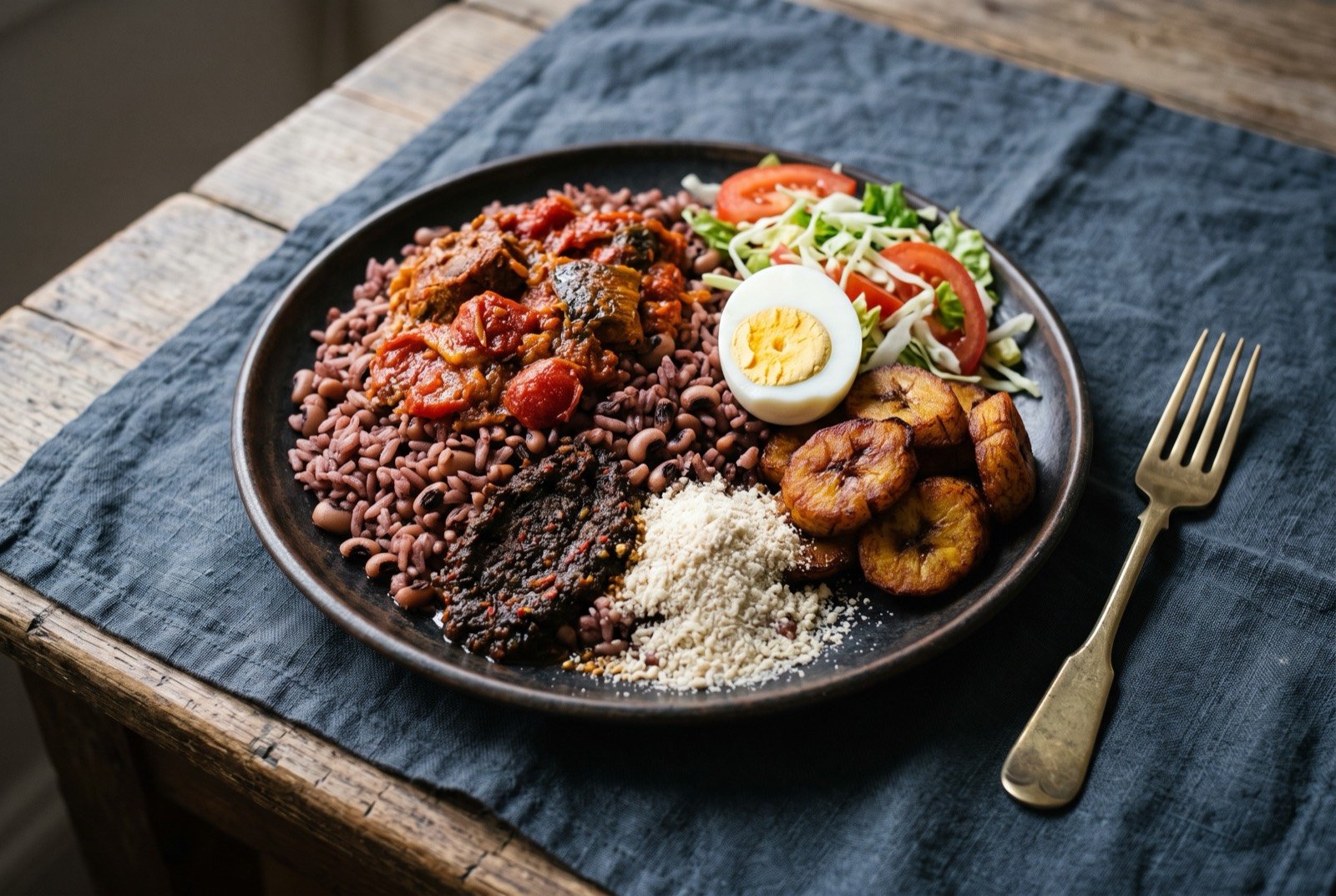
- Build the plate, do not garnish it. Waakye down, stew over one side, gari in a dry drift, shito in a dark smear, wele and egg placed, salad and avocado at the edge, with talia and kelewele alongside if you are feeling modern. Layered so the components run into each other.
What a modern chef changes
The plate as a composed course
Rungs 10, 12, 14
Method
If you must refine it, refine the components
- Toast the gari in a dry pan until it smells nutty, then dress it with a little palm oil and salt. It becomes a genuine crumb rather than filler.
- Make the wele properly: simmer until fully gelatinous, chill, cut into neat batons, then deep-fry to blister. Crisp outside, molten inside.
- Cure the egg yolk in soy and shito oil for two hours instead of hard-boiling.
- Serve it family style on one board and let people build their own plate, which is what Atadika's rule and the whole West African table have always insisted on.
Notes
There is no clever version of waakye and you should not try to invent one. What there is instead is the realisation that the waakye plate is already a composed dish, and that it teaches you more about plating than any technique in Part Four. Look at what it does:
That is a tasting menu course, assembled in a plastic bag by the side of a road, and it has been solved for longer than fine dining has existed. Roads & Kingdoms asked the right question about it: "Is waakye that's not sold beside a gutter authentic waakye?"