West Africa · Volume 03, The Gulf of Guinea
Ogbono and Mango
The sweet end
Illustration
- Time
- 30 minutes
- Researched
- 11 sources cited
Be honest about this: West African cooking does not have a large formal dessert repertoire in the European sense. What it has instead is an exceptional street-snack culture, and that is where a serious cook should start. Nkate cake, peanut brittle sold in slabs. Bofrot and puff-puff, yeasted doughnuts. Ice kenkey, fermented maize blended with milk and sugar, which is essentially a sour-mash horchata and is genuinely brilliant. Asaana, fermented maize drink. Roasted plantain with groundnuts, sold as kofi brokeman.
This is also, not coincidentally, where the new restaurants take their biggest swings: egusi ice cream and fonio ice cream, café Touba mousse with uda ice cream, tiger nut mousse with an ehuru tuile, benne seed and miso cookies, Milo chocolate mousse. The savoury seed and the fermented grain turn out to belong in the dessert course.
As tradition built it
Nkate cake, and ice kenkey
Two Ghanaian street sweets · 30 minutes each
Method
Nkate cake
- Toast 300g raw peanuts until deep gold and rub off the skins.
- Melt 250g sugar in a heavy dry pan without stirring, until it is a mid-amber caramel. A pinch of salt, and if you have it, a scrape of ehuru.
- Stir in the warm nuts, tip onto oiled parchment, press flat with a wet spatula, and cut into bars while still hot. It sets brittle.
Ice kenkey
- Blend 200g of fresh kenkey with 500ml cold water until completely smooth, then pass through a fine sieve.
- Sweeten with condensed milk to taste, add a little evaporated milk, a scrape of nutmeg and plenty of ice.
- Serve very cold. It is sour, creamy, faintly alcoholic and unlike anything else you will drink this year.
What a modern chef changes
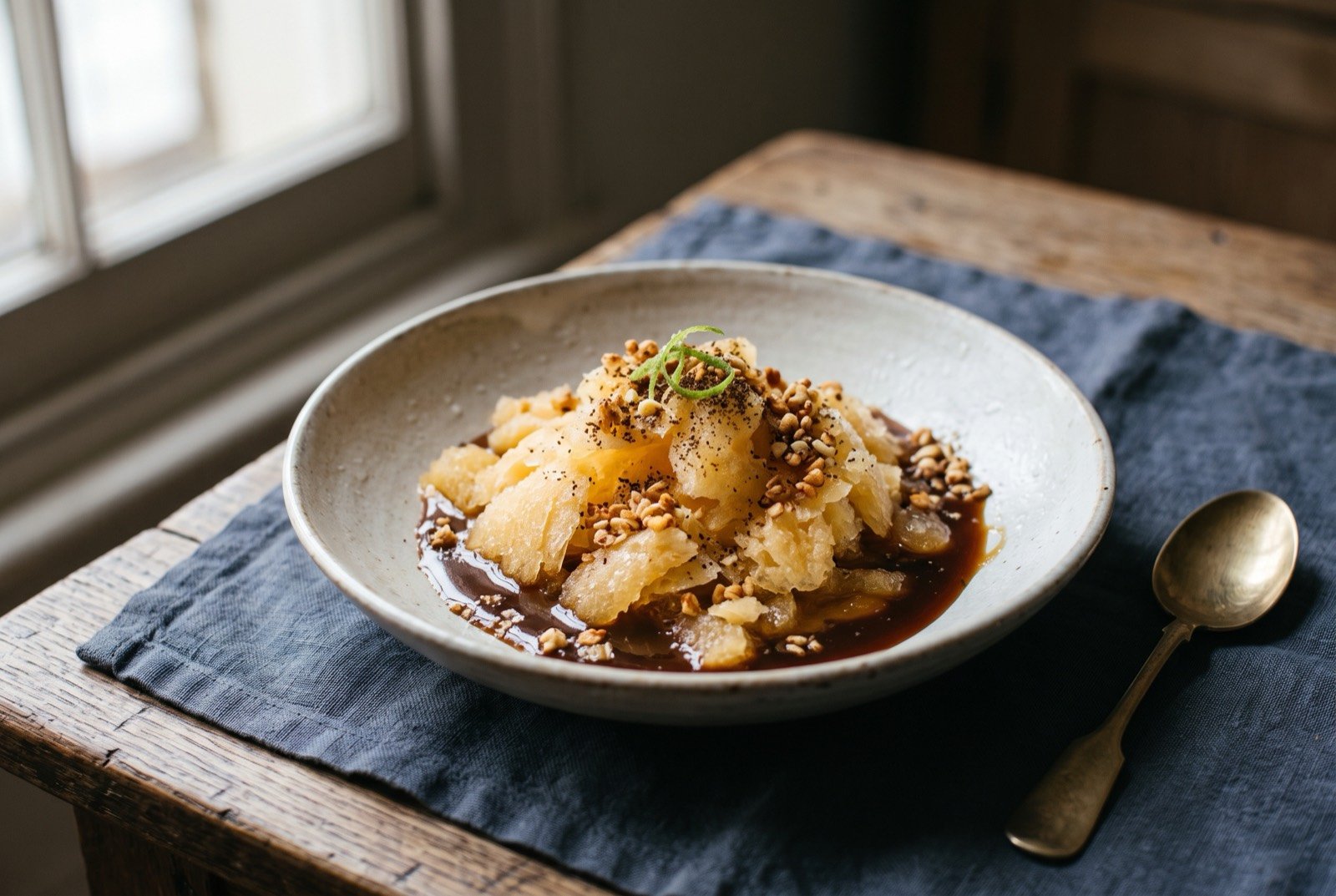
Roasted ogbono caramel, mango, sorghum crumb
Rungs 07, 10, 12 · Serves 6
Method
- Roast 60g of whole ogbono kernels at 170°C for 12 to 15 minutes, until they are deeply fragrant and a shade darker. Cool and grind coarse.
- Ogbono caramel. Make a dry caramel with 150g sugar, take it just past amber, then off the heat whisk in 120ml warm double cream, 40g butter, a good pinch of salt and 40g of the ground roasted ogbono. Blend smooth and pass through a sieve. It will taste like a darker, greener, more savoury praline.
- Mango, frozen and shaved. Blend ripe mango with a squeeze of lime and 20g sugar, freeze flat in a tray, then scrape into a granita, or churn it as a parfait if you have an ice cream machine.
- Sorghum crumb. Rub 80g sorghum flour, 40g butter, 30g sugar and a pinch of salt to a rough crumb, then bake at 170°C for 12 minutes, stirring once. It has a toasted, faintly malty flavour that plain flour does not.
- Assemble with the caramel underneath, mango over, crumb across the top and the last of the ground ogbono dusted on. Finish with lime zest and a few flakes of salt, because there is a lot of fat and sugar here and Rung 10 does not stop applying at the dessert course.
Notes
After Ikoyi's ogbono and Sicilian mango. Ogbono, a seed you have only ever met as a soup thickener, roasted hard, turns nutty and bitter-aromatic in a way that behaves exactly like a praline. The trick is that you are using it for flavour, not for draw, so all the usual rules about not frying it are suspended.