Mainland Brazil · Volume 39, The Fritter and the Fire
Xinxim de galinha
Salvador, Bahia
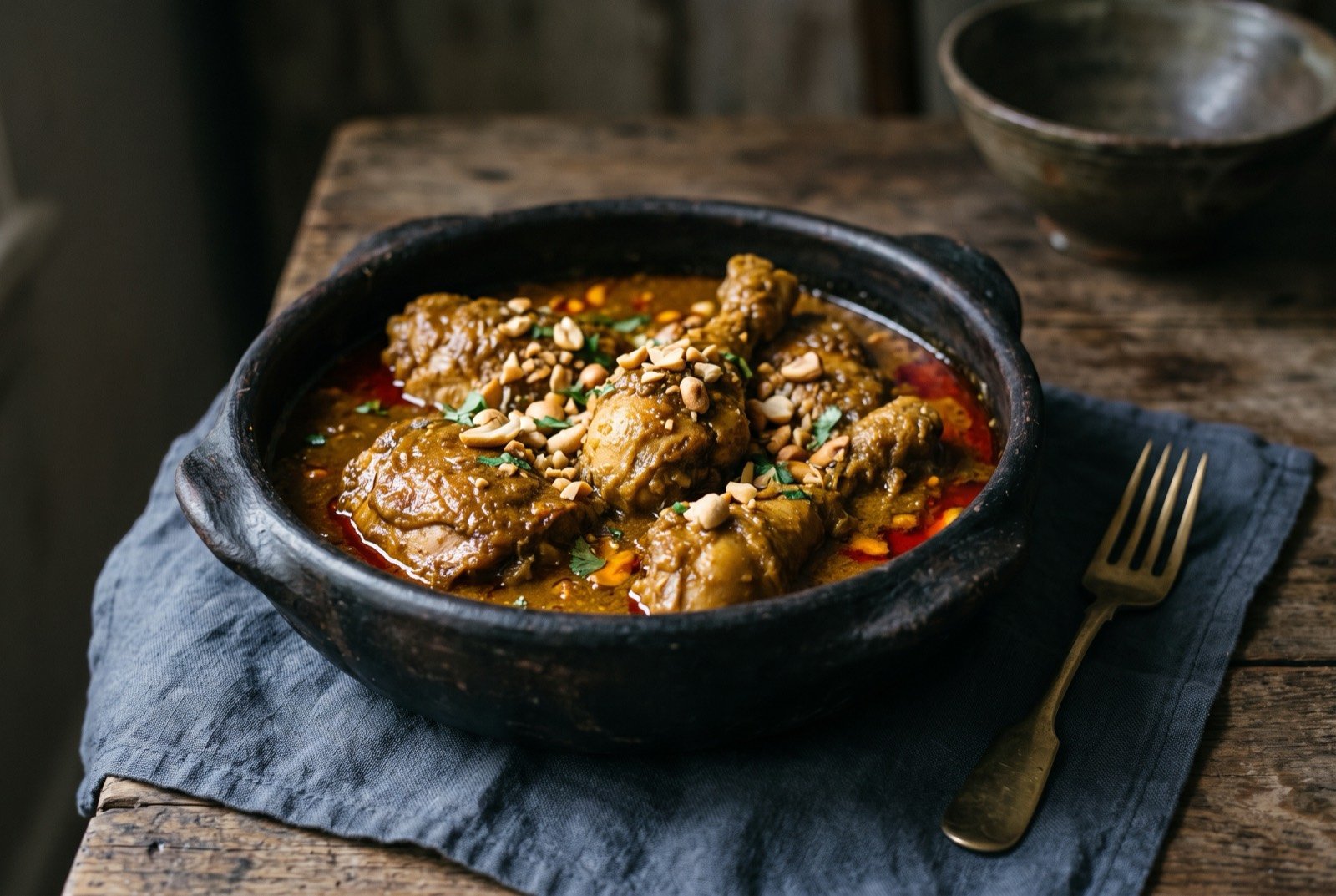
An illustration of the dish, not a photograph of it cooked.
- Time
- 1 hour 30
- Researched
- No outside sources linked
- Reviewed
- Not yet reviewed from inside the tradition
- Cooked
- Not yet cooked and reported
As tradition built it
Xinxim de galinha
Serves 4 to 6. About 1 hour 30 minutes.
Ingredients
- 1.5 to 2kg chicken pieces, on the bone
- 2 to 3 tbsp, for browning dendê
- 100g dried shrimp
- 100g roasted cashew
- 100g roasted peanut
- a thumb fresh ginger
- 3 to 4 cloves garlic
- 1, chopped onion
- 1 to 2, to taste malagueta
- roughly 400ml (one can), or as needed to come halfway up the chicken coconut milk, to come halfway up the chicken
- 200g, optional okra (optional)
Method
- Brown the chicken pieces in dendê, then set aside.
- Blend a paste of dried shrimp, roasted cashew and peanut, fresh ginger, garlic, onion and malagueta and fry until it darkens and smells toasted, not raw.
- Return the chicken to the pan with coconut milk to come halfway up the pieces, cover, and simmer forty five minutes to an hour until falling-tender.
- Uncover for the final ten minutes to let the sauce reduce and cling.
- Okra is sometimes added.
Notes
The Bahian food writer Raul Lody, comparing the dish directly against its Nigerian namesake, argues the Nigerian xinxim reads closer to a fried, sometimes sweet street snack, while the Bahian dish became something else entirely, a stewed, festive-and-everyday chicken dish carrying dendê, dried shrimp, peanut and egusi-adjacent seed thickening.
What a modern chef changes
Sous vide chicken and a fresh-toasted, chinois-strained sauce
Method
- Cook the chicken sous vide to a precise, still-moist doneness, skin crisped separately under the Big Green Egg's direct heat, before it ever meets the sauce, rather than simmering it to tenderness inside the reducing coconut milk, where the breast in particular is otherwise the first thing to overcook.
- Toast and grind the peanut and cashew paste fresh in the spice grinder immediately before blending, the same discipline as vatapá.
- Pass the finished sauce through a chinois before the chicken is folded back through it, for a cleaner, restaurant-grade consistency the traditional pan, thickened by whole roasted nuts, does not attempt.