Mainland Brazil · Volume 39, The Fritter and the Fire
Acarajé
Salvador, Bahia
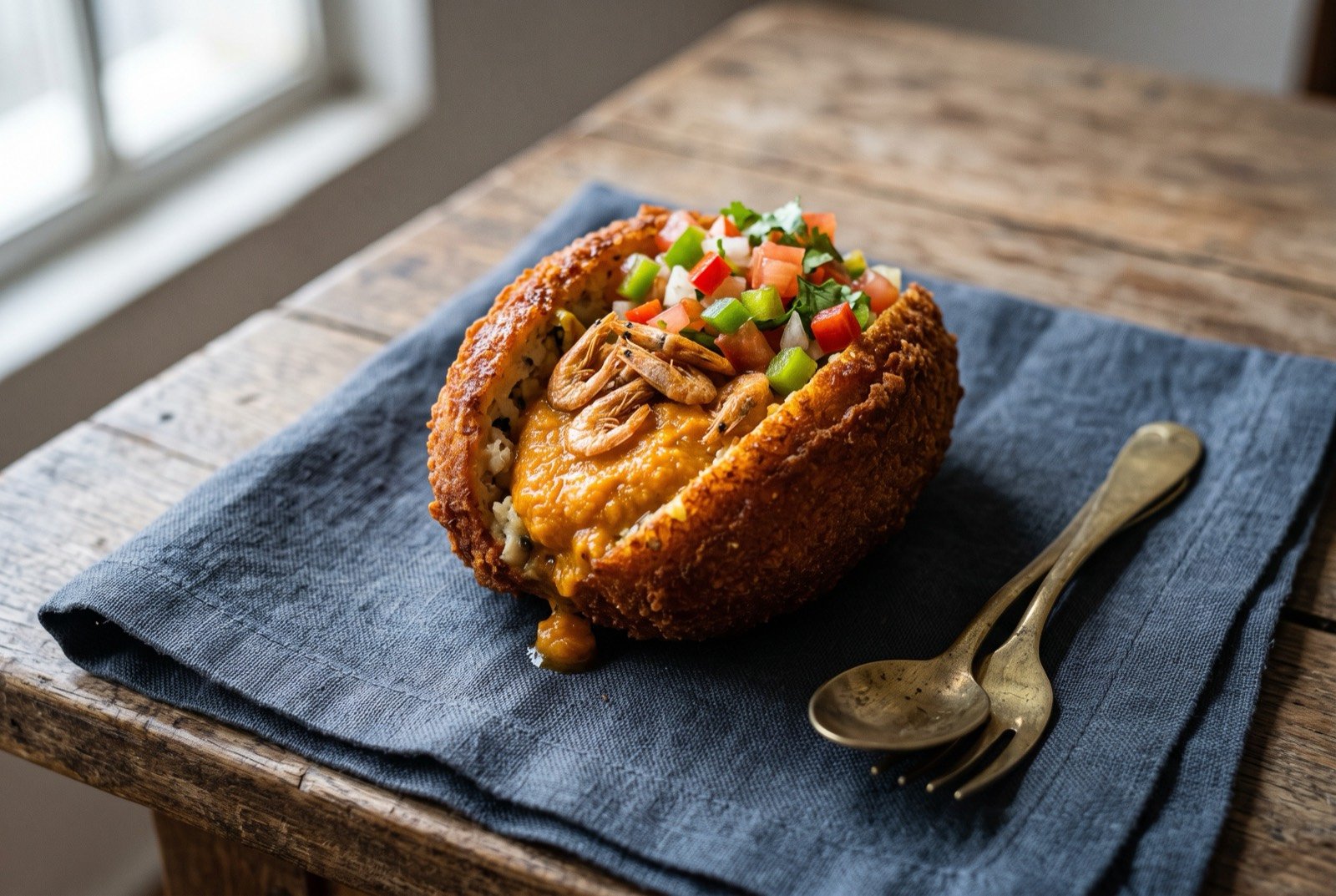
An illustration of the dish, not a photograph of it cooked.
- Time
- 4 hours 45
- Researched
- No outside sources linked
- Reviewed
- Not yet reviewed from inside the tradition
- Cooked
- Not yet cooked and reported
As tradition built it
Acarajé
Makes about 20. Soak 4 hours or overnight, then about 45 minutes.
Ingredients
- 500g dried black-eyed peas
- 1, small onion, quartered, plus a sliver for testing the oil
- as needed, for deep-frying dendê, for frying
- a spoonful, to fill vatapá, for stuffing
- a small handful, to fill dried shrimp, for stuffing
- a spoonful, to fill fresh tomato-and-pepper salad, seasoned with garlic, for stuffing
- to taste, for the ritual version only salt and grated onion, for the version offered to Iansã
Method
- Soak the dried black-eyed peas at least four hours, ideally overnight.
- Rub the soaked peas between the hands under running water until the thin skins lift free and can be washed away.
- Blend the skinned peas with the quartered onion to a thick, fairly dry paste.
- Beat the paste, by hand with a wooden spoon against the side of the bowl or in a pilão if you have one, without adding any further liquid, for a genuine ten to fifteen minutes, until the mass has visibly doubled or tripled and holds soft peaks the way a whipped egg white does.
- Heat dendê in a deep pan to frying temperature, tested traditionally by dropping in a sliver of onion, which should bubble energetically around the edges the moment it hits the oil.
- Shape the beaten paste into rough ovals with two spoons and lower into the oil, frying four to six minutes, turned once, until deep golden-brown and crisp.
- Sell split and stuffed with vatapá, dried shrimp and a fresh tomato-and-pepper salad, seasoned with garlic.
- For the version offered to Iansã, fry plain, unsplit, with only salt and grated onion in the paste: no garlic, no filling.
Notes
The ritual version offered to Iansã is fried plain and unsplit, seasoned only with salt and grated onion, with no garlic and no filling, unlike the stuffed secular street version.
What a modern chef changes
Better tools for the same aeration, not a different technique
Rung 1, Rung 2, Rung 4, Rung 5
Method
- Do the beating in a high-power blender pulsed dry, scraping down between pulses so no water is ever introduced.
- Finish the aeration properly in a stand mixer fitted with a whisk, which holds a more consistent, larger volume of air through the whole batch than an arm tires of holding by the twelfth minute; this is Rung 1 done with better tools, not a different technique.
- Fry in flor de dendê decanted specifically for its heat stability, Rung 2.
- Keep back a spoonful of raw, unrefined dendê to brush over the split, filled acarajé at the very end, off the heat, Rung 4, so the aroma a bottled dendê promises on the label actually survives the fryer.
- Cure your own dried shrimp for the filling on the dehydrator and finish with a short cold smoke on the Big Green Egg, Rung 5, over a resinous fruitwood, honestly stated as a substitute for the aroeira wood Bahian curers actually use rather than a claim of equivalence.