West Africa · Volume 04, The Attiéké Coast
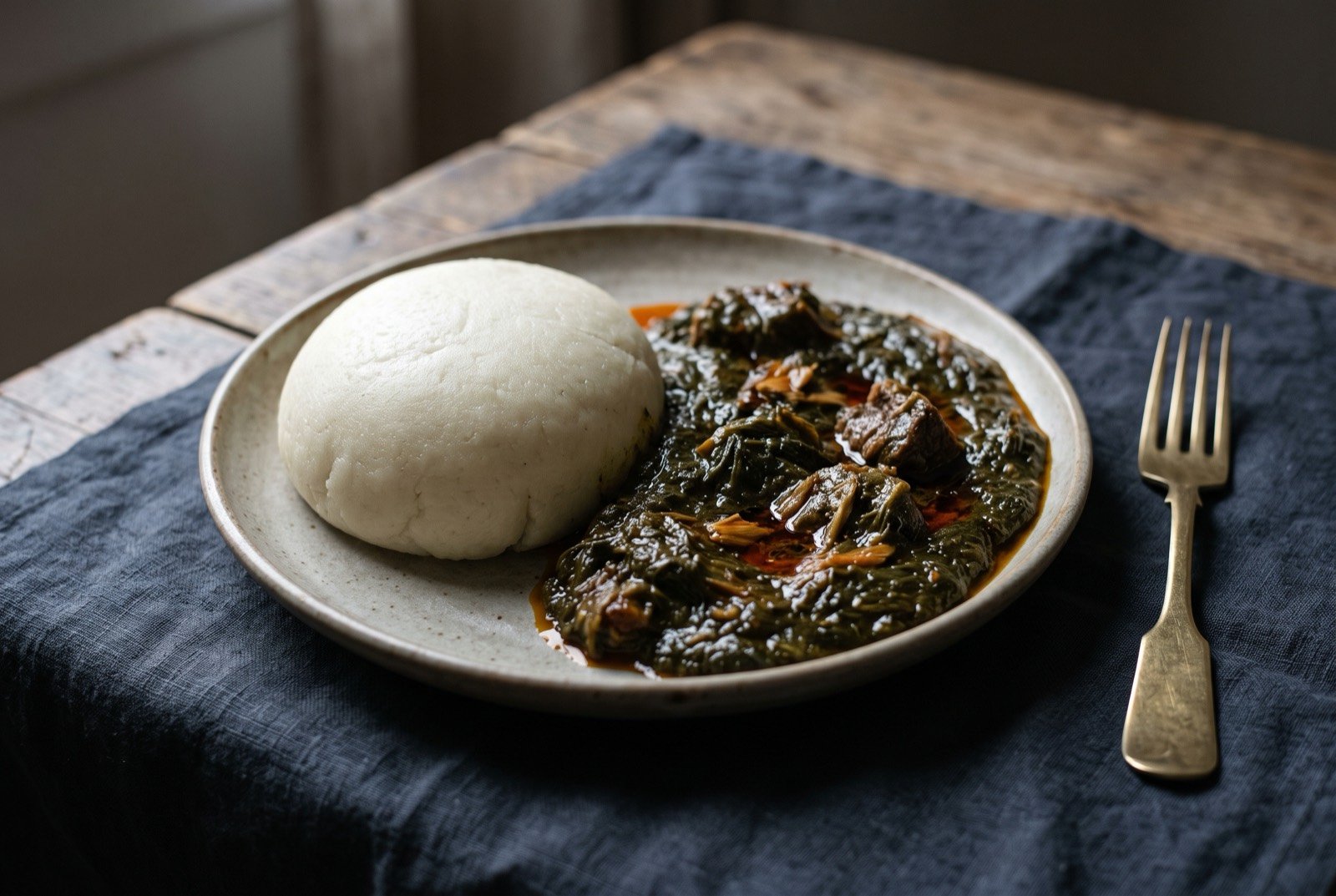
Akoumé with sauce adémè
Ewe and Gen, Togo
Illustration
- Time
- 1 hour 15
- Researched
- Researched from 104 sources in the brief
Akoumé is the fermented wet route: maize steeped, lactic soured, wet milled, and cooked to a smooth paste. It is the same dish as Ewe akple in Ghana and as banku in Accra, and that is the point. Sauce adémè is jute mallow, Corchorus olitorius, the plant Egypt calls molokheya. It is cooked in almost no liquid and then beaten to develop the draw.
As tradition built it
Serves 4. About 1 hour 15.
Ingredients
For the sauce
- 600 g adémè (jute mallow) leaves, chopped coarse
- 15 ml water. Fifteen millilitres. This is not a typo
- 100 ml zomi (spiced red palm oil)
- 1 tsp akam (potash)
- 30 g lanhouin (fermented fish)
- 30 g dried shrimp, crushed
- 2 fresh chillies
- 1 tsp afitin
- 400 g beef, or beef skin
- 200 g smoked fish
Method
- Wash the leaves in salted water, then rinse in warm water two to three times until no sand remains. Chop coarse. Allow 15 minutes for this and do not shortcut it: sand in the sauce is unforgivable and unfixable.
- Cook the beef separately with half the onion, salt and pepper until fork tender, 30 to 40 minutes. Keep the liquor.
- Soak the smoked fish 10 minutes in warm water, then skin and bone it.
- Put the 15 ml of water into the pot with the potash and the lanhouin. Bring to a hard boil. Add all the leaves at once and let them collapse, about 3 minutes.
- Beat for 10 minutes, crushing the leaf bundles against the sides of the pot. This is where the draw comes from and there is no shortcut.
- Add all the proteins, the dried shrimp, garlic, ginger, the remaining onion, the fresh chillies, the afitin and the zomi. Cook 5 minutes. If it tightens too far, let the reserved meat liquor back in.
- Simmer until oil forms glossy eyes on the surface.
Notes
After a Togolese source giving weighed quantities.
For the akoumé, cook 500 g fermented maize dough into 1 litre of water, stirring hard, until smooth, thick and pulling from the sides, about 20 minutes.
Service matters and is not arbitrary. The sauce goes beside the paste ball, not over it, so the eater can press a thumb hollow and scoop.
What a modern chef changes
The draw as a controlled variable, and the acid held back
Rungs 5, 3 and 2
Method
- Understand what the potash is doing and dose it accordingly. It is not seasoning. Mild alkalinity strengthens the polysaccharide network and thickens the draw; acid and prolonged heat destroy it. Start at half a teaspoon, taste for the slippery quality you want, and add more only if it is thin.
- Nothing acidic goes in until the end, and preferably not at all. No tomato, no lemon, no tamarind. If the plate needs brightness it comes from a raw relish on the side. Rung 5.
- Use smoked fish stock as the meat liquor. You are already making it for sauce graine. Rung 3.
- Add the zomi in two stages. Half at step 6, half stirred in off the heat at the very end, which keeps the colour bright and the aroma fruity. Rung 2.
- Serve it the moment it is beaten. This dish cannot be held. Every minute in a warm pot is draw being destroyed, and a gombo or adémè sauce that has sat over a bain marie is a different and much worse dish. This single fact explains most of what is wrong with West African takeaway food in Britain.