West Africa · Volume 04, The Attiéké Coast
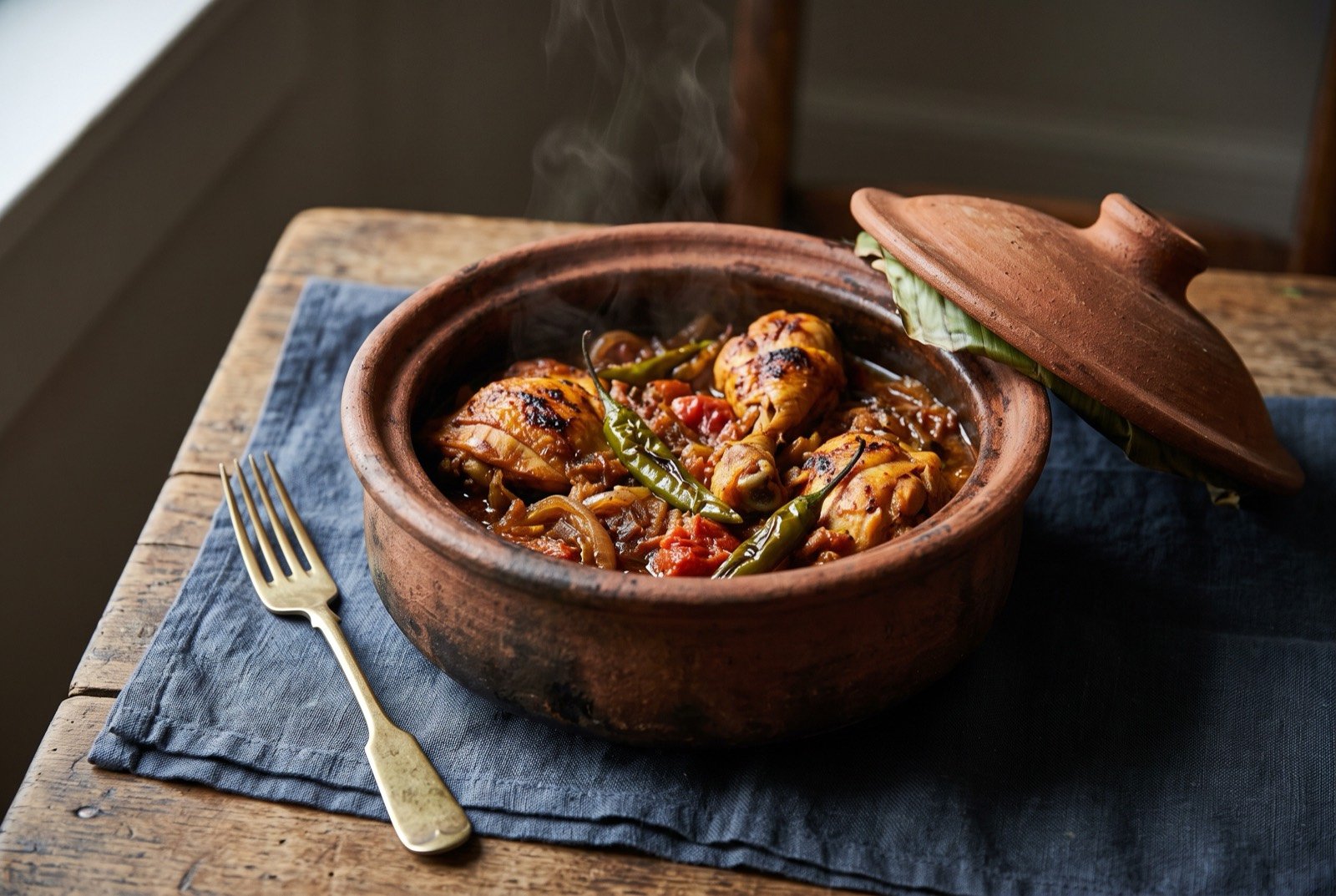
Kedjenou de poulet
Akan and Baoulé
Illustration
- Time
- 40 minutes
- Researched
- Researched from 104 sources in the brief
The name comes from the shaking. This is the only major dish in the volume built entirely on concentration rather than addition: no stock, no oil, no thickener, no browning step. The Ivorian lexicon is firm that it is poultry, game, snails or rabbit only. No beef or mutton version exists.
As tradition built it
Serves 4. 40 minutes covered, plus the seal.
Ingredients
- 1.5 kg chicken or guinea fowl, jointed into 8
- 3 large tomatoes, deseeded and crushed by hand
- 2 onions, sliced thin
- 2 scotch bonnets, one crushed and one left whole
- 20 g fresh ginger, grated
- 2 bay leaves, or aromatic leaves if you have them
- to taste salt
- to seal banana or cassava leaves to seal, or foil
Method
- Put the chicken, tomatoes, onions, scotch bonnets, ginger and bay leaves in a heavy casserole or a clay pot. No water. No oil. Season with salt.
- Seal the mouth with overlapping banana leaves, then the lid. If you have no leaves, a double layer of foil pressed down under the lid.
- Set over the lowest possible heat, or in an oven at 140 to 150°C.
- Cook 40 minutes. Every 15 minutes, lift the whole pot with both hands and rock and swirl it so the contents move. Do not open it.
- Open at the table. There will be a surprising quantity of concentrated liquid, all of it from the bird and the vegetables. Fish out the whole chilli unless someone is brave.
Notes
After Monique Biarnès, La cuisine ivoirienne (1974), the standard early reference.
Serve with attiéké or foutou.
What a modern chef changes
Guinea fowl, a luting seal, a two-temperature cook, and the liquor finished separately
Rungs 4, 3 and 2
Method
- Use guinea fowl, not chicken. It is the better bird for this and it is what the good Ivorian kitchens in London use. Sikatio in Brockley lists kedjenou de pintade, not de poulet, and they are right.
- Lute the lid properly. A rope of flour and water paste pressed around the rim gives you a genuine seal, holds the internal atmosphere at saturation, and makes the theatre of cracking it open at the table part of the dish. Rung 4.
- Two temperatures. 30 minutes at 150°C to render and concentrate, then drop to 120°C for 25 minutes to finish the legs without tightening the breast. Still no lid lifting, still swirling every 15 minutes.
- Split and rebuild at the pass. Pour off the liquor, let it settle 2 minutes, spoon off the fat and reserve it. Reduce the liquor by a third, then whisk the reserved fat back in off the heat to a glossy, just-split sauce. Rung 2 applied to the bird's own fat rather than to palm oil: you are choosing when the emulsion breaks instead of letting an hour of boiling decide.