West Africa · Volume 04, The Attiéké Coast
Djenkoumé
Togo
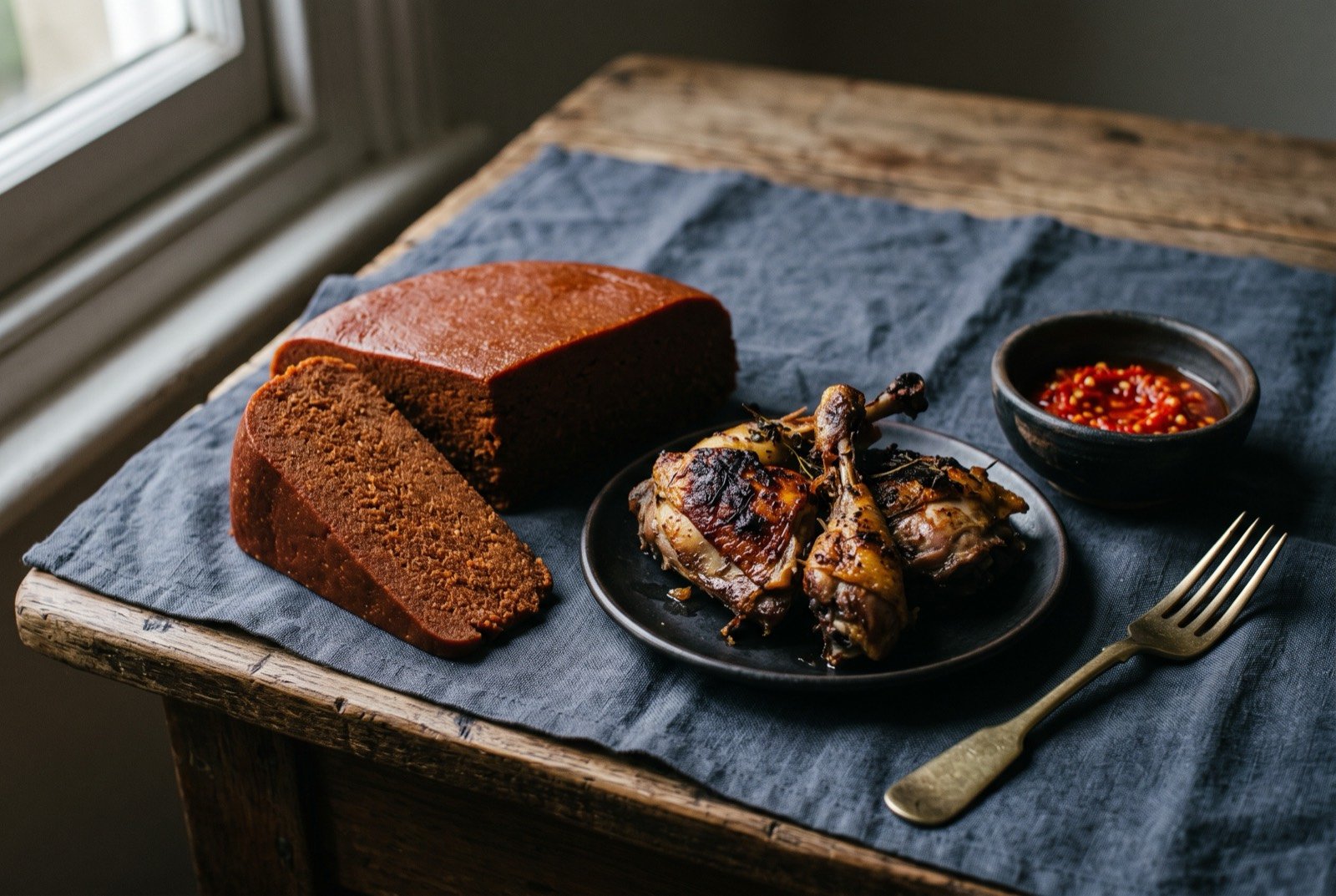
Illustration
- Time
- 1 hour 10
- Researched
- Researched from 104 sources in the brief
- Reviewed
- Awaiting a reader from inside the tradition
- Cooked
- Awaiting a cook report
Where akoumé is fermented and wet, djenkoumé is torrefied and dry. The Ewe name says it: djin, red, and koume, paste.
As tradition built it
Serves 4. About 1 hour 10.
Ingredients
- 400 g maize flour
- 500 g tomatoes, blended with onion and chilli
- 1 tbsp tomato concentrate
- 3 tbsp zomi
- 1 guinea fowl, jointed (traditional), or chicken
- to taste onion, garlic, ginger, salt, stock
Method
- Coat the guinea fowl or chicken with ground onion, garlic, ginger and salt, and braise 40 minutes over wood coals. Keep the braising liquor.
- The step that defines the dish: toast the maize flour dry, over medium heat, stirring constantly, for about 7 minutes, until it smells of popcorn and turns pale blonde. Do not walk away. This is what gives djenkoumé its soul, and it is the only difference between this and a plain maize paste.
- Reduce the blended tomato in the zomi with the concentrate until deep and thick. Add the reserved braising liquor back.
- Assembly, 12 minutes. Pour the toasted flour gradually into the hot sauce, stirring with a wooden spatula in a figure-of-eight motion, never circular, until smooth, glossy and pulling clean from the sides.
- Serve warm, not hot, with a separate raw chilli paste. Diners ball it by hand and press a thumb hollow for the sauce.
Notes
This is the Sunday dish of southern Togo, and it turns up at weddings, baptisms and yam festivals.
What a modern chef changes
Toast measured rather than guessed, and the liquor treated as the point
Rungs 6 and 3
Method
- Toast to a colour and a temperature, not to a feeling. Take the flour to a pale biscuit colour in a dry pan, stirring, and stop when the aroma turns from raw starch to popcorn. If you have a probe, that is around 130°C in the flour bed. Toast further and it goes bitter; stop short and the dish tastes of nothing in particular.
- The figure-of-eight is not folklore. A circular stir sets up a rotating mass that slides against the pan without shearing internally, so the flour hydrates unevenly and lumps. The figure-of-eight reverses direction twice per cycle and forces the paste to fold through itself. Same reason a baker figures-of-eight a dough.
- Make the braising liquor properly and reduce it. The FAO survey describes amiwo, djenkoumé's twin, as maize flour cooked in chicken juice, which is the older and more precise formulation. The liquor is not a moistening agent, it is the flavour of the dish. Braise the bird in a sealed pot as in Rung 4, so nothing is lost, then reduce the liquor by half before it goes in.
- Serve at 55 to 60°C. The instruction to serve warm rather than hot is not casual: hot maize paste is gluey in the mouth and its aroma is masked. Warm, it reads as toasted grain.