West Africa · Volume 04, The Attiéké Coast
Amiwo
Fon, Benin
Illustration
- Time
- 1 hour 10
- Researched
- Researched from 104 sources in the brief
- Reviewed
- Awaiting a reader from inside the tradition
- Cooked
- Awaiting a cook report
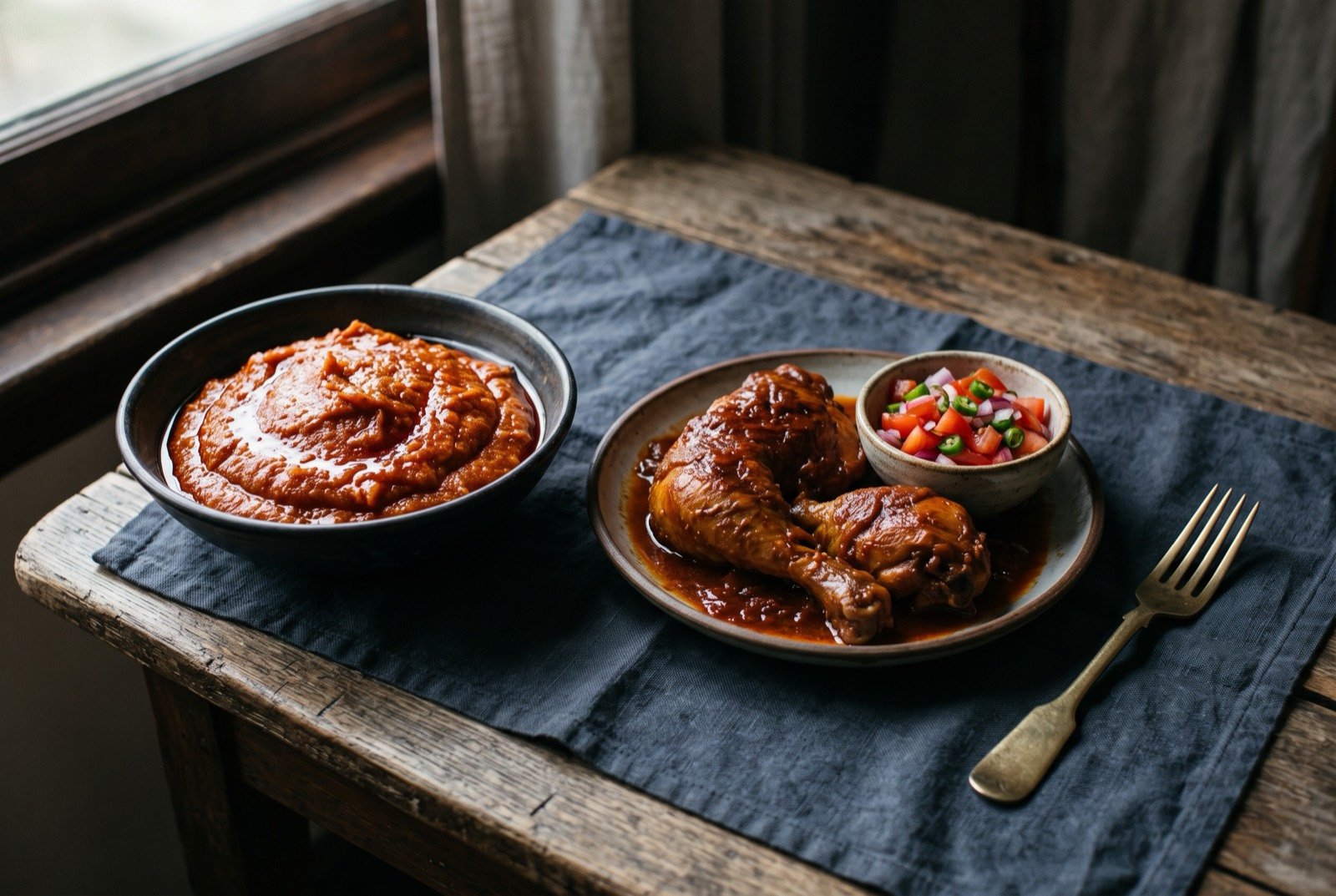
This is the volume's argument in a single pot. Amiwo and djenkoumé are the same technique: torrefied maize, a reduced red palm and tomato base, figure-of-eight assembly, a braised bird. Fongbé names it ami, oil, and wo, paste, the oiled paste. In Fon it is also called Djewo. The Ewe and the Fon descend from the same kingdom at Tado. The line between Togo and Benin was drawn in the twentieth century. The dish is older than the border, and it did not notice it.
As tradition built it
Serves 4. About 1 hour 10.
Ingredients
- 250 g fine white maize flour, unfermented
- 500 g fresh tomatoes
- 1 tbsp tomato concentrate
- 2 tbsp red palm oil
- 1 tbsp vegetable oil
- 1 onion, 3 garlic cloves, ginger, 1 red chilli
- 1 chicken, jointed
Method
- Braise the chicken 40 minutes, traditionally over wood coals. Not fried.
- Torrefy the maize flour 5 to 7 minutes to the popcorn aroma.
- Reduce the tomatoes, concentrate, oils and aromatics 20 minutes to thick and glossy.
- Assemble over 12 minutes, figure-of-eight, raining the flour in until homogeneous, glossy and releasing from the base.
- Serve with moyo: 2 tomatoes, half an onion, 1 red chilli, the juice of half a lemon, oil and salt, all raw and chopped.
Notes
The red is not decorative. The sources are clear that the sacred red signals ceremony and the Vodun warrior deities, and that amiwo was ceremonial festival food before it was everyday street food. Cooking it without knowing that is like cooking a Christmas pudding without knowing what it is for.
What a modern chef changes
Everything from dish nine, plus the moyo taken seriously
Rungs 2, 4 and 5
Method
- Braise the bird sealed, as Rung 4, so the liquor is concentrated without reduction and the meat stays intact.
- Two-stage palm oil. Rung 2. Half into the tomato reduction, half whisked in at the end.
- Build the moyo 30 minutes ahead and drain it. Chop, salt, and leave. It will weep. Drain the liquid off, reduce it by half in a small pan, cool it, and stir it back through. You get moyo with concentrated flavour that does not flood the plate, and the acid arrives where the eater controls it rather than in the paste. Rung 5's principle applied to a relish.
- Do not season the paste with stock cube. If it is flat, it is because the braising liquor was thin. Fix it upstream.