West Africa · Volume 04, The Attiéké Coast
Sauce graine
Côte d'Ivoire
Illustration
- Time
- 3 hours
- Researched
- Researched from 104 sources in the brief
If you cooked abenkwan in Volume Three, you already know this technique. The method is identical and the aromatics are not. That is worth noticing: two national dishes, one shared piece of engineering.
As tradition built it
Serves 6. About 3 hours.
Ingredients
- 800 g palmiste paste, tinned, or 2.5 kg fresh palm nuts
- 1.5 L boiling water
- 400 g smoked meat or kplo (smoked beef skin)
- 200 g smoked fish, soaked and boned
- 2 crabs, halved
- 8 okra, topped
- 1 onion, chopped
- 2 scotch bonnets
- 1 tsp soumbara
- to taste salt
Method
- If starting from fruit: boil the palm nuts 45 minutes until the pulp gives, pound in a mortar to work the oil out of the fibre, keeping the rinsing water. You are after roughly 4 litres of liquid.
- If starting from paste: put the paste in a heavy pot and rain 1.5 litres of boiling water over it, stirring hard the whole time so it does not lump.
- Sear the smoked meat in the dry pot 12 minutes. Add the paste and sweat 8 minutes. Deglaze 5 minutes.
- Add the smoked fish and simmer 30 minutes.
- Add the okra, crab, onion, scotch bonnets, soumbara and salt.
- Reduce uncovered 30 minutes.
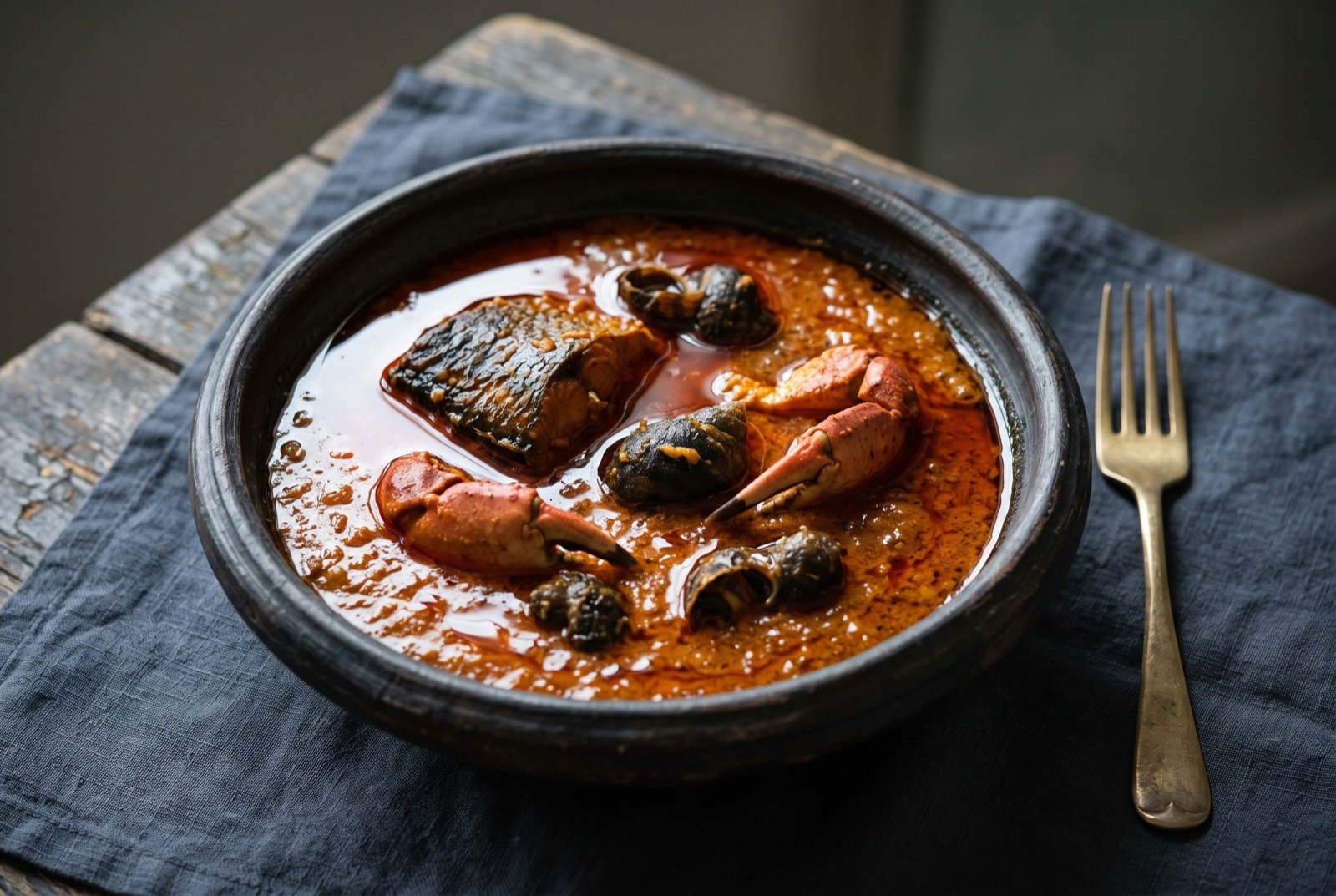
- The success marker is visual and it is not negotiable: a distinct layer of red-orange oil, half a centimetre to a centimetre deep, standing clear on the surface. If no oil has separated, it is not finished. If it separated an hour ago and you are still boiling, you have gone past it.
Notes
Serve with foutou, placali, rice or attiéké.
What a modern chef changes
Smoked fish stock as the liquid, a deliberate break, and the oil re-married at the pass
Rungs 3, 2 and 6
Method
- Build a smoked fish stock first and use it instead of the water. 200 g smoked fish and 30 g dried shrimp, covered with water at 70°C for 40 minutes, never boiling, then strained through muslin, chilled, and the fat lifted off. Reduce by a third. This is Rung 3 and it is the biggest single improvement available to this dish.
- Rain the stock over the paste, not water. Same technique, five times the depth.
- Break it on purpose and hold the parts separately. When the oil layer stands, take the pot off, let it settle, and skim the red oil into a separate jug. Hold the base warm and the oil warm but apart. Rung 2: from that moment, no more carotene is being destroyed.
- Re-marry at the pass. Spoon the base into the bowl, then flood the surface with the reserved oil so it reads as a deliberate slick rather than a broken sauce. It is the same visual endpoint the tradition asks for, arrived at with control instead of hope.
- Use the attiéké fines. The floury fraction you sieved out in dish one thickens this beautifully and is exactly the right flavour. Nothing is wasted.