West Africa · Volume 04, The Attiéké Coast
Placali
Baoulé and general Ivorian
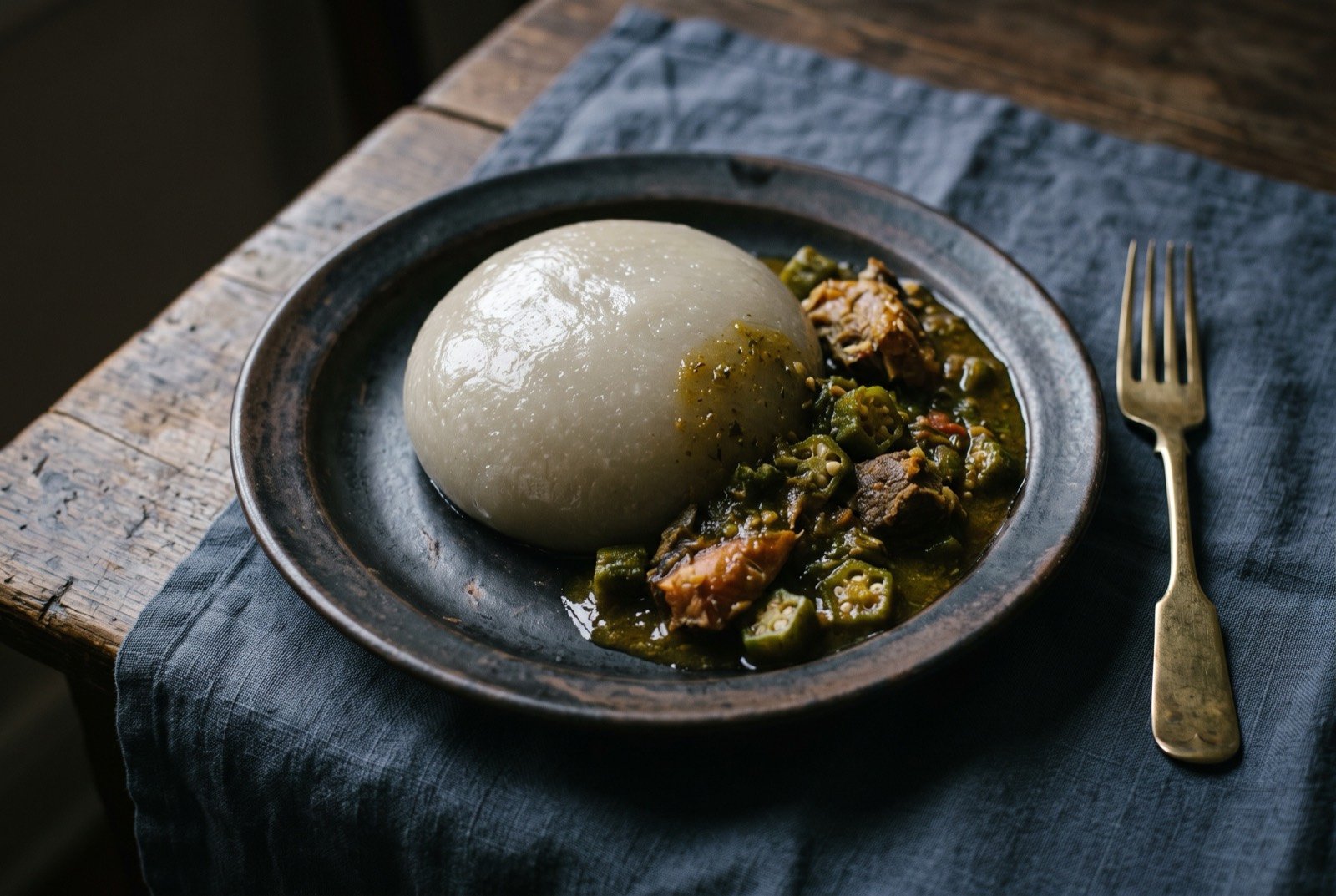
Illustration
- Time
- 25 minutes
- Researched
- Researched from 104 sources in the brief
Attiéké is fermented and steamed. Foutou is boiled and pounded. Placali is retted, which is a different ferment again: the cassava is submerged in water for days until it softens and sours, then worked to a paste. The result is smooth, translucent, elastic and markedly sour, and it is the correct partner for the heavy sauces.
As tradition built it
Serves 4. 25 minutes from flour.
Ingredients
- 500 g fermented cassava flour
- 1 L water
- 1 tsp salt
Method
- Salt the water and bring to a bare simmer in a heavy pot.
- Rain in the flour steadily while stirring hard with a strong wooden spatula.
- Stir hard for 15 to 20 minutes. This is genuine physical work and it does not get easier. The paste passes through a lumpy stage, then a heavy dough stage, then finally goes smooth, glossy and translucent. Stop before that and it is raw and grainy.
- Wet a bowl, turn the paste into it, and swirl to a smooth dome.
Notes
In Côte d'Ivoire the true version starts from fresh retted cassava paste dissolved and sieved rather than from flour, and it is better.
What a modern chef changes
Two-stage hydration, controlled sourness, and a portioned quenelle
Rungs 1 and 6
Method
- Slake first. Mix the flour to a smooth slurry with 300 ml of cold water before it ever meets heat, then rain that slurry into the remaining 700 ml at a simmer. You will not get lumps, and you will halve the stirring. This is the same cold-slake principle that funge, tô and ugali all arrived at independently, which is a striking piece of convergent engineering across the continent.
- Measure the sourness. Taste the slurry. Retted cassava flour varies enormously in acidity between brands and batches. If it is flat, add 30 ml of the strained liquor from a lacto-ferment; if it is aggressive, hold back and let the sauce carry the plate. Rung 1: acidity is a dial, not an accident.
- Finish with a knob of zomi, worked in at the end, which gives a faint sheen and stops a skin forming.
- Portion it. Two warmed spoons into a quenelle, one per plate, rather than a communal dome. This is exactly what Charlie Koffi did to gouagouassou when he put it in an individual cassolette, and it is the whole Abidjan plating argument in one move: the dish is unchanged, the format is not.