West Africa · Volume 04, The Attiéké Coast
Attiéké
Côte d'Ivoire, the lagoon peoples
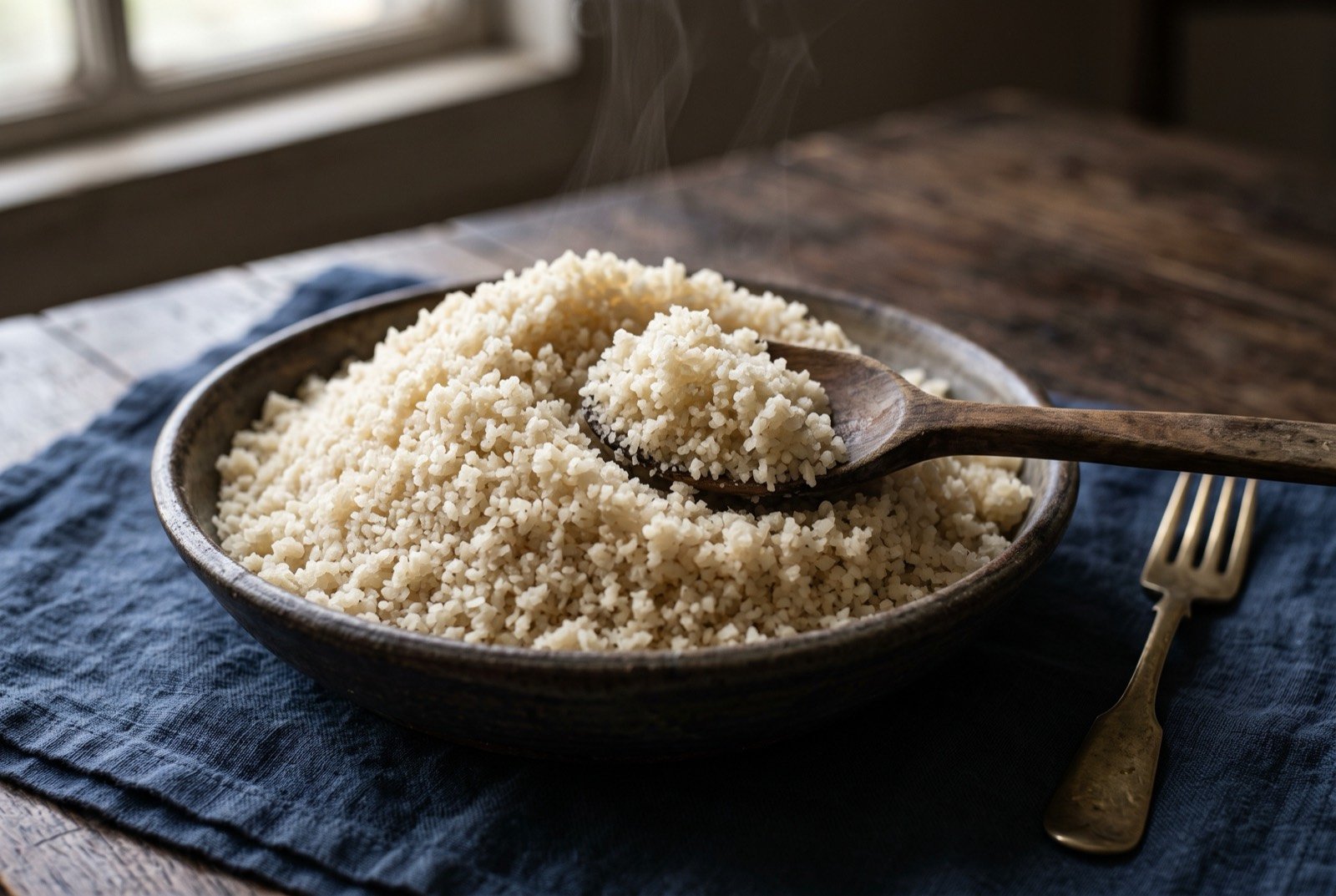
Illustration
- Time
- 25 minutes
- Researched
- Researched from 104 sources in the brief
- Reviewed
- Awaiting a reader from inside the tradition
- Cooked
- Awaiting a cook report
Fermented, pressed, granulated, steamed cassava. UNESCO listed the practice in 2024, and the listing is for a skill set held by women: men do the field work and the milling, and the knowledge that matters is not theirs.
As tradition built it
Serves 4. 25 minutes.
Ingredients
- 400 g dried attiéké
- 300 ml warm water
- 1 tsp fine salt
- 1 tbsp neutral oil, or red palm oil for colour
Method
- Put the attiéké in a wide bowl. Sprinkle over the salted warm water a little at a time, raking it through with your fingers so every granule is dampened and nothing forms a wet lump. Rest 10 minutes. The grain is drinking.
- Sieve it. Push the damp grain through a coarse sieve or a colander with 2 to 3 mm holes, breaking any clumps. This is the step nobody does and it is the difference between attiéké and cassava porridge. You are sorting to a single grade, which is what abodjama means.
- Line a steamer with muslin, add the grain loosely without pressing, and steam 15 minutes, covered.
- Turn into a bowl, fork through the oil, and taste. Do not add lemon. It should already be faintly sour.
Notes
In Britain you will almost certainly start from imported dried attiéké rather than from fresh cassava, and that is fine, but you must understand what you are rehydrating.
What a modern chef changes
Sieved to grade, steamed twice, finished with an aromatic fat
Rungs 1 and 6
Method
- Sieve to a single grade and be strict about it. Discard or set aside the floury fines that fall through a 1 mm sieve; keep only what sits between 1 and 2 mm. You are hand-building abodjama. The fines are not waste, they thicken a sauce.
- Steam twice. Ten minutes, out, raked with a fork and rested uncovered 5 minutes so surface moisture flashes off, then a second 8 minutes. Two short steams with a rest between give a drier, springier, more separate grain than one long one.
- Check the acid. Taste it. If your imported attiéké has gone flat, and much of it has, bring it back with a tablespoon of the strained liquid from a lacto-ferment rather than with lemon: cabbage or cucumber brine, or the liquor off a jar of preserved limes. You are restoring the fermentation acidity the grain lost in transit, on the same axis it originally had. Lemon is a different acid and it tastes bolted on.
- Finish with zomi rather than raw oil. Warm 2 tbsp red palm oil to 140°C with a slice of onion, a crushed clove of garlic and a bay leaf, off the heat, infuse 10 minutes, strain. Fork it through. Rung 2: the oil goes in warm and late, so the carotene survives and you get the colour and the fruit.