West Africa · Volume 01, The Wolof-Mandinka World
Benachin
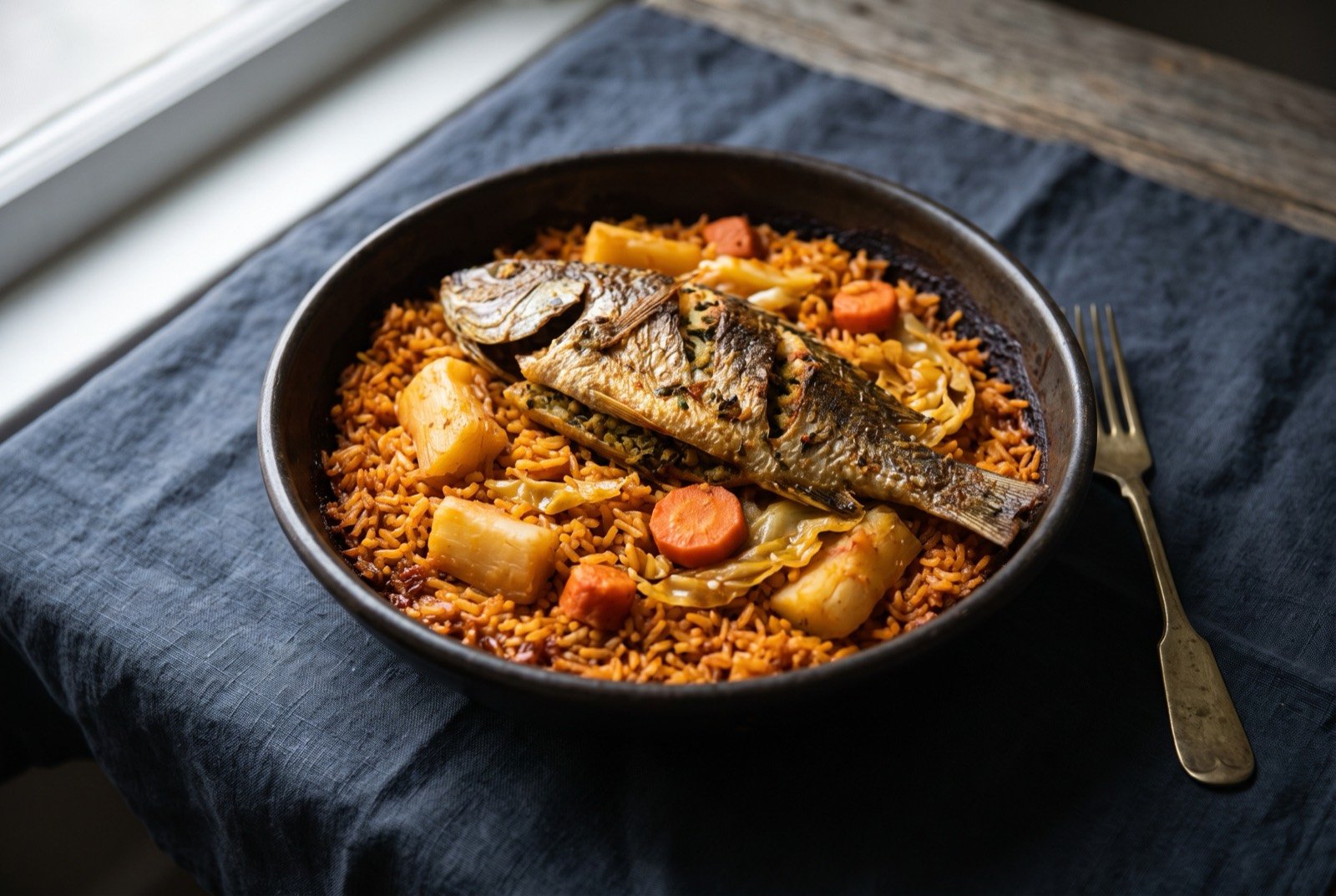
The Wolof-named "one pot," Gambia and Senegal both
Illustration
- Time
- 1 hour 30
- Researched
- Researched from 160 sources in the brief
- Reviewed
- Awaiting a reader from inside the tradition
- Cooked
- Awaiting a cook report
As tradition built it
Serves 6. About 1 hour 30.
Ingredients
The method as the tradition gives it, ingredients named but not yet weighed. Quantities follow as we verify them, lead dishes first.
- 1 whole fish, stuffed with rof as in dish 1
- 2 onions
- 400 g tomatoes, plus concentrate
- 60 ml palm oil
- cassava, sweet potato, bitter aubergine, cabbage
- 800 g rice
Method
- Soften the onion in the palm oil, add the tomato and concentrate, and reduce hard.
- Add water and the harder root vegetables: cassava, sweet potato and bitter aubergine.
- Add the stuffed fish, cook through, and lift out.
- Add the cabbage.
- Add the rice to the same coloured, fat-rich liquid and let it absorb entirely, exactly the ceebu jën logic with palm oil in place of the fish-and-guedj base.
- The crust at the very bottom is prized, not discarded, caramelised dark, crisp and faintly smoky.
What a modern chef changes
The same xoon discipline as ceebu jën, with palm oil's own carotenoid chemistry to manage
Rungs 1 and 2
Method
- Treat the palm oil in two stages, a little early for depth, more stirred through late for colour and aroma, since red palm oil's carotenoids degrade under sustained heat exactly as they do everywhere else in this atlas.
- The crust rules from Rung 1 apply without modification. A flat, heavy pot, no stirring in the final minutes.