West Africa · Volume 04, The Attiéké Coast
Alloco
Côte d'Ivoire
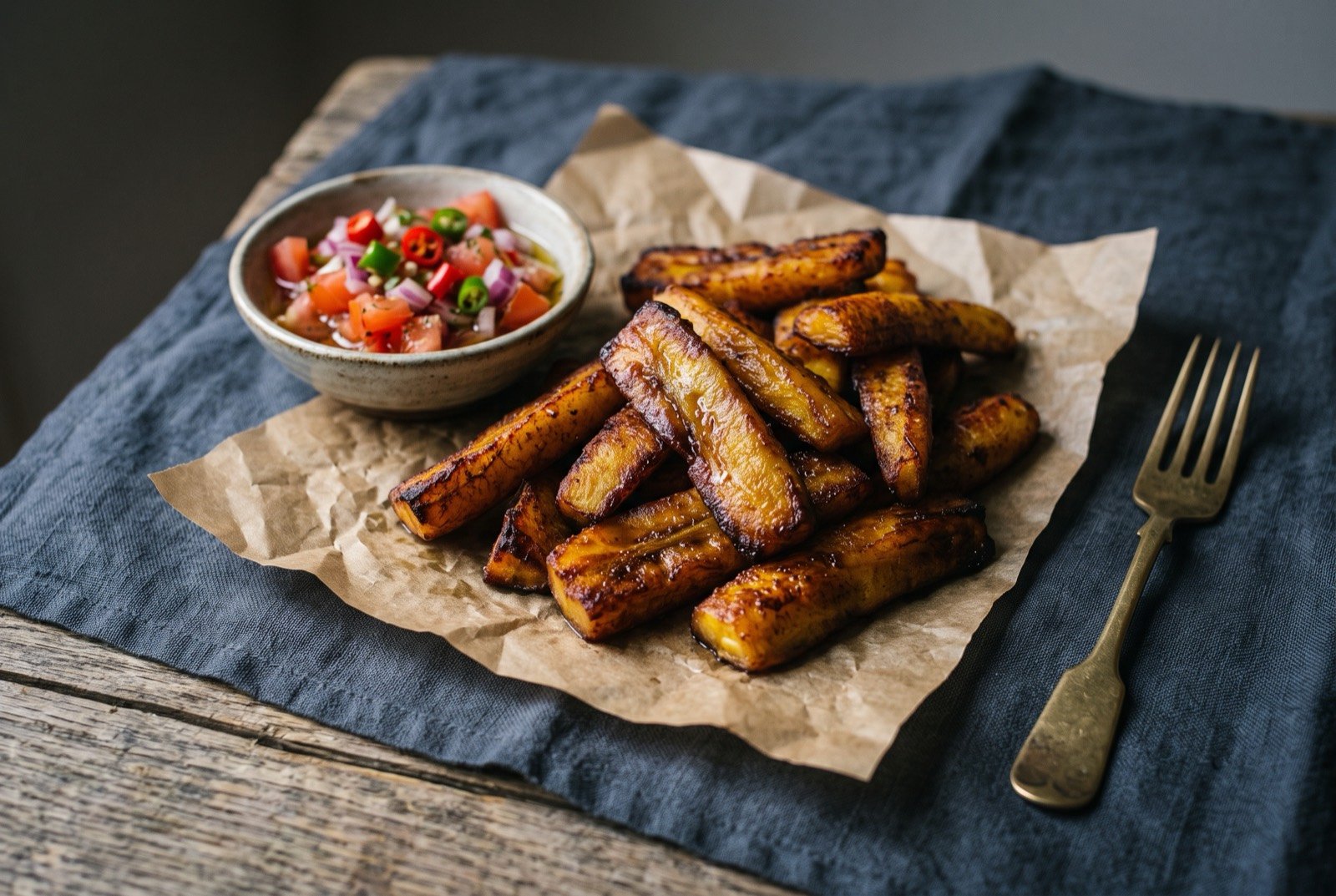
Illustration
- Time
- 15 minutes
- Researched
- Researched from 104 sources in the brief
- Reviewed
- Awaiting a reader from inside the tradition
- Cooked
- Awaiting a cook report
As tradition built it
Serves 4. 15 minutes.
Ingredients
- 4 very ripe plantains, skins heavily blackened
- 2 cm depth red palm oil to a depth of 2 cm
- 1 onion, halved
- 1 tsp fine salt
Method
- Peel and cut into cubes or thick rounds. Salt them. That is the entire seasoning.
- Heat the red palm oil with the onion halves in it, over low heat, until fragrant. Fish out the onion.
- Fry the plantain 5 to 10 minutes over low heat, turning, until deep gold with dark caramelised edges and a soft centre.
- Drain on paper. Serve with a spiced tomato sauce, hard-boiled eggs, fried fish, and the standard raw chopped chilli, onion and tomato condiment.
Notes
The philosophical note, which is the point of including it. Alloco and Ghanaian kelewele start from the same fruit and disagree completely. Kelewele marinates the plantain first in ginger, chilli, cloves and nutmeg, so the flavour is locked inside and fixed by the fryer. Alloco puts nothing on the fruit but salt, fries it in palm oil that contributes its own carotenoid flavour, and arranges the heat and acid beside it on the plate, where they stay adjustable.
Alloco is modular and composed at the table. Kelewele is finished at the fryer. Neither is better. They are different arguments about where flavour should live, and this volume's neighbour makes the opposite case.
What a modern chef changes
Ripeness by measurement, a two-stage fry, and the condiment as a real component
Rungs 2 and 6
Method
- Get the ripeness right and stop guessing. You want the fruit at the point where the skin is black but the flesh still holds shape under a thumb. If it collapses when pressed, it will collapse in the pan.
- Two-stage fry. 140°C for 4 minutes to cook through and convert starch to sugar, out and rested 5 minutes, then 180°C for 90 seconds to caramelise the outside. You get a genuinely crisp shell over a soft centre, which one-stage frying cannot give you.
- Do not do the second stage in red palm oil. This is Rung 2 stated as a rule: 180°C destroys carotene fast. Do the low stage in palm oil for flavour and colour, and the high stage in a neutral oil for the crust. You keep the palm character and lose none of it to the heat.
- Treat the condiment as a component, not a garnish. Raw tomato, red onion, scotch bonnet and a pinch of salt, chopped fine and left 20 minutes so it weeps and the flavours meet. That weeping liquid is the acid on the plate, and it is doing what the lemon should not.