West Africa · Volume 03, The Gulf of Guinea
Ayamase
Yoruba, Lagos
Illustration
- Time
- 2 hours
- Researched
- 11 sources cited
- Reviewed
- Awaiting a reader from inside the tradition
- Cooked
- Awaiting a cook report
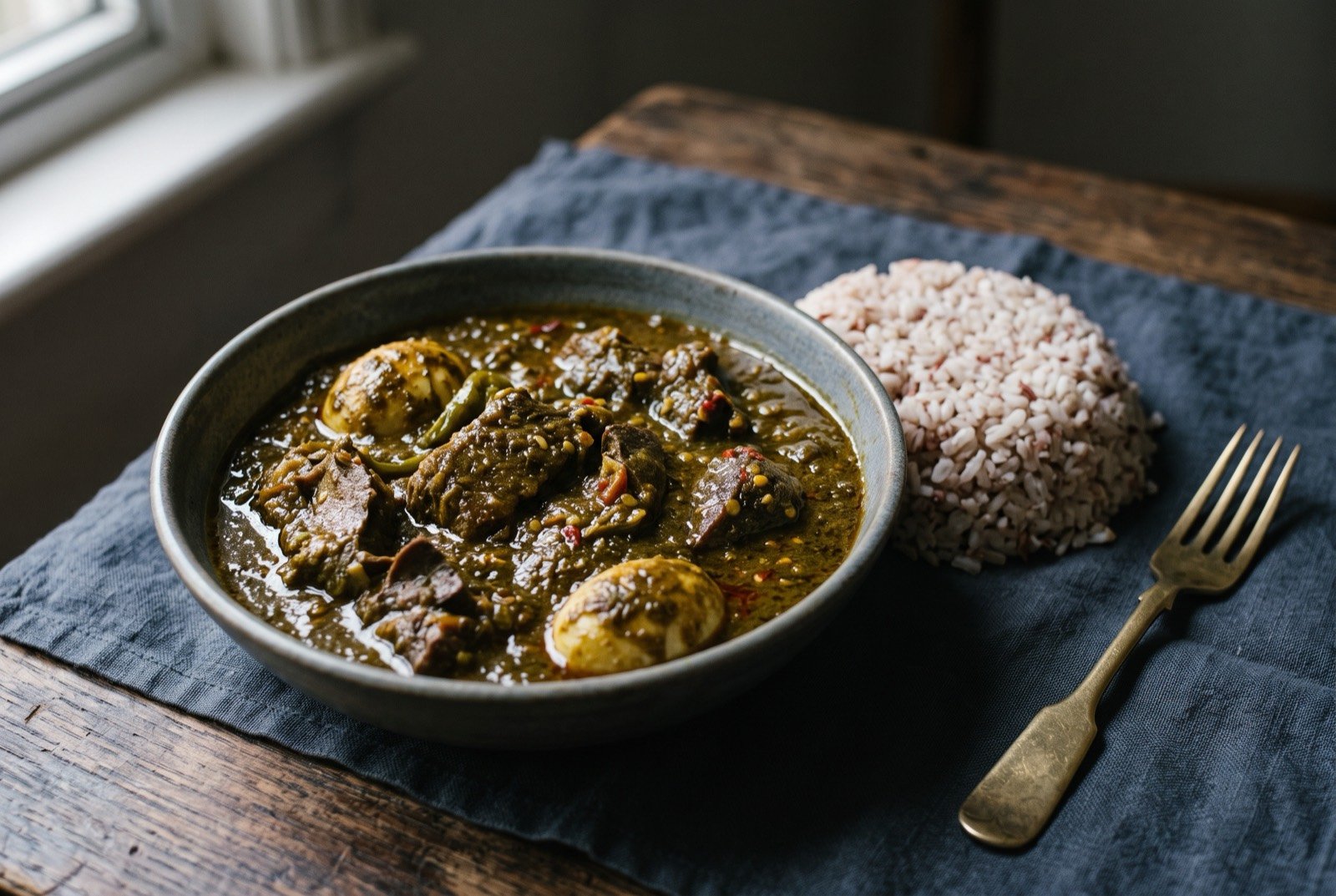
Ayamase is the dark green stew of unripe scotch bonnets that began as Lagos street food and became an owambe status dish, which is where "designer stew" comes from. The popular story that the name means "Mase's wife" is repeated everywhere and has no primary source behind it, so treat it as folk etymology.
What is not in doubt is the technique. The palm oil must be bleached. Not warmed, not heated: taken to smoke, covered, for ten to twelve minutes until it runs clear like vegetable oil. In this dish the pyrolysed oil is the flavour. Get the safety right and read Rung 05 before you start.
As tradition built it
Ofada stew, ayamase
Serves 6 · 2 hours
Ingredients
- 25 to 30 green (unripe) scotch bonnets, stemmed
- 2 green bell peppers, seeds removed
- 2 onions, one blended, one sliced
- 200ml red palm oil, to be bleached
- 850g assorted meat: beef, shaki (tripe), ponmo
- 100g stockfish, soaked overnight
- 60g smoked catfish, boned
- 2 tbsp ground crayfish
- 2 tbsp iru
- 4 boiled eggs, halved (optional, common in restaurants)
Method
- Boil the shaki first with onion and salt for an hour, then add the beef and ponmo for a further 45 minutes. Reserve the stock. Every drop of it.
- Blend the green chillies, green peppers and one onion coarsely. Boil the blend in a dry pan until every trace of water has evaporated. This takes longer than you expect and it is the difference between a stew and a watery mess.
- Bleach the oil. Windows open. Stainless steel pot. Medium-low, lidded, 10 to 12 minutes, without lifting the lid. It is ready when it has gone clear and pale. Take it off and let it cool for five minutes.
- Fry the sliced onion in the bleached oil, then add the iru and let it soften.
- Add the pepper paste and fry for 20 minutes, stirring. Add the crayfish. The stew will go from bright green to a deep olive-khaki, which is correct.
- Add the meats, stockfish, catfish and enough reserved stock to loosen. Simmer 15 minutes. Fold in the eggs at the end. Serve with ofada rice.
What a modern chef changes
Hogget ayamase, crisp tripe, pickled chilli
Rungs 01, 04, 10, 14 · Serves 4
Method
- Hogget shoulder, 18 hours at 68°C in the water bath, vacuum-packed with a spoon of yaji, a bruised uda pod and a knob of the bleached palm oil. Chill in the bag. Press it flat between two trays overnight if you want clean portions.
- Build the ayamase base as above, then sieve it through a chinois. You lose the shreds of chilli skin, and the sauce turns from rustic to velvet. Reduce the sieved sauce further until it will coat a spoon.
- Fix the colour. Blanch a large handful of spinach for 20 seconds, refresh in iced water, squeeze bone dry and blend it into the finished sauce off the heat. Akoko do exactly this. The green comes back and the flavour is untouched.
- Crisp the tripe. Simmer honeycomb tripe until fully tender, dry it thoroughly, cut into 3cm pieces, then deep-fry at 180°C for four minutes until blistered and crunchy. Salt and dust with yaji straight from the fryer.
- Finish the hogget on fire. Portion, brush with palm oil, and give it two minutes a side over the Egg running hot and direct, so the outside chars and the inside stays at the texture 18 hours bought you.
- Plate. Sauce down. Hogget on. Crisp tripe over. Then pickled green chilli (sliced jalapeño in 2 parts rice vinegar, 1 part water, 1 tsp sugar, 30 minutes) and a few leaves of raw utazi shredded to hair-fineness. Ofada rice alongside, steamed plain.
Notes
Chishuru serve hogget ayamase on a green pepper and fermented locust bean stew with crispy tripe and smoked lamb's tongue. The insight worth stealing is that the tripe stops being a soft, apologetic thing in the stew and becomes the crisp element on the plate.