West Africa · Volume 03, The Gulf of Guinea
Shito
Ga, Accra
Illustration
- Time
- 1 hour 30
- Researched
- 11 sources cited
- Reviewed
- Awaiting a reader from inside the tradition
- Cooked
- Awaiting a cook report
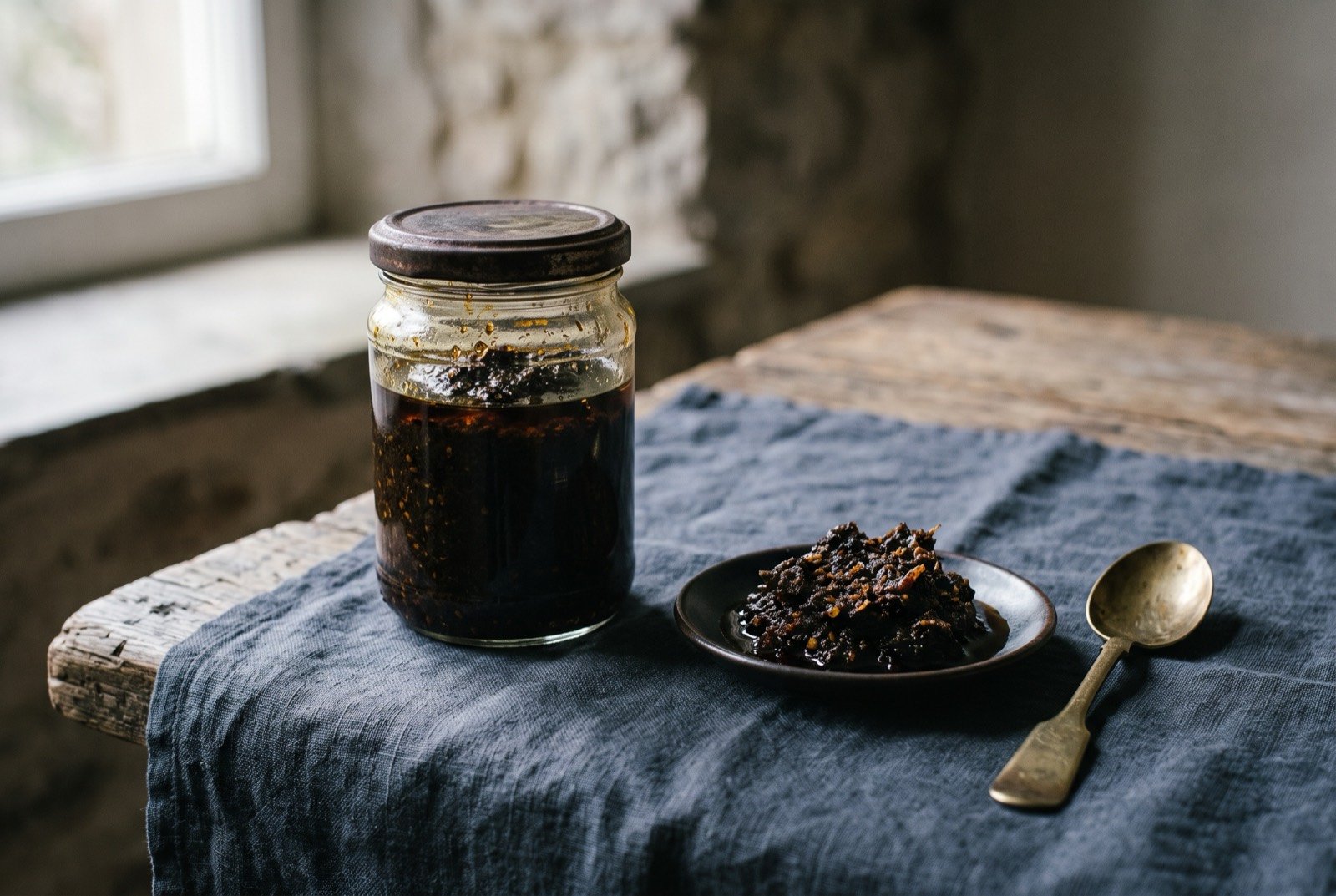
The name is simply Ga for "pepper". What it actually is: a cooked, oil-preserved, near-black chilli and dried-seafood paste, built to keep for weeks without refrigeration. It is the jar every Ghanaian student takes to school, and the thing that makes institutional food edible.
Two mechanisms explain the whole recipe. First, every moist ingredient is fried dry. Water activity is driven down until only oil and dry solids remain, which is the same preservation logic as Italian conserva or Indian achaar. Second, Maillard against fish protein: once the shrimp and fish powders go in, the amino acids meet the sugars from onion and tomato under sustained frying, and the paste turns from red to brown to nearly black. The colour change is the reaction.
As tradition built it
Shito
Makes about 1 litre · 1 hour 30 · keeps 6 weeks
Ingredients
- 400ml neutral oil (it looks like a lot; it is correct)
- 2 large onions, blended
- 75g fresh ginger, blended
- 4 garlic cloves
- 200g tomato purée
- 4 fresh tomatoes, blended
- 40g ground dried shrimp
- 40g ground dried fish or smoked herring
- 40g ground crayfish
- 2 tbsp dried chilli flakes, or more
- 1 tbsp ground anise
- to taste Salt, last of all
Method
- Fry the blended onion, ginger and garlic in the oil over medium heat until they have given up all their water and started to colour. Twenty minutes, and do not rush it.
- Add the tomato purée and fry it out for a full ten minutes, to remove the sour tinny taste.
- Add the blended fresh tomato and cook, stirring almost constantly, until it is a thick, dark, rich paste. Another 20 minutes.
- Add the chilli flakes and anise, five minutes.
- Add all three dried seafood powders and cook a further 10 to 15 minutes on low, stirring, so they do not burn and go bitter. The paste will go very dark brown to black.
- Salt at the very end, because the dried seafood is already salted. Cool. Jar it, and make sure there is at least a centimetre of oil sitting on top. That layer is the preservation.
Notes
The flavour sets in properly after cooling, and it is better on day three than on day one.
What a modern chef changes
Shito XO
Rungs 02, 06, 09 · Makes about 700ml
Method
- Use whole seafood, not only powder. Finely chop 200g of raw tiger prawns and flake 150g of hot-smoked mackerel. You now have texture and shred, which is what makes XO XO.
- Build the base as for shito, in 500ml of grapeseed oil, through the tomato purée stage.
- Fry the prawns hard in the oil first, until they have gone completely dry and slightly crisp at the edges. Lift them out and set aside. Do the same with the smoked mackerel.
- Season with soy sauce and fish sauce together, one tablespoon each, rather than with salt alone. Both are hydrolysed protein: you are adding free amino acids, not just sodium.
- Return the dried prawn and mackerel to the pot for the last five minutes only, so they keep their bite.
- Finish with a splash of Chinese black vinegar off the heat. Rung 10, and it is what makes the difference between a condiment you like and one you cannot stop eating.
Notes
Akoko's version, and one of the most intelligent pieces of cross-cultural reasoning in London cooking: shito rebuilt on the logic of Cantonese XO sauce. Both are dried-seafood chilli condiments preserved in oil. Once you see that, the rest follows.
Where to put it: under a grilled scallop. On steamed rice with an egg. Through cold noodles. Alongside roast lamb. It is the single most useful thing in this guide to have in your fridge, and it will quietly improve food that has nothing to do with West Africa.