Mainland Southeast Asia · Volume 42, The Tea Leaf, the Curry Oil and the Caravan Road
Mohinga
Bamar dry zone and delta
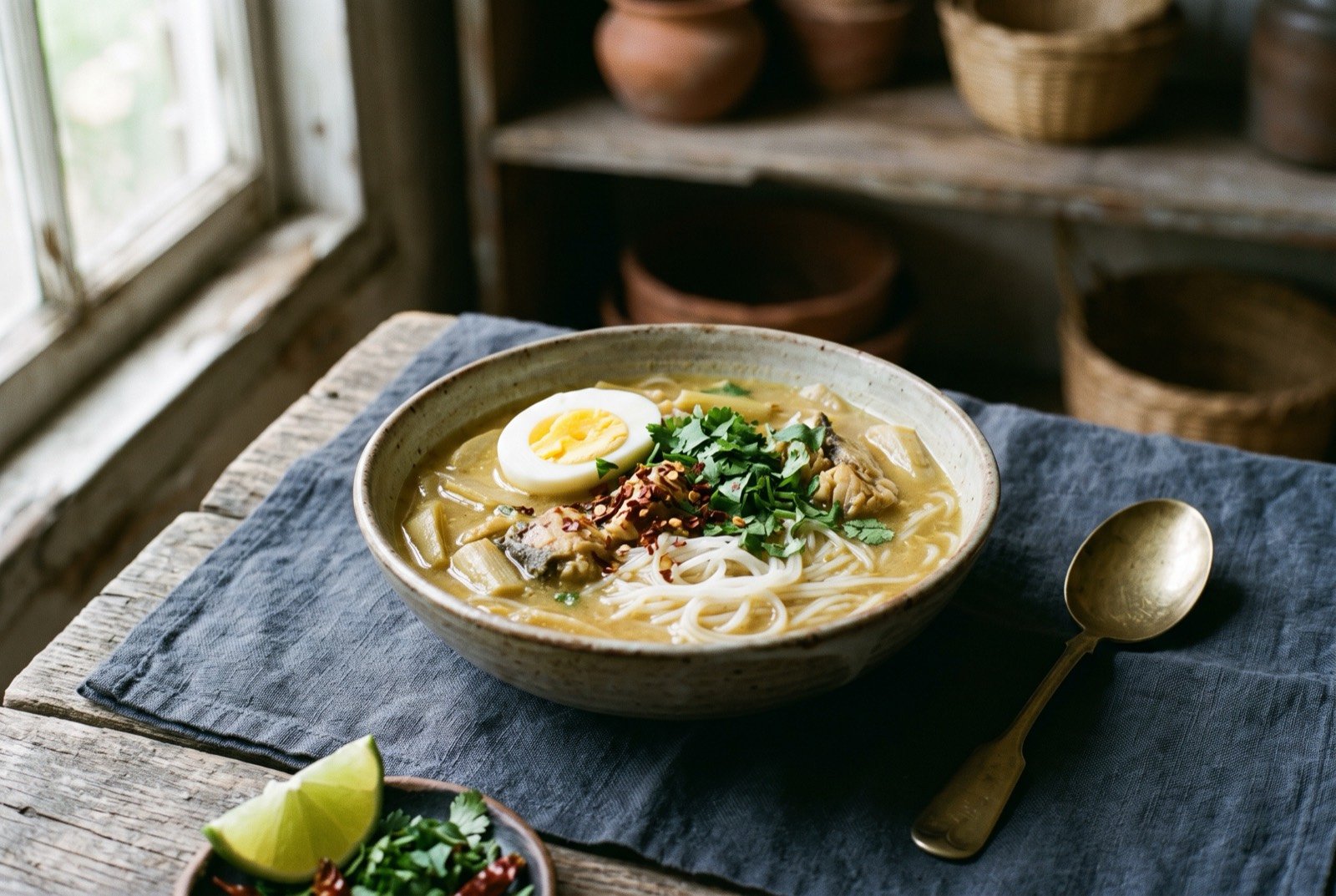
An illustration of the dish, not a photograph of it cooked.
- Time
- 2 hours
- Researched
- 12 sources cited
- Reviewed
- Not yet reviewed from inside the tradition
- Cooked
- Not yet cooked and reported
Over fifteen regional varieties of mohinga exist, Yangon, Pathein, Mandalay and Shan versions named among them, and it is eaten around the clock, at funerals and celebrations alike.
As tradition built it
Serves 4 to 6. About 2 hours.
Ingredients
- 300g catfish, whole where possible
- as available lemongrass, turmeric, ginger, for poaching
- 1.5 litres water
- 100g banana stem, young, sliced
- 75 to 100g roasted rice powder or chickpea flour
- for garnish fish sauce, dried chilli flakes, boiled egg, coriander, to garnish
- 1 bundle per bowl rice vermicelli
Method
- Poach the whole catfish gently in the water with lemongrass, turmeric and ginger until just cooked. Lift out the fish, flake the flesh, and reserve.
- Return the bones, head and skin to the pot and simmer a further hour. This second stage is what actually builds the stock's body: a single poach gives you cooked fish, not a proper broth.
- Strain the stock, discard the bones. Add the banana stem, simmer until tender but not disintegrating.
- Whisk the roasted rice powder or chickpea flour into a little cold stock to make a smooth slurry, then stir this gradually into the simmering pot until the broth thickens.
- Return the flaked fish to the pot, season with fish sauce.
- Serve over rice vermicelli, garnished with dried chilli flakes, boiled egg, coriander and a squeeze of lime.
What a modern chef changes
The two-stage stock respected as the actual technique, and the oil-break rule applied to the aromatics before the fish goes in
Rung 1
Method
- Sweat the lemongrass, turmeric and ginger in a little oil first, watching for the oil to visibly separate, before adding the fish to poach. This is the same hsibyan discipline this chapter uses for a Bamar curry base, applied here to a broth rather than a sauce, and it builds real depth before the fish is even in the pot.
- Do not skip the bones-and-skin second stage. A stock that stops after poaching the flesh is thinner and less gelatinous than the tradition intends; give the second simmer its full hour.
- Use the thinnest rice vermicelli available, not standard pad Thai noodles. Mohinga's texture depends on a noodle delicate enough to carry the thickened broth without fighting it.