Mainland Southeast Asia · Volume 42, The Tea Leaf, the Curry Oil and the Caravan Road
Shan Noodles
The Shan hills
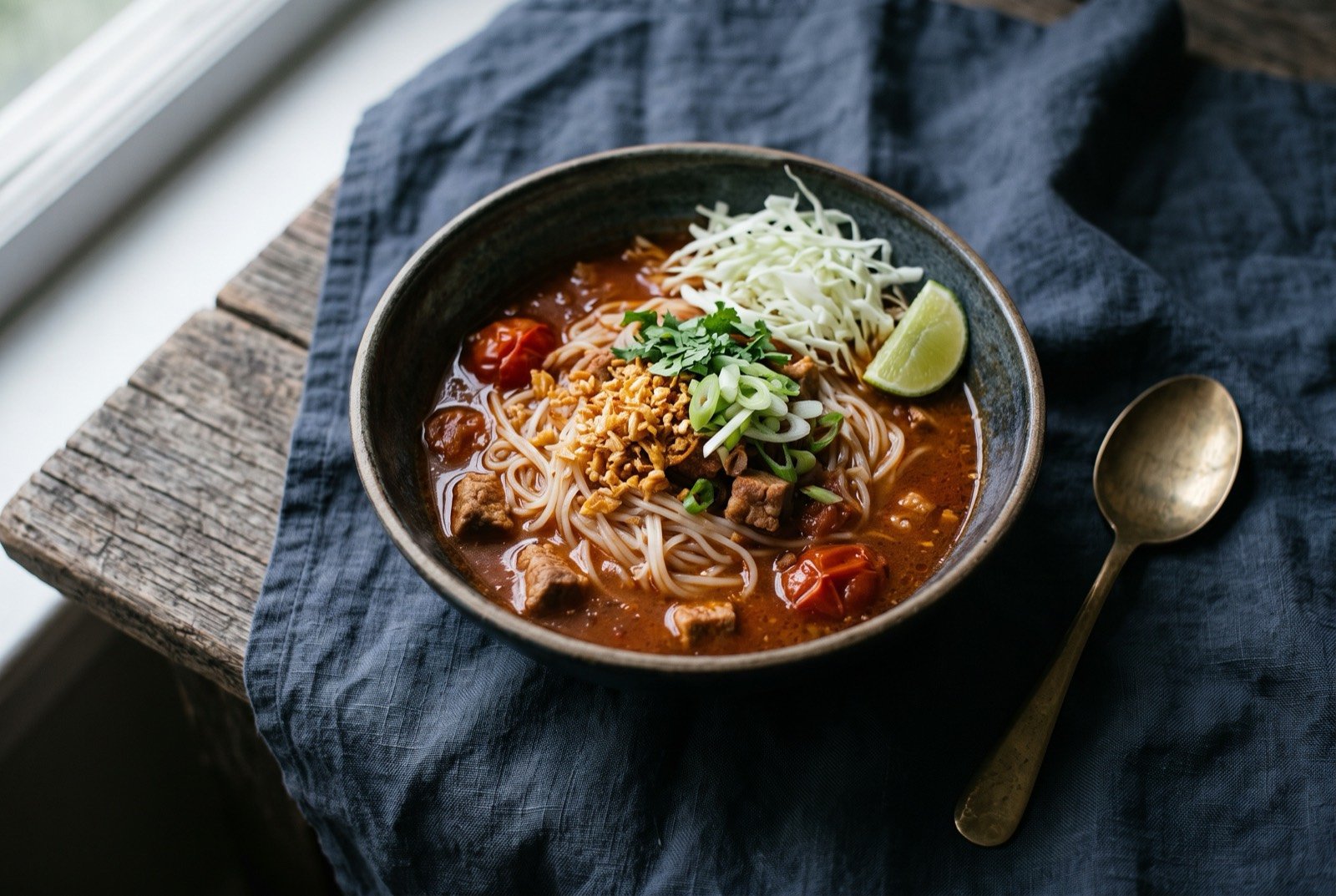
Illustration
- Time
- 1 hour
- Researched
- 12 sources cited
As tradition built it
Following Austin Bush's published method
Serves 4 to 6. About 1 hour.
Ingredients
- 3 tbsp oil
- 3½oz shallot, sliced
- 10 cloves garlic, minced
- 1 tbsp shrimp paste
- ½ can Thai-style canned mackerel in tomato sauce
- 50 to 60 cherry tomatoes, halved
- 9oz pork loin, cubed ¾ inch
- 18oz pork stock bones
- 1½ tsp salt
- 1 tsp bouillon powder
- 1⅓lb rice noodles
- for garnish spring onion, crispy garlic and garlic oil, coriander, shredded cabbage, lime, chilli powder, to garnish
Method
- Fry the shallot and garlic in the oil for 5 minutes.
- Add the shrimp paste, cook 2 minutes.
- Add the mackerel, cook 5 minutes until the oil resurfaces.
- Add the tomatoes and fry roughly 20 minutes, stirring, until reduced and the oil re-emerges a second time. This long tomato reduction, not an added acid, is what sours the broth.
- Add the pork, fry 10 minutes.
- Add the bones and 2 quarts water, simmer 20 minutes, then season with the salt and bouillon and simmer a further 10 to 15 minutes.
- Serve over the rice noodles with the spring onion, crispy garlic and garlic oil, coriander, shredded cabbage, lime and chilli powder on the side.
What a modern chef changes
The tomato reduction treated as the dish's real souring agent, not rushed to save time
No numbered rung, a variant of the same oil-return discipline applied to a tomato base rather than an onion one.
Method
- Watch for the oil to visibly resurface twice, once after the mackerel, once after the tomato reduction. Both signals matter; stopping the tomato stage early leaves the broth under-soured and thin rather than properly reduced.
- Use fresh cherry tomatoes at genuine ripeness rather than a shortcut tin of chopped tomato. The dish's whole acid structure comes from that slow reduction, and a watery substitute cannot reach the same concentration in the same time.
- Keep the garnish tray genuinely separate, the crispy garlic added only at the table, so it stays crisp against the hot broth.