Mainland Southeast Asia · Volume 42, The Tea Leaf, the Curry Oil and the Caravan Road
Balachaung
Bamar dry zone
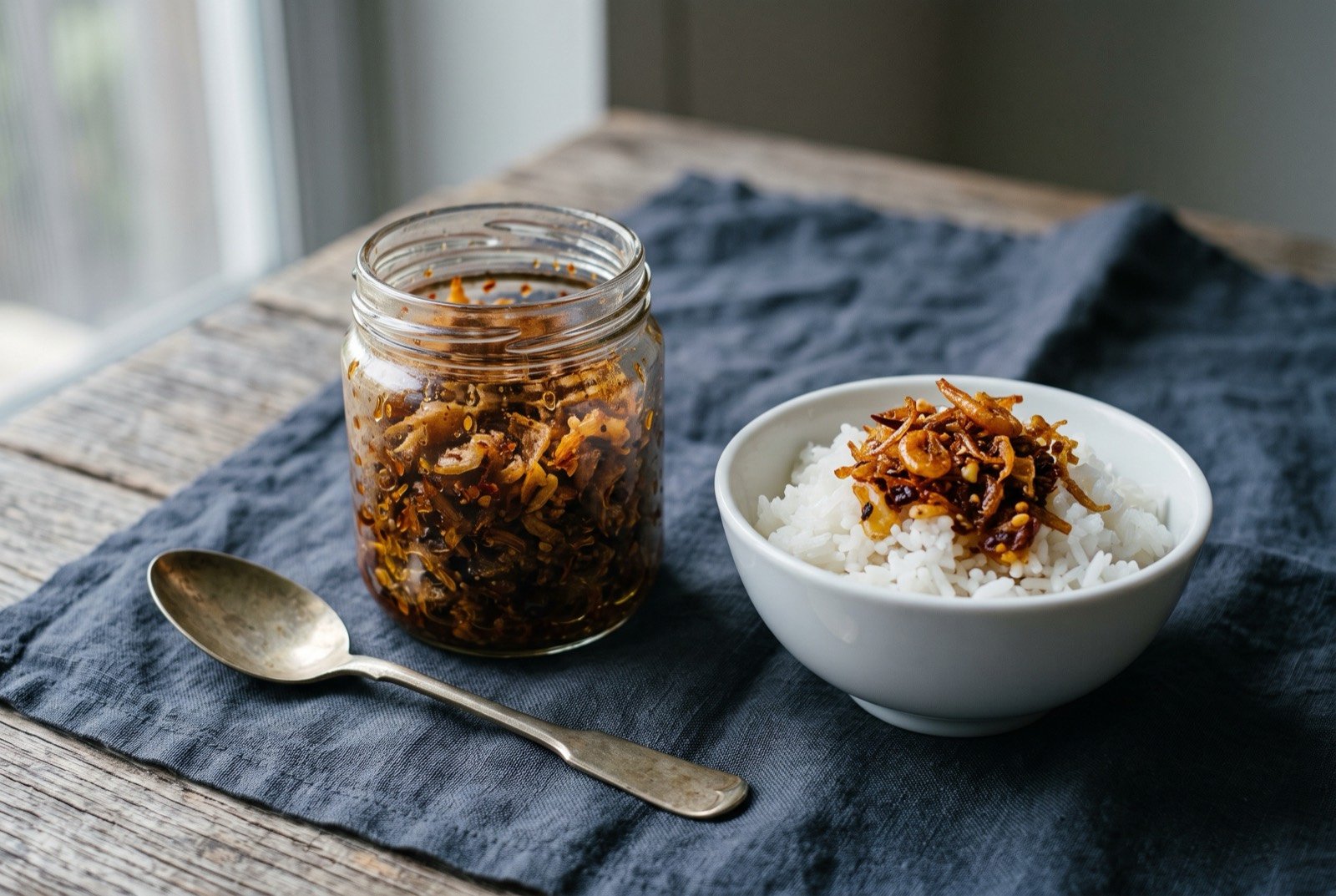
Illustration
- Time
- 30 minutes
- Researched
- 12 sources cited
As tradition built it
Makes about 300g. About 30 minutes.
Ingredients
The method as the tradition gives it, with the ingredients named. Quantities follow as we verify them, lead dishes first.
- 300ml, plus 125ml sesame oil oil, a generous amount
- 2 to 3 shallots, thinly sliced
- 20 cloves garlic, thinly sliced
- 250g dried shrimp, ground coarse
- turmeric, chilli powder
- a 2cm cube ngapi
- 120ml vinegar
Method
- Fry the shallots in the oil until golden, remove and reserve.
- Fry the garlic the same way, remove and reserve.
- Add the ground dried shrimp to the same oil with turmeric and chilli powder, fry until fragrant.
- Dissolve the ngapi in a little vinegar and stir this through the shrimp.
- Cook, stirring continuously, for 5 to 7 minutes, until the mixture is visibly dry and crisp, not merely cooked through.
- Fold the fried shallot and garlic back through, cool completely, and store in an airtight jar.
What a modern chef changes
The drying stage treated as the whole point, not a stage to rush past
No single rung, a preservation discipline this chapter treats as foundational rather than assigning to one numbered technique.
Method
- Do not stop stirring, or reduce the heat, until the mixture is genuinely dry rather than merely no longer wet. This is what gives balachaung its months-long shelf life without refrigeration, and cutting the stage short trades keeping power for a faster finish.
- Fry the shallot and garlic properly golden, not pale, and keep them separate from the shrimp mixture until the very end, so their texture survives as a distinct crunch rather than dissolving into the paste.
- Serve it the way it is actually eaten: spooned over plain rice, buttered toast, or a bowl of lentils, a protein-stretcher and a flavour bomb rather than a standalone plate.